The anniversary

Apple turns 50: how the product obsession became an ecosystem

The company revolutionised the market for PCs, smartphones and the digital economy by fulfilling a commitment made many years ago. Now the challenge is Ai

by Luca Salvioli

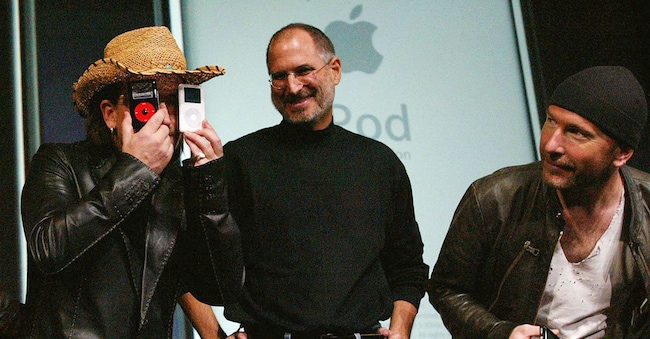
Il cantante degli U2, Bono, scherza mentre posa insieme al CEO di Apple Steve Jobs e al chitarrista degli U2 The Edge durante la presentazione dell’iPod U2 Special Edition a San Jose nel 2004./Foto d'archivio REUTERS

4' min read

Translated by AI
Versione italiana

4' min read

Translated by AI
Versione italiana

Today, 1 April, Apple turns 50. It was founded in 1976 by Steve Jobs, Steve Wozniak and Ron Wayne (no one remembers him, he sold his 10% share for $800 after a couple of weeks) in a garage, in the midst of the mystique of those Silicon Valley years that from a mix of hippy and nerd culture started the technological revolution that changed our lives. Apple, among the big companies of the time, is the one that has followed the most continuous and strategically consistent growth path, with a few stumbles in the early years that put a strain on its survival, but today it is a colossus with 2.5 billion active devices and a value of more than $3.5 trillion.

The CEOs who made history

Over these five decades, Apple has had many leaders, but only two figures have defined the company as we know it today.

Loading...

The first is the founding father, Steve Jobs, who led Apple in two phases: first in the initial years and then, after his return in 1997, for a total of about 15 years as ceo (almost 25 if one also considers the role as founder and leader in the early days). His trajectory was interrupted in 1985 by the defenestration orchestrated by John Sculley, the manager who arrived from Pepsi and would later lead the company for a decade.

The following years were the most difficult: between 1993 and 1997 Michael Spindler and Gil Amelio, two often forgotten but central CEOs at the most critical time in Apple's history, took turns. It was Amelio who made the decision that would change everything, buying NeXT and bringing Jobs back into the company.

The second great leader is Tim Cook, Jobs' trusted Chief Operating Officer: he takes up a very difficult inheritance but carries it on consistently. Without overdoing it. The company becomes one of the largest financial giants in the world. Meanwhile, he pursues a progressive plan for product and supply chain sustainability, promotes a more inclusive company and maintains the priorities of privacy and user experience as Apple's core values.

LA CORSA A WALL STREET

Loading...

From Mac to First iPhone

The first product made was the Apple I, built almost entirely by hand. This is where the philosophy that will accompany Apple is formed: simple, good-looking and functional technology. The obsession with product quality is Jobs' hallmark that will enable the company to make a quantum leap in personal technology. Coupled with an unprecedented storytelling skill embodied at its best during Steve Jobs' keynotes, which became the subject of study in universities even before the term 'storytelling' was mentioned.

The 1980s saw the arrival of the Macintosh, the first computer with a graphic interface and mouse, which revolutionised the concept of the personal computer. It is a key moment of mutual influences: for the graphical user interface and mouse, Apple is inspired by a solution it sees during a visit to the Xerox PARC. Microsoft will adapt these concepts in its Windows systems, giving rise to the historic rivalry between the two companies.

But not everything works out: flops such as Lisa and Apple III put the company to the test. In 1985, Steve Jobs left Apple after disagreements with the board of directors.

Apple compie 50 anni, i prodotti più iconici

Photogallery11 foto

The 1990s are tough: Apple has a confused strategy and too many products on the market. It fires a third of its employees and is only days away from bankruptcy. In 1997 Steve Jobs returned to the company and relaunched Apple. The 'Think Different' campaign was born and the iMac arrived, with an iconic design that changed the face of computers. Apple was reborn focusing on simplicity, design and innovation.

The next quantum leap came in the 2000s. Apple moved from the PC to the world of music with the iPod in 2001. It is not the first Mp3 on the market. As is often the case, Apple did not arrive first, but it arrived better. And with the iPod-iTunes combination, it creates an integrated digital ecosystem that revolutionises the world of music. It changed the way users consumed music and brought a breakthrough for the majors and artists, overwhelmed by the piracy of Napster and the collapse of the physical media market.

In 2007, the iPhone arrived, marking the decisive turning point: Apple was no longer a niche, but a mass culture, changing the way billions of people interact with technology. Until then, the internet on a mobile phone was a frustrating experience. The glossy screen with no buttons, then apps, speed of execution and incremental innovation that came year by year changed entire industries and integrated more and more functions, until the end of the iPod. The iPad interprets the iPhone revolution as a bridge between phone and Mac.

Tim Cook is growing all product lines and meanwhile pushing services, up to TV+ and award-winning original series. As new product categories come Apple Watch, which starts without the bang of the iPhone but grows and becomes over the years an extremely personal object capable of proactively monitoring and intervening to safeguard our health. Vision Pro is a cutting-edge, niche product, while Apple Intelligence remains an unfinished goal.

The Road to Find on Ai

As mentioned earlier, Apple has never been the first to invent a product. Its strength has always been perfecting them and bringing them to hundreds of millions of users. With Ai, however, it can no longer stand idly by. Last year, at WWDC, Apple opened up its on-device Ai models to developers with the Foundation Models framework, allowing private and offline Ai to be integrated directly into apps. The strategy is based on the ecosystem: over a billion users, millions of developers.

Apple had previously collaborated exclusively with OpenAI, but has now opened up to a cross-platform perspective. It has a partnership with Google that integrates Gemini models into Siri and Apple Intelligence functions, enhancing Ai while maintaining privacy and on-device computing. The upcoming WWDC, to be held from 8 to 12 June, will be the key moment to see which way Apple's Ai will go. Meanwhile, John Ternus' relevance within the company is growing. The manager is now responsible for all of Apple's hardware engineering and, according to Bloomberg rumours, has the potential to become the company's future CEO.

Copyright reserved ©
Loading...

Brand connect

Loading...

Newsletter

Notizie e approfondimenti sugli avvenimenti politici, economici e finanziari.

Iscriviti