The first Bukhara Biennial conquers the global stage
Among the artists is the Italian-Senegalese artist Binta Diaw, who dialogues with Uzbek artisans for an installation about global identities and shared memories

4' min read
Key points
4' min read
When you carefully mix the right ingredients - tradition and innovation, local talent and an international outlook, history and the contemporary - the result can only be a success. This is the winning recipe of the first edition of the Bukhara Biennial, entitled "Recipes for Broken Hearts", open from September until 20 November, which has transformed the ancient Uzbek city into a crossroads of global contemporary creativity. The recipe, in this case, involved bringing together international artists, local talents and master craftsmen: different voices that were able to enrich each other without overpowering each other. Orchestrating this complex alchemy was Diana Campbell, who with her vision was able to give coherence and rhythm to a dialogue that would otherwise be dispersive and at risk of being reduced to a mere decorative exercise. This first edition was not just an exhibition of works, but a living laboratory of cultural contaminations that allowed young Uzbek talents to become internationally known.
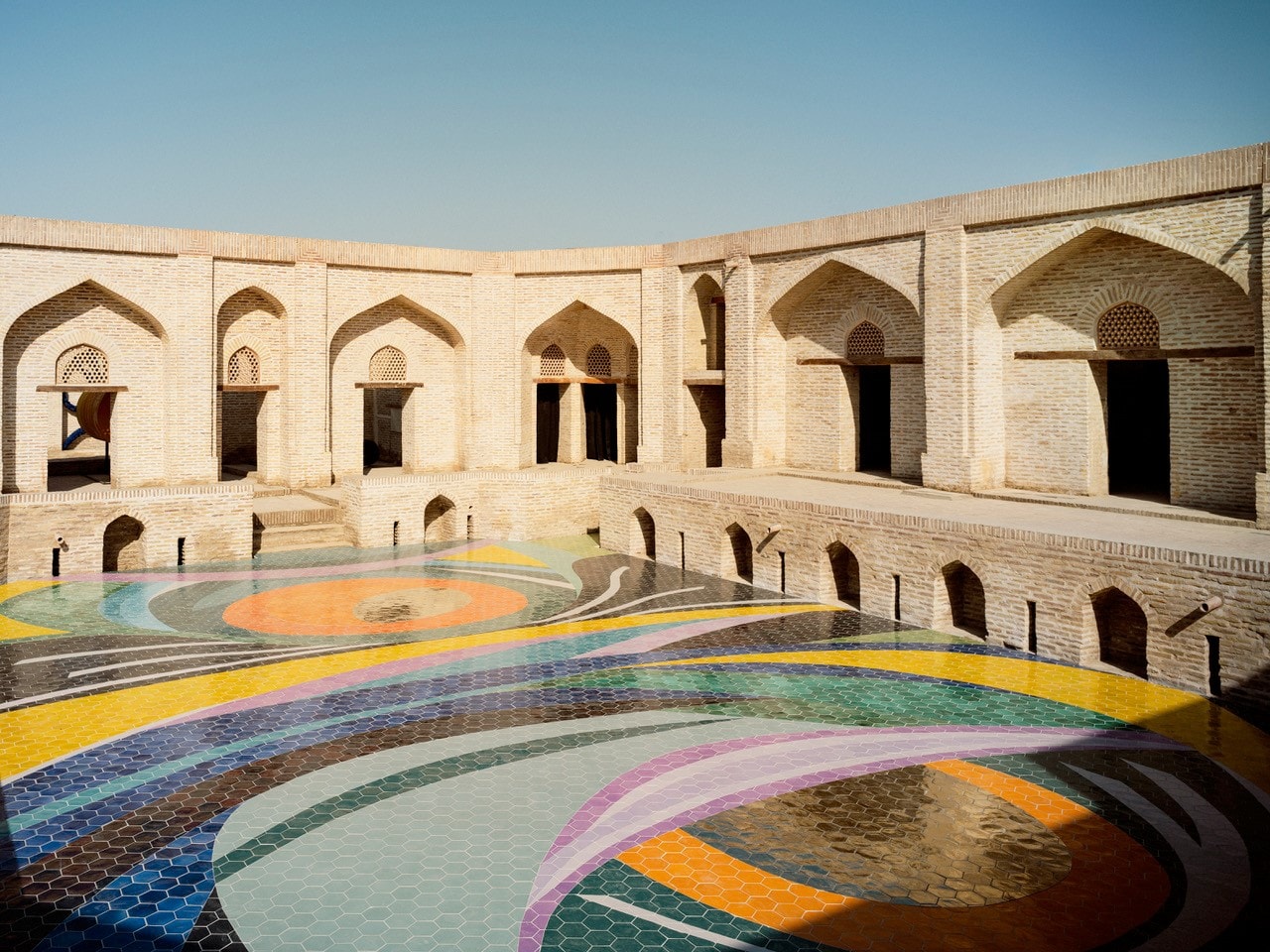
A central role was played by the craftsmen of Bukhara, repositories of ancient techniques handed down from generation to generation: from ceramics to textile work, from wood marquetry to miniature painting. Their manual knowledge, rooted in history, met the vision of contemporary artists, creating over 70 site-specific projects, works that are both memory and invention. In this dialogue, the Biennale showed how the so-called 'applied arts' can become works of art with a universal language, capable of speaking to the present without losing the link with their origins.
No disclosure on costs although rumours have emerged that, in addition to the production costs of the works, the artists and craftsmen were compensated for their work. The public, curators, museum directors from all over the world - from Italy Francesco Stocchi, artistic director of the Maxxi - contributed to making the atmosphere of the Biennial even more vibrant Among the alleys and squares of Bukhara, a special energy was in the air: curiosity, exchange and participation.
The artists and works
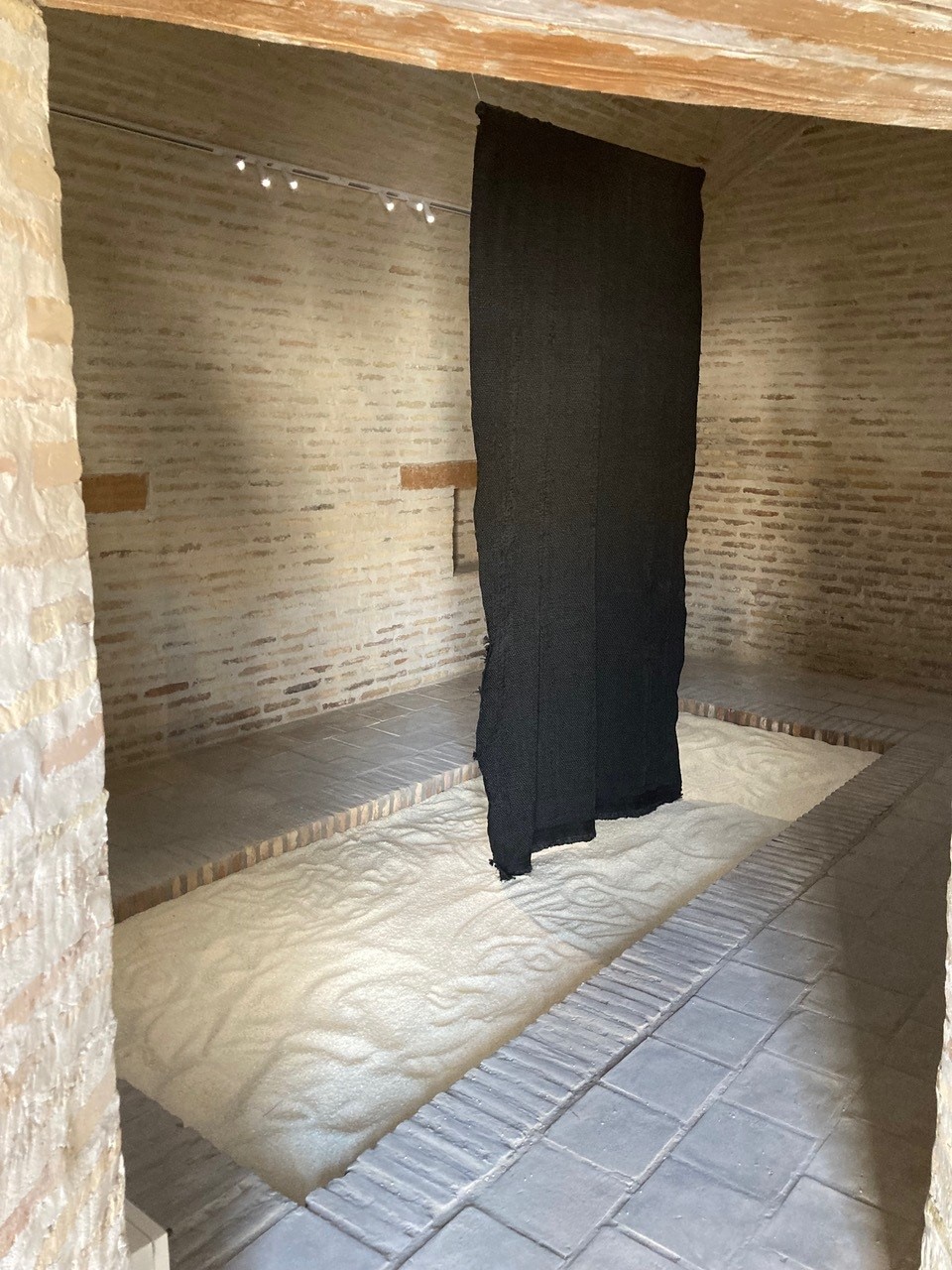
.Among the artists is the Italo-Senegalese Binta Diaw, born in 1995 (at Prometeo Gallery, Milan, the prices of her works range from 7,000 to 22,000 euros and for large works the price reaches 40,000 euros) who in collaboration with Mastura Maxmudova and Zarnigor Maxmudova (Uzbekistan) has created "Cosmopoétique", 2024-2025, an installation that takes inspiration from carpet making and also alludes to the historical role played by trade routes in the interconnection between Africa and Asia, which enabled the exchange of cultural practices between the continents.
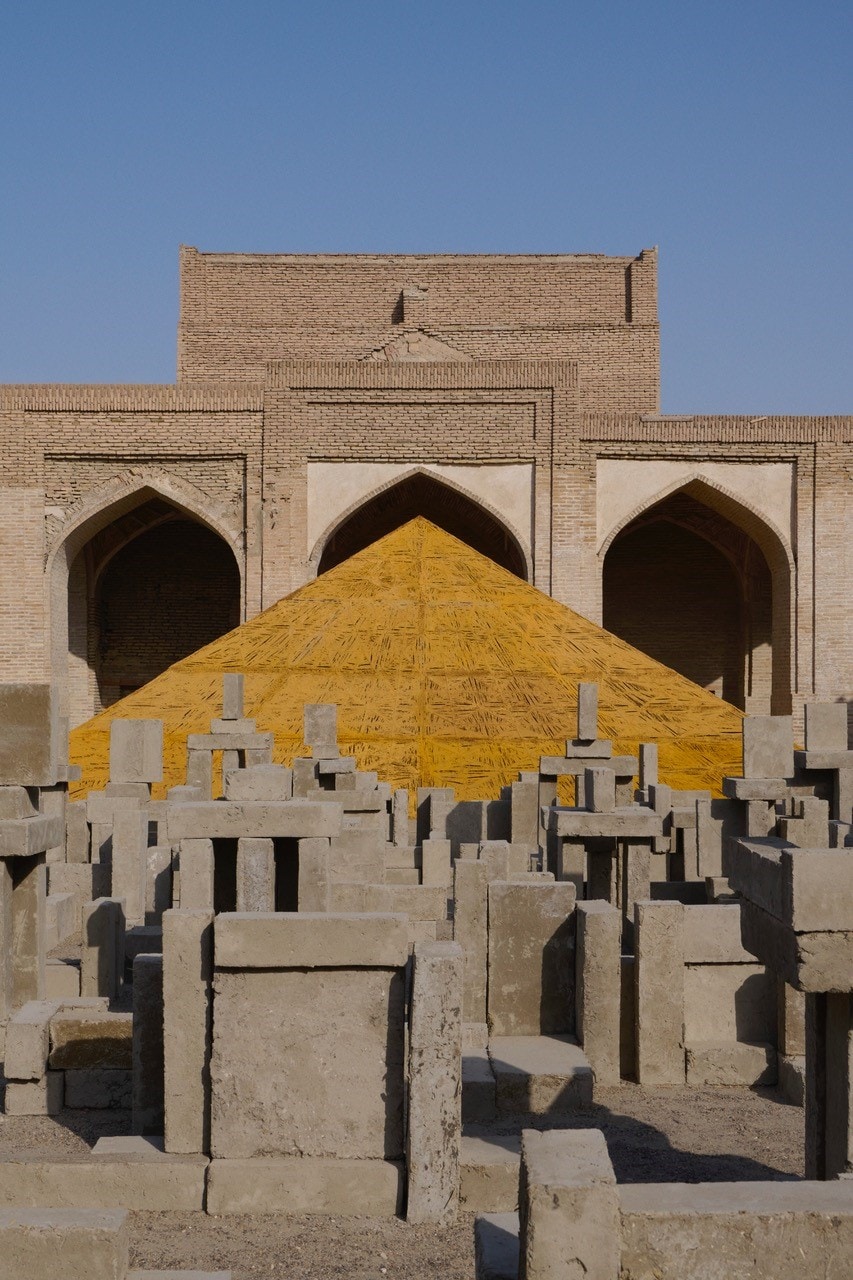
The sculptural installation by Antony Gormley, 'Close' (2025) inside the Khoja Kalon mosque was realised in collaboration with the restorer Temur Jumaev (Bukhara, 1992) and local brick manufacturers. Formed of several mud bricks, it resembles a labyrinth of bodies.