
The first chair of Economics? In Italy, 270 years ago...
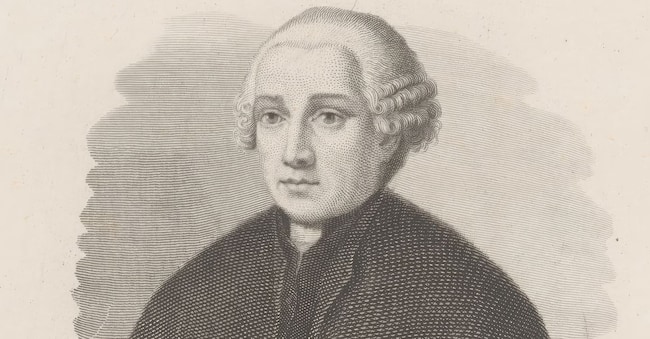
On 5 November 270 years ago, Antonio Genovesi began his teaching of economics in Naples at the Federico II University, 'with a large crowd'.

4' min read
4' min read
On 5 November 270 years ago, Antonio Genovesi began his teaching of economics in Naples at the Federico II University, 'with a large audience'. Thus was born the first chair of economics in Europe and the world. Genovesi called it 'Civil Economics'. There were at least three innovative features of that teaching: it was based on a consistent cultural platform (Genovesi had taught philosophy, metaphysics, theology, logic, ethics and had followed Vico's lectures until 1754); it intertwined theoretical profiles and practical application in a new way; it was taught only in Italian and not in Latin, a choice consistent with his pedagogical vocation and the inclusive approach that distinguished him. Genovesi also added to this extraordinary teaching skills and a strong educational intentionality. All this in the reforming context of the Enlightenment Naples of the second half of the 18th century.
His lectures were always well attended, not only by students. According to the scholar from Salerno, 'public knowledge' (the knowledge that trains sentiments and conduct consistent with the good of civitas) could have 'a direct influence on the generativity of conduct marked by civic virtues and oriented towards public happiness' (Dal Degan, 2013). His seminal text, Lectures on Commerce or Civil Economy, was translated into German, Spanish and partially into Portuguese and was much appreciated in Enlightenment Europe. An English-language edition was not immediately produced. This probably did not help Civil Economy to 'break through the glass wall' of the still dominant mainstream of economic thought, that of so-called Political Economy. Whose reference text, Adam Smith's Enquiry into the Nature and Causes of the Wealth of Nations, was published in 1776.
Genovesi followed in the footsteps of Aristotle and Thomas Aquinas when they pointed to sociality and the quality of relationships as elements for living a full and happy existence. In his Lectures, he wrote about classical themes (international trade, currency, population), but also included new topics such as civic bodies or the employment of the poor, trust, reciprocity or mutuality, the common good and public happiness.
Public trust was indispensable in Genoa's vision to nurture economic and civic development. It is reminiscent of today's concept of 'social capital', that set of trust between people, collaborative networks, and collectively desirable behaviour that facilitates compliance and facilitates the social and economic development of a community and its members. The lack of public trust was at the root, according to his analysis, of the failed development of the kingdom of Naples, thus anticipating one of the 20th century research strands relating to the southern question. Public trust is also generated by the market: Genovesi sees it as a civilising place, if operators are inspired and motivated by civil virtues, and also as a means of generating peace ('two nations that trade become mutually dependent').
Another element, public happiness. To achieve it, the availability of goods (hence the indispensability of business and market development) and their fair distribution were needed. Inequalities of income, of opportunities, of services, of educational and health provision were (and still are) the cause of 'public unhappiness'.

