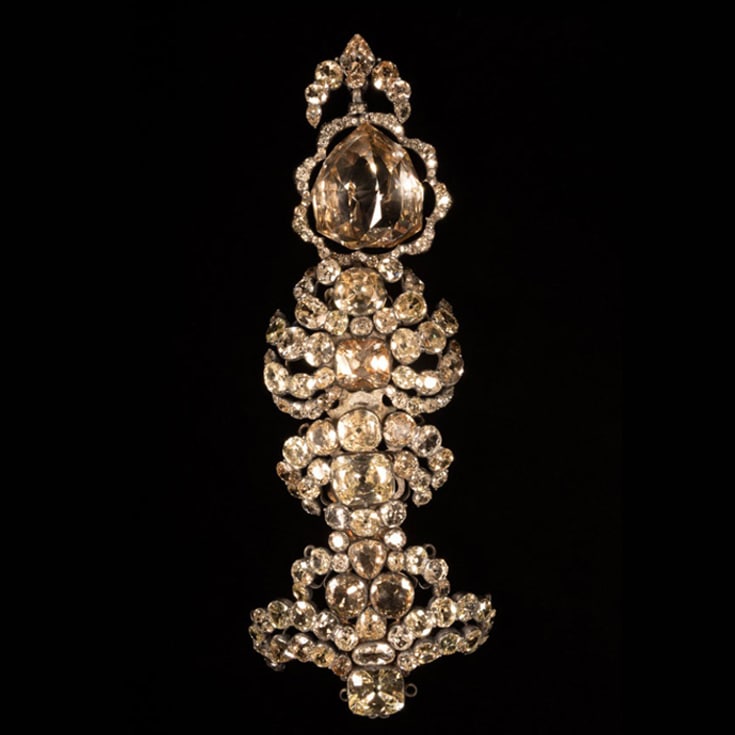
Does the 'Florentiner' diamond belong to Italy? Thick mystery about the Habsburg crown jewels
After the news that the corpus of valuables believed lost is in a vault in Canada, doubts grow among historians and jurists about the ownership of the jewellery

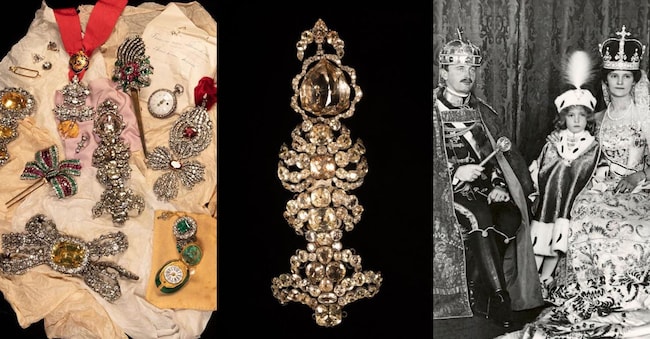
For decades, it was thought that the Habsburg crown jewels, removed shortly before the end of the Great War and the implosion of the Austro-Hungarian Empire from display case XIII of the treasure chamber of the imperial palace in Vienna, had been lost. The news spread by Karl Habsburg, the current head of the Habsburg family and grandson of the last emperor Charles, that some of those precious artefacts are instead kept in a vault in Canada, has set scholars and jurists in motion, because the conviction that they are the private property of Charles I and his wife Zita of Bourbon-Parma, does not convince several leading historians. And there are too many obscure points.
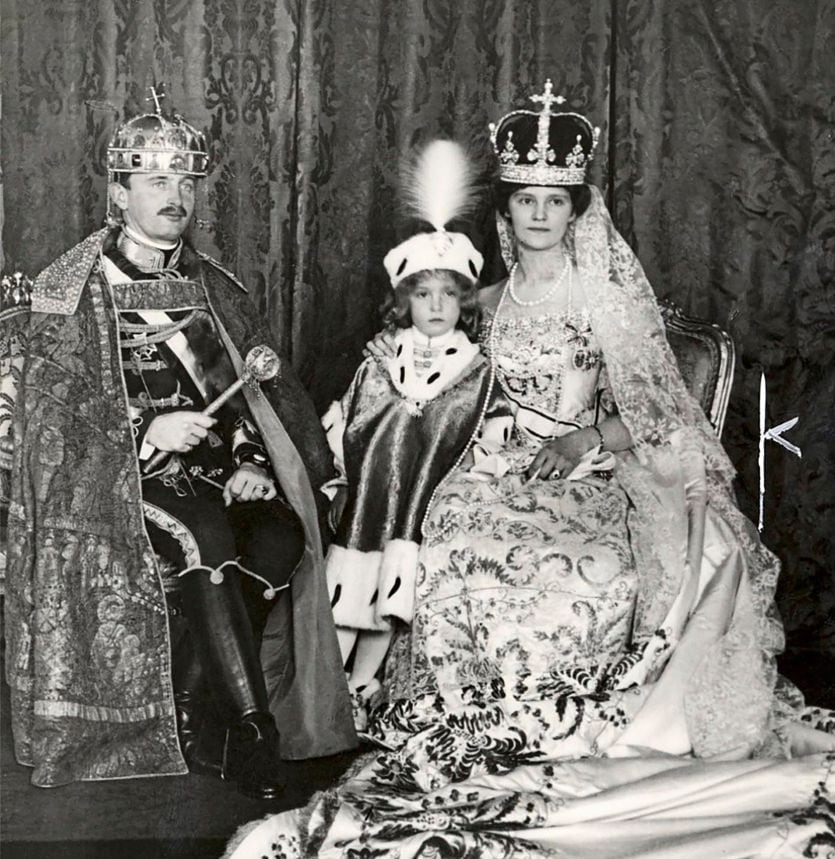
When they were removed from the display case and taken to Switzerland in early November 1918, there were still 38 pieces. In the case deposited in Canada there are 15. Some of the jewellery was already sold in the early post-war years: unlike Franz Joseph and Sisi, Charles I and Zita did not have a large private fortune, so that a number of the jewellery pieces were dismembered and certainly changed hands to make money, as the historian Ilse Reiter-Zatloukal has reconstructed. It remains to be understood, however, why Zita's pearls were entrusted intact to Cartier to find buyers and instead other artefacts were dismantled and sold in pieces;
The 'Habsburg Law'
In April 1919, the new Austrian republic enacted the so-called 'Habsburg Law', by virtue of which it exiled the imperial family and swallowed up its assets, with the exception of private property. Strictly personal jewellery, historian Katrin Unterreiner points out, was kept at Schönbrunn Palace, and crown jewellery was kept in the treasure chamber in the centre of Vienna. However, it was precisely those removed from showcase XIII that were already out of the country when the law expropriating sovereigns came into force. An argument brought by Karl Habsburg in support of the thesis that those jewels could not be claimed by the Austrian state. However, historians who have delved into the matter again point out, in the latter part of the war Charles I had enacted a law forbidding the export of gold, silver, jewellery, pearls and gems, so that the pieces of Showcase XIII should have remained in Austria. Did the emperor violate his own law? Not really, Karl Habsburg retorted in an interview with Austrian TV ORF, because the sovereign could make exceptions;
A secret to be kept for a hundred years
The timing of the reappearance of the jewels in Canada is also enigmatic. After taking them with her overseas in 1940, Zita stipulated that their existence and whereabouts should remain secret until the first centenary of her husband's death: 1 April 2022 therefore, Charles I having died in exile in Madeira on 1 April 1922.
Apparently, only two of Zita's eight sons were aware of that body of jewellery: Robert and Rudolph, who then informed their sons. Not Karl, however, who claims to have learned of it last year from his cousins, after which the necessary checks, appraisals and legal opinions have taken until these days to be able to proceed with the revelation of their presence in Quebec, in the certainty, so Karl believes, that they are private property.