The foil that makes the electric fly: the futuristic RaceBird is born in Italy
A chance to convert recreational boating to zero emissions comes through the World Powerboat Championship E1 Series. A circuit with growing business potential and big investors, from Will Smith to Rafael Nadal.

7' min read
7' min read
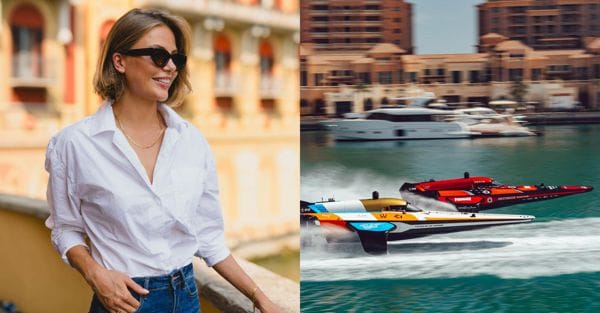
On one side, white tunics swaying in the wind and headgear blocked by the igal, the black cord that wraps around them. On the other, the fluorescent colours of fireproof suits, which adhere like a second skin to the body. Under the dazzling light of the perennial Qatari summer, well-known faces from finance and business, actors, sports legends, behind large dark glasses. It is a kaleidoscope of colours and seemingly distant worlds that is assembled under the vault of the Corinthia Yacht Club in Doha, for the second leg of the E1 Series Electric Powerboat World Championship. A relatively new passion for a competition and investment destined to grow, where unexpected gender equality, strong environmental sustainability, great entertainment and cutting-edge technology coexist. On the water, motorboats with futuristic lines race with zero emissions, with crews, half of them female. In the air-conditioned coolness of the Ocean Club VIP hospitality, international investors and Hollywood stars play their game, networking, projects and million-dollar deals. Now in its second year, this championship is a microcosm condensing the major global challenges, not least because of the role of the big names taking part. "We don't want to set ourselves up as the champions of innovation," says engineer Rodi Basso, ceo and co-founder, with Spanish entrepreneur and politician Alejandro Agag, of the E1 Series World Championship, with Neapolitan candour. "Of course we are talking business, but associating with us also means being able to experiment with technologies and solutions in protected environments, where homologation is not stringent and cutting-edge concepts can be realised."
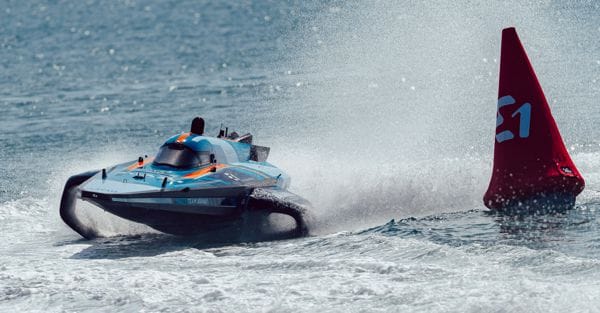
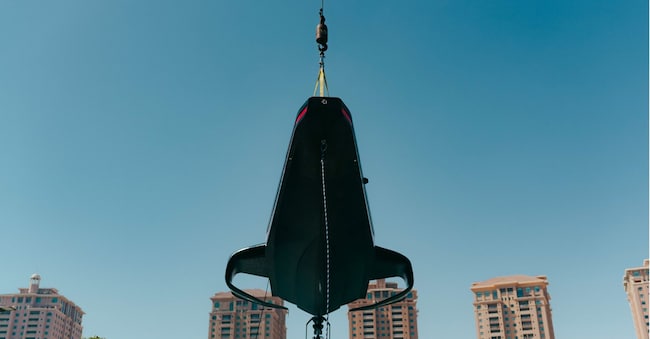
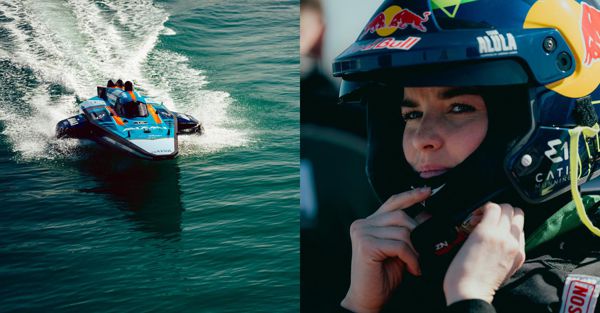
The stars of this aquatic revolution are the RaceBird, electric speedboats that look like something out of a science fiction film. They speed across the water - seas and lakes - thanks to foils, which allow the craft to rise and almost fly, eliminating the resistance of the hull. A principle that leaves only a minimal carbon surface in the water, a technology also made famous by the America's Cup, but here taken to an even higher level of innovation. "The batteries of a single craft weigh 230 kilos, with the hull the boat weighs up to 1,300 kilos. Of course the batteries have an impact on speed, precisely because of their weight, but to have a battery that weighs less than 20 per cent of the total is a great achievement," Basso continues. The RaceBird accelerate 0/100 kilometres per hour in 15 seconds, and reach a top speed of 52 knots, about 90 kilometres per hour: "The limit is not the power - we use less than the 200 horsepower available - but the fluid dynamics of the foils, but we chose them because they introduce maximum efficiency and we believe in them for the yachting of the future. We aim to reach 60 knots in the next few years, the maximum potential".
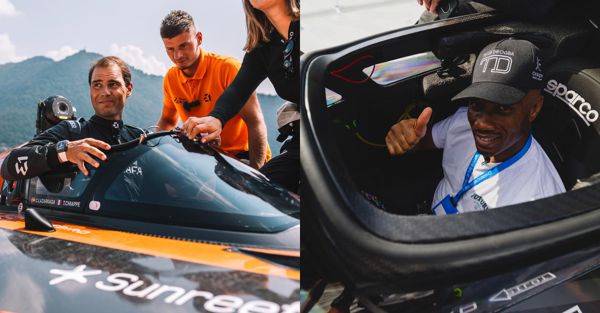
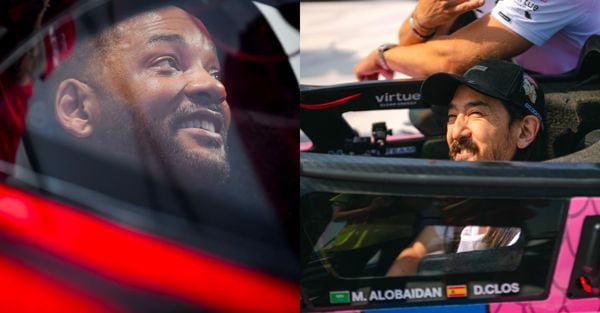
The calendar for this second season is already in full swing: after the three races held in Jeddah in Saudi Arabia, Doha in Qatar and Dubrovnik, the RaceBird will land in Italy at the end of June, on Lake Maggiore. This is no coincidence: it is here, in Sesto Calende, that they are built and maintained. London hosts the headquarters for organisational and promotional aspects. The world tour will then continue in the Principality of Monaco and, after a stop in Lagos, Nigeria, will end in November in Miami. Uim E1 has rapidly become a landmark and turning point for water sports: it is the first and only world championship for all-electric racing boats recognised by the Union internationale moto nautique, which governs powerboat activities on a global level. Supported by Pif (Public investment fund, the sovereign fund of Saudi Arabia), it not only attracts the public with its spectacularity, but has as its mission to promote research and development of innovations that can protect the increasingly fragile coastal areas. Behind each team (there are 9 owners and 18 drivers, 9 men and 9 women) there is a constellation of celebrities: actor Will Smith, singer Marc Anthony, music producer Steve Aoki, tennis player Rafael Nadal, football legend Tom Brady, Indian cricket champion Virat Kohli, former Ivorian footballer Didier Drogba, Nba parquet dominator Le Bron James, entrepreneur Marcelo Claure.
We ask Basso why these entertainment and sports giants have decided to dive into this adventure: 'First, they see extraordinary business potential; second, we are talking about personalities who have already reached the pinnacle of their careers and are looking for projects capable of generating a significant impact on the lives of billions of people. The vision is as ambitious as it is concrete. "More than 50 per cent of the world's population lives in coastal areas, which are now threatened by multiple climate factors. Our electric motorboats not only have zero emissions, but thanks to foils they do not generate waves, which are one of the main causes of coastal erosion. Noise pollution is also drastically reduced compared to thermal engines, with tangible benefits for marine species". A passion, a sport, a commitment to the ecosystem. What's more, far from being a pastime for billionaires, the teams have a horizon of commercial opportunities ahead of them: revenues from sponsorship, merchandising, hospitality and other sources for a good 25 years, the duration of the exclusive licence granted by the Federation. In an era where digital presence is valuable currency, the talent of celebrities has been strategically channelled to launch the E1 into the media universe. The numbers speak for themselves: the follower count has risen from around 850 million in 2024 to 1.1 billion in 2025, thanks to this year's entry into the competition of Nba basketball player LeBron James, and the agreements with E1 stipulate that these talents and their teams will be active in promoting the league through their digital channels.
The E1 does not come from nowhere, it follows in the wake of another pioneering competition: the Formula E (the Electric Formula 1 of cars). "When I presented the idea to Alejandro Agag, the man behind the birth of Formula E more than 10 years ago, we quickly realised that the electric maritime industry was lagging far behind the automotive industry. We built on our motorsport experience, transferring technologies that had already been tested on supercars and hypercars to electric powerboats. It is therefore a revolution with three souls: technological innovation, ESG (environmental, social, governance) principles and, in a broader sense, the promotion of a sustainable marine lifestyle. "The RaceBird are more than racing boats: they are a manifesto for the mobility of the future," Basso concludes. "Of course, the technology is not 100 per cent ready yet. After all, we come from 120 years of optimising thermal engines, while electric systems are at the beginning of their evolutionary journey. But that is where the investments are concentrated today, towards a more efficient and responsible alternative propulsion.