
The children of the forest, abducted by savages
“Maikan”, a novel by the Innu writer Michel Jean, tells the story of three Native Americans deported to boarding schools for forced assimilation. Igiaba Scego’s graphic novel recounts the true story of two children abducted by the “famous explorer” Miani and put on display in Italia like animals

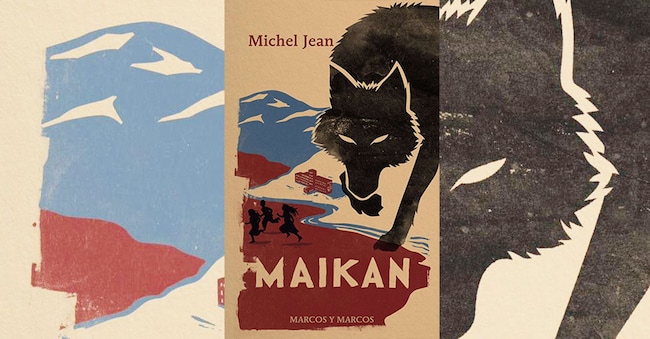
The summer of 1936, spent hunting in the forests that once surrounded the great Lake Pekuakami in Québec, was the last carefree season for Virginia and Marie, two teenage girls from the Innu Nation and inseparable friends. Just as they and their families were preparing to travel upriver to their winter territories – ‘that’s how nomads are: happy to set up camp and even happier to break it down’ – large lorries descended on the camp. All the children and young people were loaded onto the lorries, then onto small planes that deported them to the residential schools: institutions run by priests whose aim, as the Canadian government finally acknowledged some fifteen years ago, was the assimilation of Native Americans. Essentially, they were meant to ‘kill the Indian in the child’. And often, as the Innu singer Florent Vollant says, ‘they killed the child too’. The youngest among them were just six years old; the oldest, sixteen: over 150,000 members of the First Nations, Inuit and Métis suffered this fate. Virginia and Marie arrived on an island thousands of kilometres west of where they were born, at the Catholic boarding school Fort George. And at some point they disappeared, like their Innu peer Charles. It would not appear that they died, as happened to many thousands of Indigenous children: committing suicide after being raped by those who called them savages, killed by torture, malnutrition and disease. There are dozens and dozens of mass graves.
The Innu writer and journalist Michel Jean, who previously wrote Kukum, in which he described life in the camp following the abduction of all the children and young people – in Maikan he recounts the story of the young deportees. Jean has created Audrey, a charming lawyer in present-day Montreal looking for a pro bono case to take on, as Canadian lawyers are required to do every year. She decides to take up the cause of the Indigenous people after reading a newspaper article: ‘Like most of her compatriots, Audrey did not know that of the approximately 139 residential schools opened across the country, twelve were located in Québec. How is it possible that a people, who have been fighting against assimilation for three centuries, should themselves have attempted to acculturate another? The idea had struck her as even more baffling when she discovered that the colleges were run by the very same religious orders that, in the past, had staunchly opposed the forced integration of Francophones.” Sifting through the archives to find out which of the deportees are still alive and help them receive compensation from the Canadian government, Audrey stumbles upon the story of Virginia, Marie and Charles, who vanished without a trace in 1937, and decides to find out what became of them. Maikan, with its splendid descriptions of boreal nature and Innu life, with its fast-paced rhythm, and believable characters, is first and foremost a testimony, an investigation into the memories of the living and the dead undertaken by Jean when she discovered that many members of her family had been at Fort George: overwhelmed by shame and trauma, they had never spoken of what they had endured.
Literary invention has served to create what Saidiya Hartman calls a fiction of love: ‘filling the gaps in a narrative that had silenced them’, writes Igiaba Scego, referring to her latest work, Children of the Forest, a graphic novel about two other deported children: Makunka and Tukuba, abducted in the Congo by the “famous explorer” Giovanni Miani, members of the Akka, one of the hunter-gatherer peoples whom the colonisers wrongly labelled as pygmies, brought to Italia in 1872 “as ethnographic objects to be observed, analysed, measured and catalogued”. Another true story, documented by the newspapers of the time and by various scholars whom Scego consulted before attempting to imagine what the two young boys, torn from their parents, had truly experienced. ‘When it comes to enslaved and racialised people, the archive never reflects reality. People in archives are objects; they are always accompanied by some number (in our case, measurements); the archive stages dehumanisation, it stages the obscene,’ writes Scego.
From the Labrador Peninsula to the Congolese rainforest, history repeats itself: ‘What happened to the Innu happened in Réunion, or in New Zealand, or to the Berbers of North Africa,’ says Jean. “The reality of the planet’s indigenous peoples is a universal story; it affects every continent. It is the story of colonisation.”
Michel Jean


