
The forgotten dead, what happens when a person goes missing without relatives
Lonely deaths affect people without relatives or friends, revealing how isolation and social fragility can cause the end of life to go unnoticed, in Italy and much of Europe
by Davide Madeddu (Il Sole 24 Ore), Lola García-Ajofrín (El Confidencial, Spain), Anna Sawerthal (Der Standard, Austria), Francesca Barca (Voxeurop, France) and Boroka Paraszka (HGV, Hungary)
 Aggiungi Il Sole 24 Ore
ai preferiti su Google
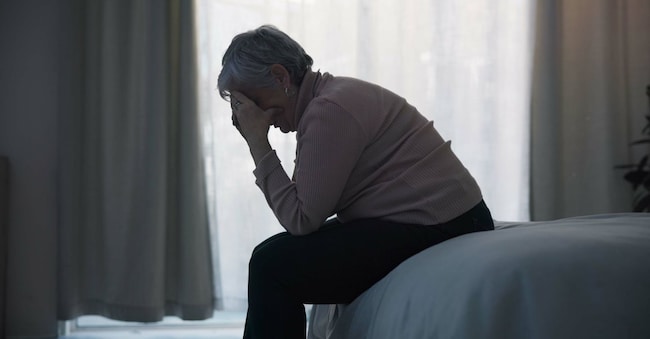
There had been no news of Paolo, a 65-year-old fire lookout working in the Iglesiente countryside in Sardinia, for four days. His lifeless body was found by colleagues a few days later in his house, where he lived alone.
In Noto, Sicily, however, the body of a 46-year-old man was found mummified. The death was dated a month earlier and no one would have been aware of his death. These are the dramas of those who die alone, that is, people without relatives or friends who live in solitude.
The chronicles are full of such episodes. Such as the story that happened a few years ago in Valencia, where the body of a man was found mummified twelve years after his death. No one noticed anything the whole time because the pension came into the account as well as the utilities were paid by direct debit. A flood prompted the condominium administrator to call the police to open the door and then discover the man's corpse. In Trento, in 2010, the body of a mummified man had been found only because the roof of the house had collapsed and an inspection had to be carried out. The man had been dead for almost twenty years.
Dramas that do not only occur in Italy, but also in other EU countries, and that now occur in large cities as well as in small towns.
Fernando Nonnis, anthropologist and president of Soccorso Iglesias, a civil protection association with missions in earthquake and flood-stricken areas, as well as engaged in daily activities in his city, speaks of the effects of widespread social change. "The true fact is that we live in a society that generates loneliness where fear and distrust are produced every day," he says. "In the past, and this was the case both in small towns and in larger cities, there was a kind of assistance or support for the elderly or those who lived alone. Then the scenario changed. "With the issue of privacy everything changed,' he adds. 'It happens, for example, that those who live in a building, precisely because of this need for privacy, do not know who lives there, except on the same landing, upstairs or downstairs'. A phenomenon that has spread from large cities to small towns. "The old neighbourly help no longer exists,' he adds, 'and with people living next door it is easier to argue than to help each other. Precisely for this reason, voluntary associations are launching initiatives to provide answers and support the elderly. "We are carrying out an experimental initiative with tele-help," he adds, "through a dedicated convention, we equip the elderly with connection tools that can tell us if the person is standing, has fallen, is sleeping or is ill. Not only that, to the 'technological' aspect is added the human one. "One of the activities that are carried out," he continues, "concerns the telephone call. There may be two a day, or only one on Sundays. The civil service volunteers take care of this aspect and animate the service". Hence also the appeal to the municipalities to support these initiatives. 'Through these tools,' he continues, 'we manage to guarantee a service and allow people of a certain age to continue to have their independence'.

