
The formula that makes e-commerce fly: lots of AI but invisible
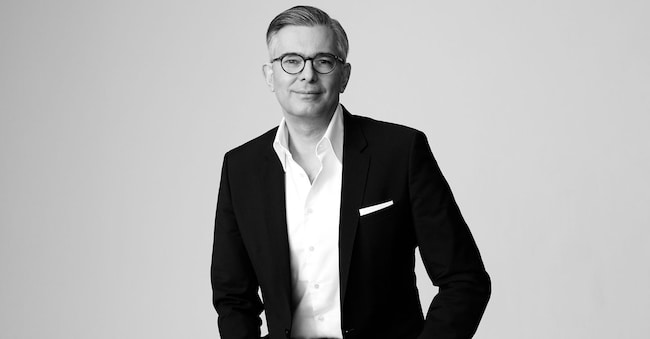
Meeting with Michael Kliger, the CEO of Mytheresa, who explains how technology should simplify life and focus on the speed of 'being able to shop in the time it takes to wait for a red light'.

5' min read
5' min read
Unique experiences. Emotions to remember. According to Michael Kliger, the CEO of Mytheresa, luxury has less and less to do with the objects we own and more and more to do with the sensations and moments it can give. With a smart casual look and black-rimmed glasses, Klinger has been at the helm of the platform that has revolutionised online shopping since 2015. It was founded in 1987 with a boutique in Munich, on the web in 2006 and listed on the stock exchange since 2021. We interview him as he is on his way to one of the many events that the luxury giant organises for top clients around the world. It is one of the characteristics that make the difference between Mytheresa and other similar shops, perhaps responsible, at least in part, for that plus 17.9 per cent in gross sales value just for top clients and plus 8.8 in average order value, with 86 per cent customer satisfaction. All this in a period that is not easy for luxury. "After the explosion of the post-pandemic moment, the sector suffered the economic difficulties of one of its most important clients, China, which slowed down," he explains. 'But the low point is already behind us, I am sure: demand is picking up. How much and how quickly I can't say, but the trend has reversed,' he assures, bolstered by the recent acquisition of Yoox Net-A-Porter. The group, with its new name LuxExperience, now brings together Mytheresa, Net-à-Porter, Mr Porter, Yoox and The Outnet under one roof, for a total estimated value of almost three billion euros. The transaction, which closed in April 2025, led to the creation of a new holding company listed on the NYSE under the symbol LUXE. "The goal is to create one of the strongest global players in digital luxury, optimising operational and technological synergies, while maintaining the distinct identity of the various brands." Despite the merger, in fact, the idea is to keep distinct product lines, dedicated to different targets. Mytheresa has over 250 brands and focuses on high-end customers; Net-à Porter and Mr Porter offer over 700, with a more trend-oriented focus. Kliger traces the medium-term path of the company, starting with the 'money can't buy experience' and the importance of building unique moments that make users feel part of an exclusive club. We are talking about a small group of happy few, 3.5 per cent of those who shop on Mytheresa, who count for 38.5 per cent of profits and enjoy special attention: personal shoppers, collections to see and buy before everyone else, faster delivery, priority e-mails. The latest preview launches and capsule collections have the brands of Loewe, Etro, Balenciaga, Manolo Blahnik, Saint Laurent, Bottega Veneta, Tod's, while the collaboration with Prada has been strengthened with global distribution rights extended to the United States. A world of its own, which speaks the global language of luxury and goes far beyond the latest it-bag: "People today tend to spend less on the usual products, they are looking for an all-round experience and a connection with the brand and the people who embody it. Until a few years ago, there was a race for the iconic object, luxury had to be owned. Today you want to live it. That's why we tie special moments to clothes and accessories to spend together: a meeting with the designer, a special dinner, a visit to a craft workshop'. This trend has also infected China, which, until recently, was more focused on buying material goods and which today could, instead, act as a driving force for countries rich in history, art and storytelling. "This desire to go out, to see, to experience, is evident in the world of hospitality, the true luxury playing field today. It is in that direction that brands must go: linking products to a journey, to a specific moment, to something that can be experienced, felt, touched and remembered. The opportunities to enrich the story of a brand by linking it to the richness of the territory are endless. Gucci and Florence. Della Valle and the Colosseum.
From a lunch in Portofino at Dolce and Gabbana's villa to après-ski in Aspen or a weekend at the Oasi Zegna, these are the kind of all-round projects that top spenders expect as a corollary to high quality shopping. Far from the digital glitter of the influencers: 'These are not moments created to end up in the social media stream, but private occasions to be savoured in real life, among people who share the same interests and values'. The influencers also exist in the world of Mytheresa, of course, but the criteria for selecting them are not those of millions of followers: "They are chosen in a targeted manner, they must be consistent with the brand narrative and the type of event, and possibly already brand ambassadors of the brand," he explains.
The group today is a kaleidoscope present in 130 countries. The largest growing market is the United States (more than 20 per cent), while Europe accounts for 50 per cent, Asia-Pacific and the rest of the world for 25 per cent. It is interesting to observe the different age groups, which change according to geography: younger in Asia, older in Europe, while the majority is globally between 30 and 50 years old, but with more similarities than differences in buying habits and brand choices. As well as in the way they look at sustainability. "We are talking about a niche of people who have money, like to spend it and usually have little time. They are not interested in the technicalities of production methods, they are not scientists. They want to be sure that what they wear does not have a negative impact on the ecosystem, but they are more interested in the credibility of the brand and therefore trust in its seriousness than in checking the details. This is why communication on these issues must also be emotional, not rational and technical,' he explains. A communication that, in digital, still and above all passes through Instagram, in a manner consistent with the average age of customers. On Gen Z, whose involvement remains a priority, Klinger has precise ideas: 'The basic needs, even for young people, are to get excited, to feel good. With the difference that for the new generations it is essential to feel part of a tribe. That's why we need to communicate not so much a different message, but on different channels and platforms'.
Technology is crucial. "Although the same argument applies as for sustainability: it must be there and it must work perfectly, but it must not be seen. It stays in the background, it is never intrusive, it is at the service of the customer in presenting the perfect product at the right time. Artificial intelligence helps us to improve text and images, but the key must remain user-friendliness: those who buy online do so to save time. They often tell us that our site is so easy and straightforward that they can shop in the waiting time of a red light. We want to stay that way'. As far as technological innovations are concerned, the Chinese market has a specific focus. After an immersive shopping experiment with Apple Vision, the latest innovation is the launch of WeChat Mini Program, which offers Chinese Whatsapp users a smooth and easy shopping experience with instant access to over 180 brands.
Before his flight to Venice, there is time for one last question. We ask him what luxury really is for someone who leads a global fashion platform and goes from one event to the next, photographed alongside designers, entrepreneurs and the biggest names in the industry. "Banal, but true: time. Even to do nothing. The thought of spending a few hours sitting on the sofa, with no commitments, is almost a dream'. This is to be expected, luxury is not an object.

