
The French Government responds to students’ demands: more funding for education
Prime Minister Lecornu: ‘We will turn the proposals put forward by sixth-form students into amendments. Everyone must take responsibility for their own actions.’

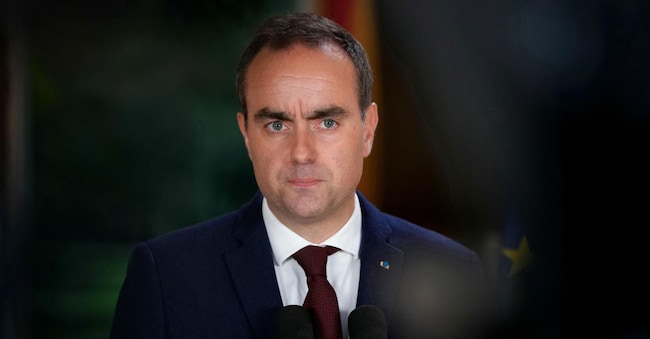
The protests? “It is their right, even to criticise the government. We have a duty to listen to them. Taking young people seriously means not only supporting their commitment but also sharing their difficulties, as well as the constraints they face.” The French Prime Minister Sébastien Lecornu attempted to calm tempers in his message to the nation. Shortly before, however, two conflicting messages had arrived at the Hôtel Matignon: a request from student organisations to be received, and the decision by the public education trade union coalition to walk out of talks with the Government.
Lecornu has not ruled out allocating more resources to schools, albeit with caution: after pointing out that Education is one of the few ministries to see an increase in spending (1.2 billion), ‘we will translate,’ he added, ‘the proposals put forward by sixth-form students into amendments. The debate will take place and everyone will have to shoulder their responsibilities, starting with the government. He also launched a period of dialogue ‘starting tomorrow, in every sixth-form college’ to gather proposals. There are five key areas of focus: replacing absent teachers, the condition of school buildings, the organisation of the school day, careers guidance and student participation.
On the subject of the violence, “I want to be clear,” he said. ‘The police have not been ordered to confront secondary school pupils. Their role is to protect property, but above all people, to enforce the law and to ensure access to schools. They must do so in a proportionate manner, in what is often a very difficult context. We must acknowledge this, and I wish to reiterate our support for them. But when a young person is seriously injured, investigations must establish the circumstances of the incident with the utmost transparency.” “I reiterated this yesterday,” he concluded, “in the National Assembly: respect for the rule of law is binding on everyone.”
The protests by sixth-formers have lost momentum. This is likely a lull ahead of Thursday’s major demonstrations: the SNES-FSU, CGT, FO and SUD trade unions have called for a day of strike action and mobilisation in support of secondary school pupils. On Wednesday, according to the Ministry of the Interior, 459 schools reported a total or partial suspension of lessons (276 total, 183 partial), compared with 891 on Tuesday. ‘Protests and disruptions’ were reported at 232 secondary schools, down from 496. The protests appear to have centred on universities: 80 university campuses are blockaded, according to the Union Étudiante. At Sciences Po, on Rue de Guillaume in Paris, near Boulevard Saint-Germain, tensions were reported with the police.
The words of the French President Emmanuel Macron, who on Tuesday evening emphasised ‘the need to maintain order and to intervene in the event of violence’, whilst at the same time calling for interventions to be proportionate and invoking ‘empathy’, prompted the Minister of the Interior, Laurent Nuñez, to temporarily suspend the use of stun grenades (Grenades assourdissantes, or stun grenades), used only by the French and Canadian police: manufactured in France, they are designed to produce a noise of 160 decibels and a bright flash of light. If thrown upwards – as stipulated by the rules of engagement – they cause no damage or injury, but there have been instances of them being thrown at people.


