The future and investments in made in Italy: meeting with Marco Bizzarri
The spark that will revive the luxury sector has two flints, creativity and finance, without underestimating new talent. The new assets (and new things to come) over the next twelve months.

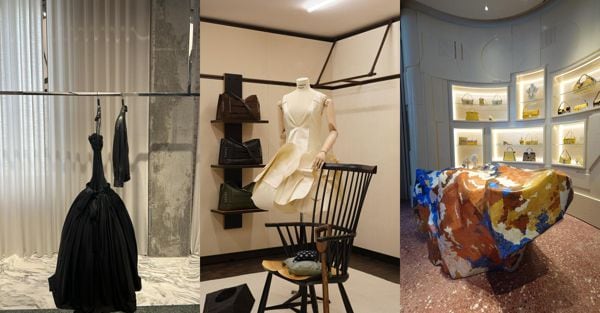
There is the cautious approach: it will be a watershed year; the apocalyptic approach: an unprecedented tectonic earthquake; the nostalgic approach: it is the end of an era. Certainly the fashion world is changing its skin and, like all metamorphoses, it is not a passage without unknowns. Every great transformation takes place under the impetus of will or need, or both, and this is what is happening. On the one hand, tariffs, geopolitical uncertainty, the seesaw of markets, on the other, price escalation, the suffering of some of the biggest brands in search of identity, the elusive relationship with the luxury of Gen Z (and beyond) have gripped the system in the grip of the need for a reaction. On the creativity front, it has overreacted, triggering a chain reaction. Between Milan and Paris, the last few fashion weeks have seen the debut of Dario Vitale at Versace, Louise Trotter at Bottega Veneta, Simone Bellotti at Jil Sander, Demna at Gucci, Pierpaolo Piccioli at Balenciaga, Jonathan Anderson at Dior, Michael Rider at Celine, Matthieu Blazy at Chanel to name but the most eagerly awaited and, in the months leading up to it, a map was needed to orient oneself in the rapid in-and-out. A map is also needed to follow the sequence of new flagships which, in perhaps the blackest moment for the online shopping giants, is redesigning the profile of entire streets. Once again, to record only the latest openings, Fendi, Saint Laurent, Jonathan Anderson, Alberta Ferretti (after the monumental Louis Vuitton in spring and soon Celine) have arrived between Montenapoleone and the Milanese quadrilateral during the fashion shows.
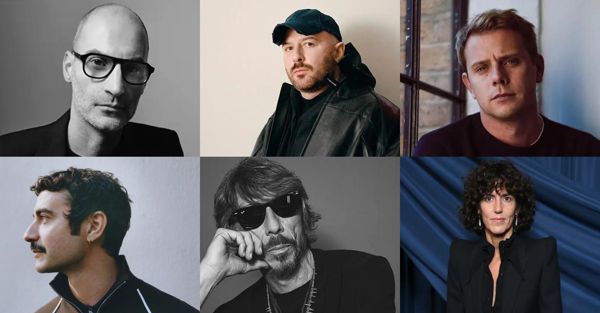
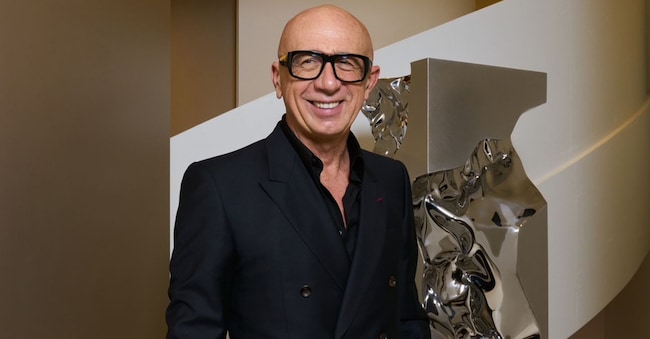
So far the drive of need. But what is the will and vision driving so many changes, beyond the urgency of revitalising sales? The impression is that, instead of hazarding predictions on where fashion will go in the coming months and even more years, we need to find the thread that unites the experience of the past with the total novelty of the present. This is why we decided to have a long chat with Marco Bizzarri, the manager who, in twenty years, has been the protagonist of the growth of Stella McCartney, then Bottega Veneta and, above all, Gucci. Then, with his holding company Nessifashion, he joined and subsequently left Elisabetta Franchi, took a majority stake in Visionnaire, and sits on the boards of Golden Goose, Illy and, as of a few days ago, Giorgio Armani. When it comes to radical breakthroughs, his experience stands out along with his stature on a linear horizon. 'I have had the good fortune to work in extraordinary brands with very different dimensions, cultures and people, and the chance to unleash all my curiosity.
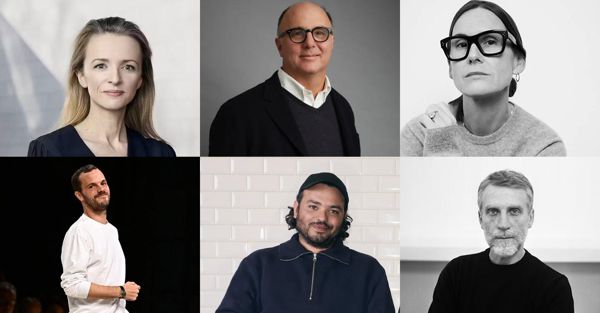
After my experience at Gucci (from January 2015 to July 2023), undoubtedly the brand that most represented me, also from the point of view of positioning and values, as well as the incredible team, I no longer felt like being ceo in other realities. I decided to find something different. Since I have always followed the philosophy that if you don't try and make mistakes, you don't grow, I have tasted - let's say - various realities in my journey'. Tasting, for a fund manager, mostly means investing and buying. What else is on the horizon in such a rapidly changing market? "If there is a period of great opportunity, I think this is it. I can't believe that the luxury trend is going downwards, on the contrary. It has always recovered, and when there are major downturns, it is time to get back into the game. There are so many changes happening, all at the same time, it is impossible that something interesting won't happen in the next 12 months'.
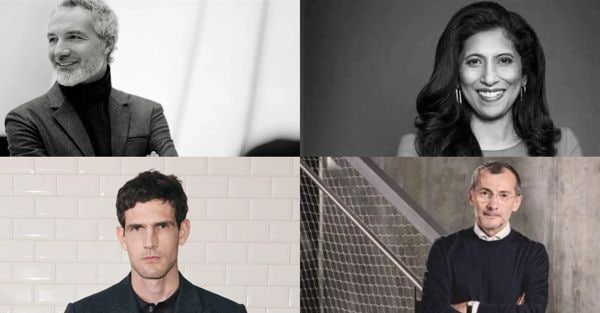
A short horizon to manage so many variables, some potentially explosive if not well governed. Let us take the shortlist of new designers at the trial of legendary maisons. "A lot has been said about creative directors, but it is underestimated that all top brands have between 80 and 90 per cent direct shops, they are retail brands. Someone of these crazy creatives will certainly manage to develop an offer consistent with the fashion house they have taken over - I don't know if it will be Demna from Gucci, Pierpaolo from Balenciaga, or others - and set off that trigger that creates attention and desirability. And then what? Are the respective CEOs, and the shareholders they have to answer to, willing to put the millions or billions on the table to be able to espouse the new aesthetic, support it, and get it into shops? How much will they produce, for how many shops, fifty, a hundred, five hundred? And with what depth? This is the crucial aspect. Because you can do the best fashion show, the most innovative event, but then the brand manager has to convey and support this change. The spark that will restart the luxury sector has two flints, not one'.
History teaches. The accelerated pace of drop marketing, with limited editions available for a very short time, only in certain shops, at ever higher prices, with the aim of immediate sell-out, has swept the concept of the season and squeezes creativity into fragmented peaks where keeping up, while maintaining aesthetic coherence, requires solid, structured designers with almost irreconcilable skills of sprinters and cross-country skiers. Bizzarri traces with great lucidity the evolution that led to what is now more "a crisis of ideas than a crisis of turnover". Let's go in order. "We lived through five, six years of maximalism, where the logo played an extraordinary role, along with self-expression, individuality, and the explosion of street style. Covid came to a halt and the quiet luxury, the soft tone, began to assert itself. As soon as the pandemic was over, the luxury sector took off at an impressive pace. The high-end consumer had been locked in, had substantial assets, also accumulated through lack of spending, and started buying like there was no tomorrow. The turnovers of big companies, some more, some less, exploded. With demand at its peak, brands raised their prices. They went up and people kept buying, which led management to avoid risk. Result? Little creativity. This incredible momentum faded exactly between the end of 2022 and the beginning of 2023, and after that it was a fairly vertical decline'. Bizzarri catches his breath after this ride that covers a decade to get to today and the crisis that has forced companies to invest in change, first and foremost stylistic change.