Strategies

'The future of art fairs between global expansion and new market dynamics'

Vincenzo de Bellis, Chief Artistic Officer and Global Director of Art Basel Fairs, speaks: role as meeting point and catalyst for meeting new collectors and experiencing new creativity. The challenge of Doha

by Maria Adelaide Marchesoni

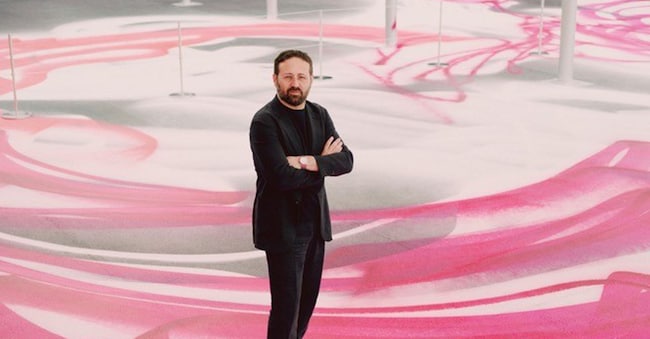
Vincenzo de Bellis, Chief Artistic Officer & Global Director Art Basel Fairs Photo by Matthieu Croizier for Art Basel

4' min read

Translated by AI
Versione italiana

4' min read

Translated by AI
Versione italiana

At a time of profound transformation for the art system, international fairs continue to represent privileged observers for reading market dynamics and anticipating developments. During Art Basel Miami Beach, the last event of the year, we met Vincenzo de Bellis, director of all the fairs in the Art Basel network, to discuss the present and future of a rapidly changing ecosystem. With him we analysed the increasingly strategic role of fairs and the challenges that await the Art Basel brand in the coming years. A particular focus is on 2026, when the group will inaugurate a new fair in Doha, marking a significant expansion into a geographical area undergoing rapid cultural and economic growth. In this conversation, de Bellis recounts his vision, priorities and expectations for an industry that, despite global uncertainties, continues to prove itself vibrant, competitive and constantly evolving.

In this phase of redefining the system, what tasks absolutely must art fairs perform?

Loading...

Trade fairs are places where new things are discovered and, above all, where art can be seen live - an essential element. This is why they play a key role in bringing everything together in one place and, in the case of the most important fairs, in offering an accurate snapshot of the system at a given time. At the same time, they are a powerful attractor for the territory that hosts them, a function that they must not lose and that requires continuous innovation. We can no longer think that the art world is exhausted between Europe and the United States: new markets must be explored, not only economically but also as centres of artistic production.
A theme that all fairs must work on is the evolution of the visitor experience: today it is still very mechanical, from one stand to another. As long as it remains that way, it is essential to ensure the utmost care, quality and precision.
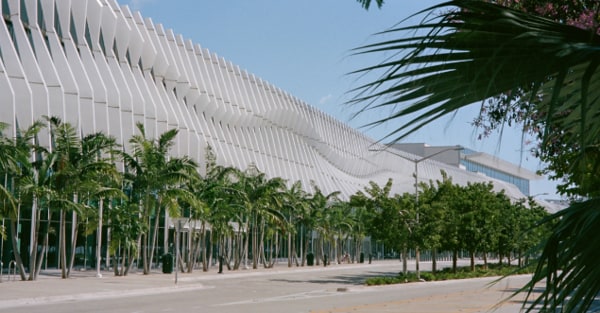
Miami Beach Convention Center

In a complex macroeconomic context, what added value can a fair offer galleries?

Gallerists should be the ones to respond. I think the reason why they participate in fairs is the possibility of meeting a large number of collectors who would otherwise not have access. The fair therefore plays the role of meeting point and catalyst.
How is the geography of collectors attending Art Basel fairs changing?

We are experiencing both generational and geographical change. Despite the strong presence of the US and Asian markets, we are seeing more and more new growth areas: India, the Middle East, South-East Asia, which are becoming key.

How is the propensity of collectors to spend changing and to what extent is it affected by generational change?

It is not related to generational change. In the last two years there has been a significant downturn, due to many factors: very strong growth in previous years, extraordinary geopolitical events and, of course, also the generational change. The new generations have a different way of buying: they do not buy like their parents for status symbols - they already have that - but they look for personal experiences. When they visit trade fairs, they want to know, to see, to be involved.

International competition from trade fairs is increasing: how is the Art Basel brand positioned?

Competition is good for everyone. It is important to have different players. Of course we are pleased that many consider us to be leaders, but the presence of other fairs pushes us to innovate more and more.

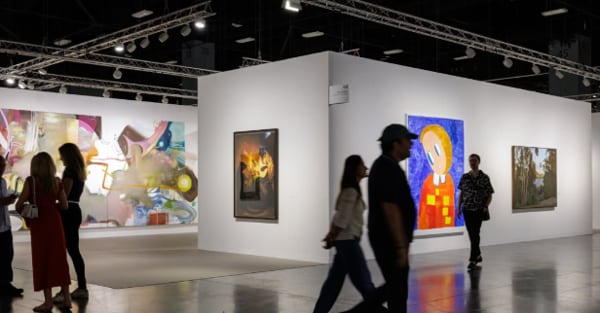
Art Basel di Miami Beach 2025, tra gli stand

QWhat are the strategic reasons that led you to choose Doha as the new fair for Art Basel?

There are several reasons for this. Doha should be read from a perspective that goes beyond the traditional view of an art world divided between Europe, the United States and, more recently, Asia as the second global market. Art Basel wants to evolve both geographically and in terms of content.
Doha links up with our Tokyo Art Week and other projects still in the pipeline: not only to develop a market that is not yet mature, but also to experiment with new content. The choice of Doha also stems from the possibility, in the first few years, to work with a different format and project approach, with the aim of growing a market that is active 365 days a year.
In that part of the world a lot of quality art is produced, often little known. Art Basel can offer enormous visibility, contributing to the growth of the entire local ecosystem - including the smaller fairs - and to the development of future collectors who can then also attend our five global fairs.
Finally, there is another element: in places where there are no preconceptions or filters, as was the case in Miami at the time of its launch, one has the freedom to experiment. Miami started as a traditional fair and became a festival: the same could happen in Doha.

How will this new fair fit in with the group's global calendar?

It was founded as Art Basel Qatar and will enter as the fifth fair in the group's calendar.

What are the main challenges for the art fair system in the coming years?

Rather than challenges, I would speak of an evolution of the art ecosystem. Fairs are a fundamental part of it, but they do not operate in isolation: they respond to the needs of the system. Those in a position of leadership can influence more, but we must not forget that the real protagonists are the artists and galleries. Our challenge is to always maintain the centrality of the artist.

And the number of galleries?

It is difficult to predict today. For us, the priority must be a kind of North Star: quality above all else. And quality is not what it was ten years ago: it changes over time, and we must avoid confusing it with mere tradition.

Copyright reserved ©
Loading...

Brand connect

Loading...

Newsletter

Notizie e approfondimenti sugli avvenimenti politici, economici e finanziari.

Iscriviti