
The future of the countryside lies in innovation
Solterre aims to create a model that combines renewable energy production with sustainable agricultural practices

2' min read
2' min read
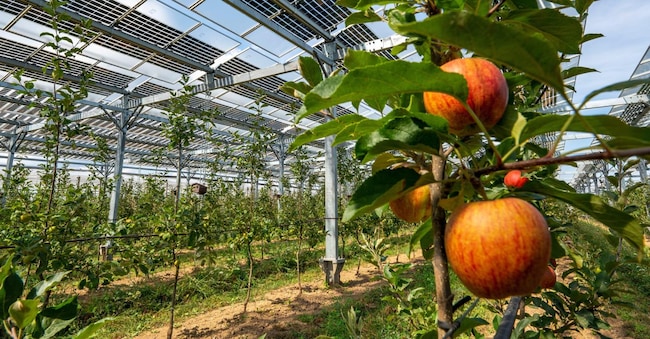
The future of the fields is made up of agriculture, technology and energy. All in a path that aims to make the most of natural resources while also exploiting all the positive aspects brought about by innovation. An experience that the Solterre farm, 'the agri-voltaic enterprise', after an initial experiment in the field, also proposes to other productive activities under the slogan 'we cultivate energy, we produce agriculture'.
"We are an agricultural company to all intents and purposes," says president Nicola Rossi, "and our idea is to export what we have already experimented with in our company, with the conviction that only by introducing renewable energy into the food production sector can we achieve the goals of the energy transition. Born out of the experience of the parent company Solar It Global, which "develops, designs and builds plants for the production of energy from renewable sources at home and abroad", today Solterre designs and exports the recipe for agri-voltaics. "Our aim is to create, with agrovoltaics, a model, a common vision that integrates and maximises the production of renewable, economic and clean energy," he adds, "with sustainable and high-tech farming and breeding practices, in compliance with regulations and ministerial authorisations, and safeguarding the return on investment.
Then there is the field work that starts with the identification of areas and then the planning and start-up of agri-voltaic activities.
In the exploratory and feasibility study phase, there is an investigation into the potential and suitability of the area to evaluate a possible transformation into an agri-voltaic system, 'also considering in its screening the impact of the project on animal welfare and its harmonious integration into the rural and landscape context'. Then, based on location, size and cultivation, the 'customised strategy for the park's management' is prepared. At the end of this process begins the bureaucratic-administrative part preparatory to the realisation and start-up of the plant. This is what Nicola Gherardi, Agribusiness Director of Solterre, defines as the new course of the countryside. "We want to combine energy and agricultural activities in a perfectly integrated and synergic system where precision farming and the most innovative agricultural techniques lead to a completely sustainable production cycle". That is not all, however. "The application of these techniques will also allow us to measure the carbon footprint of our production and earn carbon credits for every tonne of CO2 not emitted or absorbed."
Currently, the company, which benefits from the work of more than 150 professionals and 'highly specialised' technicians, has 400 hectares of contracted land where agri-voltaics is developed and where the most diverse cultivation processes are developed. "We go from fruit crops to horticultural crops," the director continues, "and the response we are seeing among landowners is positive, also because it is a new way of farming where the energy produced gives us the opportunity to optimise production with the precision processes employed thanks to innovation. Models and recipes that we are also trying to export to other realities with success".

