We learn from our mistakes

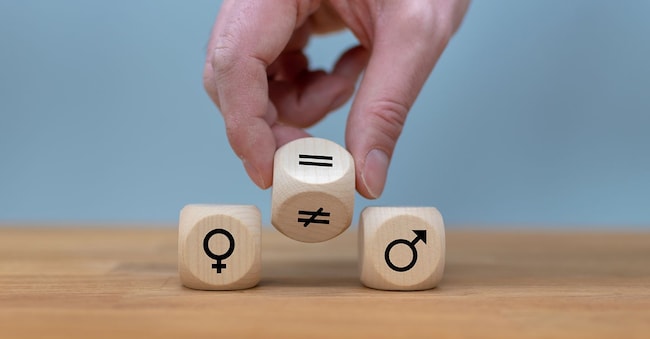
The challenge of gender equality: how organisations can promote it today

The economic gender gap and the need for education and alliances for equality

by Veronica Giovale*

 (Adobe Stock)

4' min read

Translated by AI
Versione italiana

4' min read

Translated by AI
Versione italiana

Cultural backlash and organisational fatigue show how DE&I (and beyond) needs to regenerate and move forward inexorably. I therefore return to talk about a demodé topic: gender equality. And I do so after having been invited to listen to a round table at Palazzo Marino (Milan) on 'Women, financial autonomy and self-determination: a necessary binomial', where several broad-minded women spoke, all role models who, through their studies, their work and their behaviour, are influencing the whole of society.

As is often the case in these moments, when you allow yourself to listen and activate the nurture mode, your mind wanders and connects various dots. I have therefore noticed that in this last two years I have created formats for learning and reflecting on the meaning and behaviour that arise from the intertwining and relationship between freedom, autonomy, participation, violence, privilege, power, visibility, choice and money, embedded within the dynamics of gender (and beyond). I have done this both within large companies and in various contexts where the formats were dedicated to citizens, in a social sustainability key.

Loading...

My first reflection on the title of the round table was to ask whether, how and how much people really question how they personally experience money, power and visibility. How much they link their self-determination, or part of it, to financial autonomy.

From my personal perspective, as we live in social systems in which economics and money have taken on a certain relevance (whether we like it or not), we can say that thefinancial autonomy determines us as subjects, offering us a certain degree of power. A power linked to our sustainability in the medium to long term, to freedom of choice, to visibility, to the possibility of remaining in or leaving a situation that is narrow to us. I would therefore add a substantial nuance to the title of the round table: the importance of achieving full emotional autonomy, as well as financial autonomy. These two aspects are related, but do not necessarily travel hand in hand. Being autonomous, in a profound sense, and self-determining means feeling an active part of one's existence, while also coming to terms with a certain inner loneliness. It means starting from oneself and protecting oneself - in a very broad sense - primarily by oneself.

The cultural dynamic in which we are immersed often sees, in large numbers, women highly trained to take care of others and sometimes to delegate, underestimate or even downplay the importance of self-determination through (also) financial autonomy. Men, on the other hand, for historical and social reasons, are often more trained to decide what is best for themselves and to make themselves, willingly or unwillingly, visible in the public space (obviously with all due personal and cultural differences).

The gap between men and women

Some data were shared at the round table: five years after graduation, men earn 15% more than women and, with the birth of children, the gap widens. In this case, men earn 34.3% more. Research also tells us that 80% of women do not negotiate their economic recognition for fear of appearing aggressive or ungrateful. This is a far cry from the attitude of most of the men who populate the working world and who, for example, work much more on networks, brand reputation, self-promotion and the dissemination - at every useful opportunity - of what they do at work, even in its smallest aspects. According to the World Bank, using data from the Global Findex Database, 740 million women in the world do not have a bank account. In Italia, according to a simplified estimate, one in five women have no direct access to the formal financial system. It is estimated that 67% of the female population has a bank account and manages it independently, while the remaining percentage has a joint account or does not even have one.

To pick up on the concept of protection expressed in the previous lines - and which I stated I meant in a very broad sense - the Longevity and Pension Indexes offer a disconcerting scenario, once again, for women. Poor pension culture, poor financial awareness and lower earnings are charting a course towards a longer but also less secure life for women (as well as for young people).

A question then arises for those who manage people - and their diversity - in organisations: do managers know that these cultural dynamics exist? How do they manage them? And what conclusions do they reach in experiencing the effects of these different cultural and behavioural patterns?

It is therefore urgent to continue working on:

- the crystallisation of roles, which attributes caring activities to one gender and socially relevant activities to other genders;

- the abandonment of a hegoriferous and individualistic view of privilege, in favour of an ethic of care that shares privilege for the betterment of the community and oneself;

- financial education, to remove the tendency to delegate - partially or totally - on financial and social security aspects. Each person should learn to fully manage these aspects of his or her existence;

- Constant awareness work on the multiple aspects of self-determination, from an intergenerational perspective;

- the expansion and consolidation of alliances and synergies between schools, universities, institutions and companies.

Organisations and all social actors have a duty - and also an ethical and economic interest - in continuing to address these issues. To think that gender equality has been achieved is not only demodé, it is a reductionist and superficial reading of reality. Comfortable, only in appearance, for those who fear losing their privileges.

*Senior Consultant, Newton Spa

Copyright reserved ©
Loading...

Brand connect

Loading...

Newsletter

Notizie e approfondimenti sugli avvenimenti politici, economici e finanziari.

Iscriviti