
Giacomo Puccini's 'Trittico' in Washington and New York
Gianandrea Noseda conducts the National Symphony Orchestra, baritone Roman Burdenko, soprano Erika Grimaldi

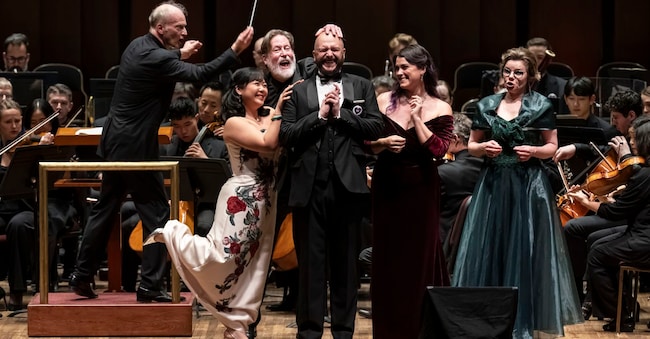
The most lasting and permanent bridges with America are built with culture, and it is not only Raphael who attracts queues of visitors, in the great monographic exhibition at the Metropolitan in New York, but also our own Gianandrea Noseda, principal conductor for nine years of the National Symphony Orchestra: a somewhat institutional ensemble, based in Washington, in what until February was called the Kennedy Center, before the imposition of the new contested name 'Trump Kennedy Center'.
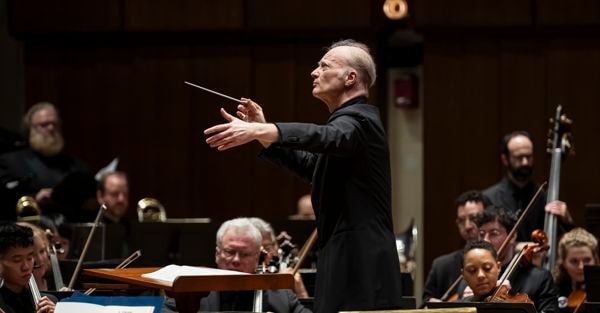
The Maestro, who is beloved here, has planned some eloquent gestures to seal his support for the ensemble, suddenly homeless for two years due to restoration work on the historic hall, which dates back to the 1960s. The first of these sounds particularly important, because it is the revival of 'Trittico', the last opera Giacomo Puccini completed (before the 'Turandot' left unfinished at the finale) and written for a New York audience in 1917. Noseda conducts it in its entirety, three medallions in a very modern symphonic setting, performed with polish and great instrumental precision, with a cast of yesterday's stars and young people that thrills in the Washington hall. But even more so in repetition, at Carnegie Hall in New York, where the triumph is transformed into tangible, eloquent solidarity.
For the homeless orchestra - momentarily, one hopes - the goal remains the defence of those values that the exhibition on John Kennedy and culture on the top floor of the building continues to remind us of. The level of civilisation of a country is shown by the degree of culture, the then President never tired of reiterating. That at the White House he met Stravinsky and Pablo Casals, just the musical high points of the time. A meaningful reminder for today's America.
National Symphony
The National Symphony, while handing out pins with a heart and its own initials to the public, is determined to defend itself: it will play in the suburbs, it will look for temporary venues, it will sow music even where it has not yet arrived. Following in the footsteps of Toscanini's old tours, who also travelled to remote places in the States. In the meantime, with a luxurious text of encouragement, Noseda has provided the first string stands with a precious handful of fourteen of his own instruments, all signed, of noble Italian lutherie. And the hue can be heard, in the velvet of the arches, in the precious sparkle of the articulations. "Homeless, all right. But with designer clothes.
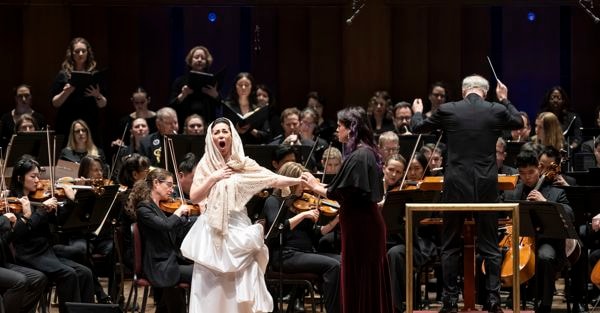
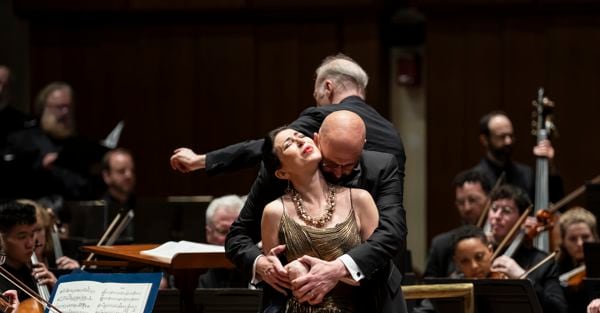
The orchestra is averagely young, in a hyper-disciplined ensemble. Another interesting and original aspect of the "Trittico" is the combination of the voices (probably the largest cast in the history of opera) of veterans such as Gregory Kunde, the thoroughbred Rossinian, then Verdi tenor and now Puccini tenor, with young people from the Washington Opera's educational project, all of whom are well prepared and also very fluent in dealing with librettos that are so Italian in their vocabulary. Especially 'Gianni Schicchi', Tuscan to the core, lashing and cutting, with a mocking humour that sends the audience into raptures. Of course, one reads the surtitles (and the translation is sometimes bizarre, because for example at the improper 'slut' in 'Tabarro' everyone laughs with gusto) but one perceives that characteristic trait of Italian opera, which always makes the voice sound like an instrument and the orchestra sing like a voice. Noseda in particular plays the symphonic card of his own, enhancing the daring texture of the writing: the antiqued white paste of 'Suor Angelica', with a chorus of girls that seems to have come out of an ancient convent, and then the sketchiness around the drama of the fetid barge on the Seine, and again the experiments of 'Schicchi', the dissonances for example, always in a biting theatrical function.

