
The go-ahead for the sale opens the financial game for Inter and Milan
Control of the facility will allow for a multiplication of matchday and corporate hospitality revenues, which today account for less than 20 per cent of turnover, compared to 30-35 per cent in the Premier League and Bundesliga benchmarks
by Marco Bellinazzo
 Aggiungi Il Sole 24 Ore
ai preferiti su Google
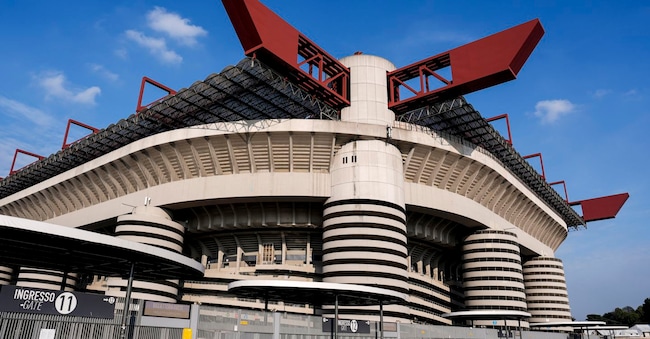
nter and Milan have welcomed with relief after six years of political-administrative vicissitudes the City Council's approval of the sale of the San Siro stadium and surrounding area. 'An historic step for the future of the club and the city,' reads the joint note, which paves the way for the construction of a new, 'world-class facility, destined to become a new architectural icon for Milan and a symbol of football fans' passion.
Beyond the rhetoric lies a crucial step from an economic and industrial perspective. For the first time, the two Milanese clubs have the opportunity to go beyond the twentieth-century model of concessionary management and enter into full ownership of the stadium asset, with the consequent capacity for capital and commercial enhancement. Direct control of the facility will in fact allow them to multiply matchday and corporate hospitality revenues, which today weigh less than 20% of the turnover, against the 30-35% of the Premier League and Bundesliga benchmarks. The premium seats, the most valuable ones in terms of revenue, cover in the San Siro, even though restructured in recent years, about 3% of the total capacity, against a European average ranging from 10 to 15. A modern stadium can guarantee an increase in revenue estimated between 50 and 70 million per year for each club, through naming rights, extra-football events, retail space and precisely premium services. From the perspective of financial sustainability, these flows are the prerequisite for reducing dependency on player trading and TV rights and consolidating the capitalisation of clubs. A not secondary aspect, in view of the new UEFA parameters of sustainability financial regulation.
For Milan, controlled by RedBird, the deal is part of a growth strategy aimed at increasing the club's enterprise value and integrating football, media and entertainment. For Oaktree's Inter, which has just closed its accounts to 30 June 2025 with record Serie A revenues at 567 million, the new stadium represents a crucial lever to enhance the value of the investment. More generally, the creation of a long-term real estate asset offers the two North American funds both a prospect of economic return and a tool to make the club more attractive in view of a future sale. The estimated value of the operation - between 1.2 and 1.3 billion - implies the possibility of structuring a medium-long term financial plan, based on project financing and recourse to dedicated bond issues, with guarantees linked to future flows generated by the stadium. In this sense, the go-ahead for the sale could facilitate the involvement of private and institutional investors.
However, some critical issues remain, such as the timing of the final approval, with the deed having to arrive by November 10 to avoid the Superintendence's constraint for the 70 years of the second ring (after which the teams will have to pay a first instalment to the Municipality of 73 million out of the total 197) and the construction costs subject to material inflation (the first phase will start in 2027, with the construction of the new stadium by 2031, while the redevelopment of the Meazza area will start between 2032 and 2035). "For the architectural design it will take some time before it is made public," explained AC Milan president Paolo Scaroni yesterday, "but I am confident because it is difficult to imagine it in the world better than Foster and Manica. It will be a stadium for everyone so it will be something positive in that area of Milan'.
'Milan and Inter are acting transparently in the interest of the city and Italian football. A new stadium represents added value, an asset not only for the clubs. It will bring jobs, attraction in terms of tourism. The goal is to operate in the interest of the Milanese community,' Inter president Beppe Marotta said in the evening.


