
The Government aims to increase oil production, but without exceeding the limits already set

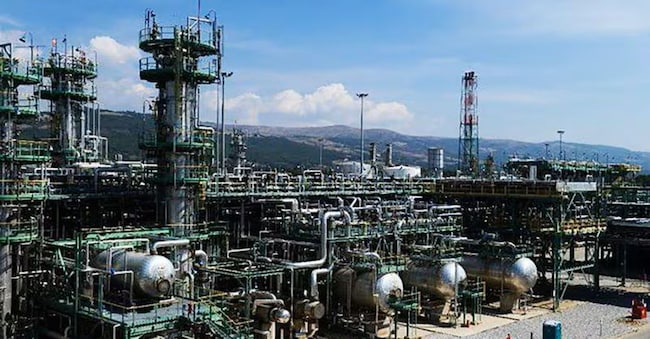
To increase oil production in Basilicata, whilst not exceeding the maximum production limits set out in the existing agreements between the Region and private operators. This is the guidance set out in the decree approved by the Government which, whilst setting the objective of increasing domestic production to reduce dependence on imports, does not call into question the underlying framework provided by the agreements governing the management of Basilicata’s oil fields. This was also clearly reiterated by the Minister for the Environment and Energy Security, Gilberto Pichetto Fratin, and the President of the Basilicata Regional Council, Vito Bardi, who, in a joint statement, pointed out that the maximum oil extraction limits in Basilicata are governed, for Val d’Agri, by the Memorandum of Understanding signed in 1998 and, for Tempa Rossa, by the Memorandum of Understanding signed in 2006.
There are currently two groups of extraction concessions operating in Basilicata: Eni-Agip, with the Trend 1 Project in Val d’Agri, and a second group under Total’s name, with the Tempa Rossa Project. The Val d’Agri field, discovered in 1987 and brought into production in 1993, covers an area of 300 square kilometres and is divided into three sections: ‘Cerro Falcone’, ‘Monte Enoc’ and ‘Monte Alpi’. As for the second group, the “Tempa Rossa” project – initially comprising three separate concessions – is now known as the “Gorgoglione” concession, which is not yet in production. The bulk of crude oil production is concentrated in Val D’Agri, where Eni holds a majority stake of 60.77 per cent and Shell a minority stake of 39.23 per cent.
The agreements signed when the concessions were first granted – according to Bardi and Pichetto Fratin – remain “fully in force and binding: there is no intention, either on the part of the Government or the Basilicata Region, to amend them”. In essence, they explained, “production in Basilicata may increase or decrease depending on the needs of the time, but always in compliance with the limits set out in the protocols. This is what has happened in previous years as well. Today, at a time when strengthening the country’s energy independence is a priority – both for security reasons and to ensure the efficiency of the system and keep costs down for households and businesses – it is natural to also look towards making full use of national resources. However, this will take place without any change to the existing production caps: extraction will remain within the established limits’. The debate on extraction limits arose after, in mid-September, the Government issued a decree on strategic energy activities, with the aim of making authorisation procedures faster and more certain, including the possibility of appointing an ad acta commissioner, at the request of the Regional President or by the Government, subject to the Region’s involvement. Furthermore, the decree does not alter the environmental safeguards or compensation for the local area, including the royalties allocated to the municipalities and communities of Basilicata, which increase in proportion to the production actually delivered.
According to the latest figures from the Ministry, released on 25 August but relating to April 2026, total natural gas production in the Basilicata region amounted to over 322 million standard cubic metres. This figure places Basilicata in first place amongst Italian regions for this type of production. The same is true of crude oil, production of which far exceeded 1 million tonnes in the first four months of 2026. Basilicata accounts for approximately 80 per cent of all the oil extracted in Italia.

