
The Government is assigning a further 500 military personnel to the ‘Strade Sicure’ initiative. The operation, which has divided the majority, has been stepped up
They are from the “Folgore” Parachute Brigade. Whilst the Lega has pushed for an immediate increase in the military presence, Fratelli d’Italia has taken the proposal a step further by suggesting that this increase should be based on a reorganisation. Forza Italia, for its part, has highlighted the need to strengthen security whilst ensuring that the military do not become permanent substitutes for the police force.

Key points
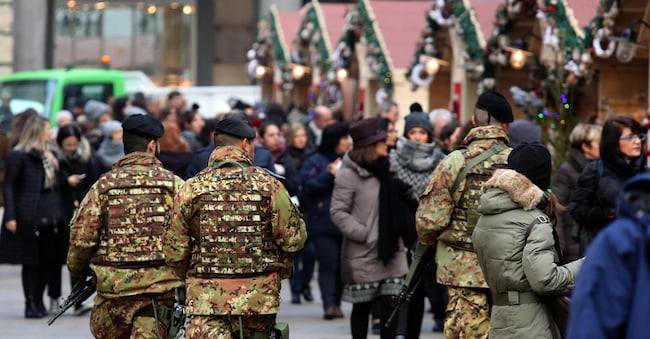
Following the serious incidents on 18 October in Milan, the Government has decided to send a further 500 military personnel to the Lombard capital as part of Operation ‘Strade Sicure’. Hailing from the “Folgore” Parachute Brigade, they will be on duty until 31 December 2026, authorised as public security officers, and will work alongside the police and the Carabinieri.
The solution is set out in the decree-law to strengthen measures to combat violence and ‘urban guerrilla warfare’ (‘Urgent provisions on public safety and combating juvenile crime’), approved by the Council of Ministers on Tuesday 20 October. The 500 military personnel are in addition to those already supporting the police in patrolling the territory. In total, there are currently 6,800 military personnel deployed under the ‘Safe Roads’ programme, spread across 58 provinces. These will be joined by the 500.
The Ministry of Defence: ‘Respect for respective areas of responsibility with the police forces’
In a statement, the Ministry of Defence clarified that Minister Crosetto will ‘make them available immediately to strengthen security measures across the country. 500 military personnel – the document goes on to state – will make it possible to reinforce garrisons, step up surveillance of sensitive sites and increase the capacity to monitor the territory. Their deployment will also help to make the allocation of resources more efficient, enabling the State Police and the Carabinieri to focus their personnel more on activities aimed at preventing, responding to and combating crime, as well as on public order duties. The military personnel will operate within the scope of the tasks set out by the ‘Safe Roads’ programme, in coordination with the police forces and in accordance with their respective areas of responsibility. ‘This reinforcement enhances the overall capacity of the security operation and allows for the best possible use of the available expertise,’ adds the Ministry.
“Strade Sicure” is the Armed Forces’ most widespread and long-running operation across the country, carried out alongside the police to combat crime and terrorism in numerous Italian cities. The League, Brothers of Italy and Forza Italia have reached an agreement to strengthen the operation, but differences remain over how to deploy the military and their role in the long term. An initial political agreement has been reached, following an initial rift earlier this month, when the Chamber of Deputies’ Defence Committee approved a resolution providing for an increase in the contingent from around 6,800 to 10,000 troops. In the end, the motion received the backing of the entire majority.
The operation
The operation, which began on 4 August 2008 and involves the deployment of Army personnel to support the police in helping to ensure public safety and prevent crime, had, however, previously given rise to some disagreements within the governing coalition. Whilst the Lega pushed for an immediate increase in the military presence, Fratelli d’Italia countered by proposing that any increase should be based on a comprehensive reorganisation. Forza Italia, for its part, emphasised the need to strengthen security whilst ensuring that the military did not become a permanent substitute for the police. These differences emerged in particular between Defence Minister Guido Crosetto (Fratelli d’Italia) and Deputy Prime Minister and Minister for Infrastructure and Transport Matteo Salvini (Lega).


