
‘The Great AI Deception’: understanding the ‘enemy’ to make better use of it
Martina Pennisi’s book delves metaphorically into the major languages underpinning generative AI to ask the questions that really matter

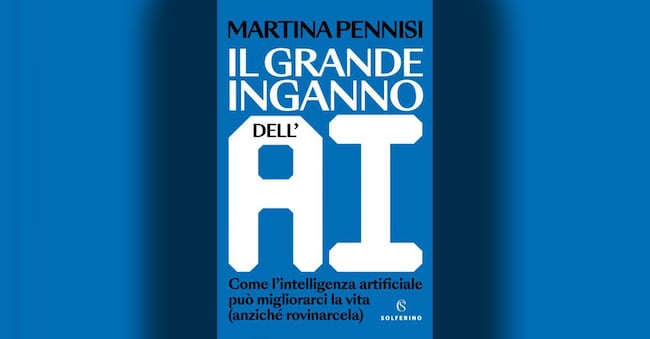
‘If you know the enemy and know yourself, your victory is assured,’ wrote Sun Tzu in *The Art of War*, but if we apply this maxim to the contemporary debate on artificial intelligence, we might say that it is perhaps more important to know one’s friend – or at least those who behave as such. ‘The Great Deception of AI’ by Martina Pennisi, a journalist at *Corriere della Sera*, published by Solferino, is the perfect book to equip yourself for one of the greatest contemporary adventures: metaphorically delving into the major languages underpinning generative AI and asking them all the questions we need to understand what on earth they are, how they work, and why they behave as if they were our friends, classmates, psychologists, colleagues or mirrors – without ever having actually told us that they were.
Here is the first major deception. Pennisi is right to point out that the other major digital revolutions had a more obvious mission: Facebook connected people, whilst Google finally allowed us to access web content easily. Language-based interfaces, such as ChatGPT, have not declared their intentions but have capitalised on their design to make us believe we are engaged in a dialogue between equals, just as we do when using WhatsApp.
We have thrown ourselves into exploring generative AI at a pace never before seen with other digital tools. This is the essence of design: its ability to influence how things are used. Think of the first iPhone. That glossy screen, which opened up the world of mobile internet and apps in a simple, elegant, fast and fun way, was a breakthrough; and it worked so well that we’ve never looked back – instead, the whole industry has had to adapt. This is what design is capable of, sometimes.
Not that it’s perfect, as an interface. Pennisi notes that searching for information, refining bits of knowledge, and delving deeper into an increasingly complex topic by writing or speaking to the AI can sometimes involve a great deal of cognitive effort. Is it really the most efficient solution? What other avenues are there? And how might this chatbot’s constant demand for new interactions be nothing more than the generative version of the endless scrolling we know so well from social media platforms? We wouldn’t want to fall for it again, in 2026 and beyond.
Part of what will happen depends on ‘cognitive-artificial’ natives – as we might call the first generation to grow up with a machine that generates answers and helps formulate questions, whilst digital natives have learnt to search for answers. These are the young people who today boo at end-of-academic-year speeches at major American universities the moment artificial intelligence is mentioned, because it is mainly junior staff who are, for now, being sidelined by the advent of these tools – so how are they being trained? Will they be an enhanced generation, capable of skipping the grind? Or the first to live in a world where work will change in terms of its role and presence, as some of Silicon Valley’s founders predict?


