
The great story that weaves together past and present

History is entertaining. And it is fascinating. It is a form of aesthetic enjoyment. And, just like art, it evokes intellectual pleasure. This was explained in crystal-clear terms, even during the dark and desperate years of the Second World War, by the great French historian Marc Bloch in his famous *Apology for History*, written whilst in hiding, before he lost his life, shot by the Nazis at Saint-Didier-de-Formans, near Lyon. It is almost a civil testament, left for posterity for entire generations of scholars, students and citizens of the world.
History is not merely a jumble of dates or a dry list of battles, isolated facts or events that one can rummage through at random, as one might at a flea market. Rather, it is rigour, passion, the active study of sources, and an analysis of the geography of peoples, the economy and societal changes. It can also become a useful tool for trying to understand the upheavals and seismic shifts in the world around us.
So, as every year, the popular history lectures at the Medieval Festival, taking place in Gubbio from 23 to 27 September, will provide a valuable opportunity to explore the major issues facing contemporary society.
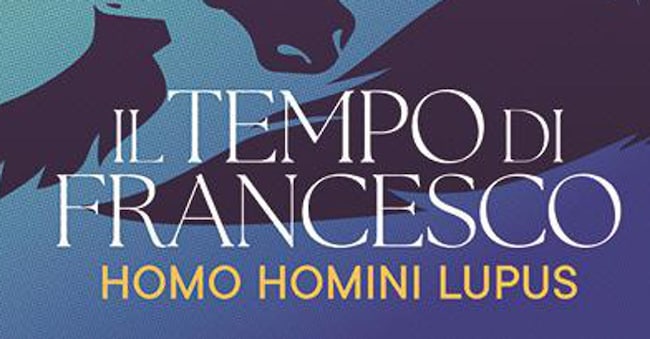
The Age of Francis is the title of the twelfth edition: a journey to the dawn of the 13th century and through the following decades to celebrate Francis of Assisi (1182–1226), eight hundred years after his death. Around a hundred leading figures will take part in what has now become Italy’s most important event dedicated to the Middle Ages: some of the most distinguished Italian and European medievalists, as well as art historians, writers, scientists, philosophers, architects and journalists.
This great historical narrative weaves together past and present. This is already hinted at in the subtitle of the poster announcing the 2026 edition: ‘Homo homini lupus’, ‘Man is a wolf to man’.

