
The green redemption of the Isle of Man, Biosphere Reserve
Projects in the field from nature reserves for bees to the preservation of the basking shark, a species threatened by plastic pollution

3' min read
3' min read
Tax haven, motorbike racing and gambling. This is the Isle of Man's (IoM, not to be translated as the Isle of Man: the name comes from the Celtic tribe of Manx) old identity card. A territory that has always been anchored in the Irish Sea with almost equal distance from both Liverpool and Dublin. A world unto itself with an autonomous Parliament and with only the obligation to be dependent on the British Crown.
It is a real old money community, but one that is resolutely pursuing a green redemption on the guidelines of sustainability, so much so that it has convinced Unesco to accredit it as a Biosphere Reserve. For Cath Robertshaw, chief operating officer of Eyesea, a techno-environmental non-profit, it is a status that "helps us maintain a balance between development and conservation, ensuring that natural beauty and cultural traditions are protected for future generations".What's more, it has to be said: in terms of energy, the island in question with its 572 square kilometres has always had a hydroelectric production system (a huge red cast-iron wheel still stands in operation in Laxey), and so the trams in Douglas, the capital, used to run on electricity or horses. And they still do to this day, much to the delight of tourists. Now, however, it may be wind power time, although several citizens' committees seem not to like it and in fact there is not a single blade turning on the island yet. The highest point here is Snaefell, a good 621 metres above sea level. Cuckoo's bush: very few conifers are to be seen. This is probably one of the reasons why several reforestation projects are underway. The latest of which, which has just started, also aims to reason about the possibility of selling carbon credits to local businesses.
Wild Flowers and Wildlife
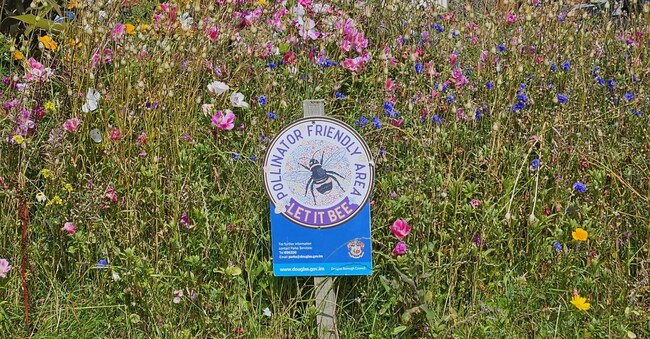
.With the Wildflowers of Man project, on the other hand, the aim is to protect and promote Manx's native wildflowers, starting with the heath orchids, but also the heathers, gorse and ferns that are best adapted to the coastal winds, forming rainbow-coloured carpets. But the Isle of Man is also a special place for wildlife. A huge amount of information is generated by groups of naturalists, volunteers and organisations such as the Manx Wildlife Trust, Manx National Heritage and the Department of environment food and agriculture's Ecosystem team. And to date there are no less than five nature reserves where bees are also protected. Then there are the cats - Man's cats are famous because they have no tails - and the preservation of the basking shark. As big - it can reach 12 metres in length - as it is harmless: it only feeds on plankton or, unfortunately, plastic. And it is precisely to defend the sea from pollution that Eyesea has developed an app to which everyone can contribute their photos, updating and mapping global pollution and maritime risks. The scope of this app is worldwide, but it was created by a team from Manx. 'Data collection,' explains Robertshaw, 'is critical to understanding and addressing pollution. With the tools and analytical dashboard Eyesea supports the clean-up of our oceans, waterways, coastlines and countryside'. Because here cleantech development goes hand in hand with fintech. The funds, in fact, are not lacking.

