Nuclear Power and AI

‘Technology is playing an increasingly important role in the nuclear sector, but safety comes first’

Minister Gilberto Pichetto Fratin speaks out. On the financing of power stations, ‘we do not rule out direct state involvement’

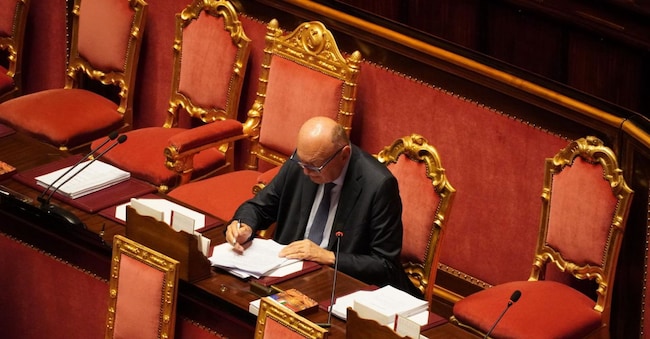
GIlberto PIchetto Fratin, ministro dell'Ambiente e della Sicurezza energetica

7' min read

Translated by AI
Versione italiana

7' min read

Translated by AI
Versione italiana

(Il Sole 24 Ore Radiocor) - Digital technologies are playing an increasingly important role in the nuclear sector. However, in the production of this type of energy, ‘safety comes first and every new technology must prove itself to be reliable before it is used, particularly where functions directly linked to plant safety are concerned’: Gilberto Pichetto Fratin, Minister for the Environment and Energy Security, takes stock with DigitEconomy.24, a report produced in collaboration with Digit’Ed on new technology ahead of the approval of the implementing decrees for the enabling act on sustainable nuclear energy, which has laid the legislative foundations for the re-regulation of nuclear power generation in Italia.

As for how to finance nuclear power, Pichetto explains that various instruments are being considered: ‘Contracts for difference, long-term Power Purchase Agreements and public guarantee schemes can help to reduce investment risk and, consequently, the cost of the energy produced. We do not rule out direct state involvement, particularly for the first projects.’ The mid-1930s remain a key timeframe for the first possible plant developments.

Loading...

Read the November issue of DIGITECONOMY24

Minister, SMR and fourth-generation technology is advancing at an exponential rate. The first reactors will be operational, as you have estimated, in 2033–34. Is there not a risk that the regulatory framework you are drafting today will already be obsolete by the time the technologies we will have in ten years’ time come into use?

It is precisely to avoid this risk that we have chosen to establish a regulatory framework based on the principle of technological neutrality. We do not wish to tie the future of nuclear power to any particular technology, but rather to define a system of requirements, procedures and responsibilities that can keep pace with the evolution of nuclear technologies over the coming decades. Enabling Act No. 169 of 29 September 2026 represents an important step in this direction. Following extensive preparatory work, which began with the National Platform for Sustainable Nuclear Energy, we finally have a legislative basis for regulating nuclear energy production in Italia once again. We are working diligently on the delegated legislative decrees, with the aim of establishing a comprehensive framework covering national planning, authorisation procedures, nuclear safety, the management of fuel and radioactive waste, right through to the most advanced applications, including Generation IV and fusion. A key element will be the strengthening of the national system for the regulation and oversight of nuclear safety, a role currently fulfilled by the ISIN (Inspectorate for National Safety and Radiation Protection), whose remit and resources will need to be adapted to new energy production technologies, ensuring the highest standards of safety and independence. As for the timetable, the mid-2030s remain the target timeframe for the first possible projects. The actual start of operations will naturally depend on the maturity of the technologies, investment, authorisations and the industrial capacity to build the plants.

You mentioned the identification of an initial group of SMR technologies. How will the technological choices be made?

There are currently several SMR technologies under development, at varying stages of maturity. Some are based on established solutions, such as light-water reactors, whilst others belong to the family of advanced reactors and feature innovative characteristics, including in terms of fuel, cooling systems and potential industrial applications. For the first projects, it is reasonable to expect that the choices will favour more mature technologies, preferably those already implemented and tested in other countries. This would help to reduce risks and construction times, whilst drawing on international experience. At the same time, we will continue to support research and development into advanced technologies, including fourth-generation technologies, as well as the development of fusion energy, areas in which Italia possesses leading scientific and industrial expertise. We also wish to promote the participation of Italian industry and research in international programmes, including through demonstration projects and initial implementations, both in Italy and abroad, which will help to consolidate the expertise and experience needed for the future development of the national nuclear sector.

 Microsoft and Amazon are buying nuclear reactors for AI. Furthermore, artificial intelligence and data centres have a constant appetite for energy that renewables alone, due to their intermittent nature, struggle to meet. Once Italia’s nuclear power is operational, what will its actual share of the energy mix be?

The rise in electricity consumption driven by artificial intelligence, data centres and the electrification of industrial processes is profoundly changing the outlook for energy systems. This transformation requires us to consider the continuity and reliability of supply, as well as the amount of energy needed to meet growing demand.

Nuclear power can play an important role, complementing that of renewable energy sources, thanks to its ability to generate energy continuously and with low emissions – a feature that is particularly useful in an electricity system characterised by a growing share of non-dispatchable generation.

Loading...

I have said this many times before and I will say it again: it is not a question of choosing between nuclear and renewables. This Government has demonstrated through its actions just how strongly it believes in the development of renewable energy. In recent years, we have achieved levels of new installations never seen before. And we intend to continue along this path, further accelerating the growth of renewable energy sources.

A return to nuclear power does not call this commitment into question, nor will it take away from the role of renewables. On the contrary, we want to build an energy system in which the various sources can complement one another, ensuring clean, safe and competitively priced energy for citizens and businesses. The scenarios developed as part of the 2024 National Energy and Climate Plan (PNIEC), based in part on analyses by the National Platform for Sustainable Nuclear Energy, show that nuclear power’s contribution could become significant in the long term, with its share capable of covering between 11 per cent and 22 per cent of national electricity demand by 2050. Even if the first plants were to come online in the first half of the 2030s, the quantitative contribution to the electricity mix would initially be necessarily limited, but we must look well beyond the first installations. Renewables are already at the heart of our energy policy today and will continue to grow over the coming decades. Nuclear power will gradually complement them, taking on an increasingly important role in our electricity system. We must be able to look beyond 2035 and even beyond 2050. The choices we make today concern not only the energy system of the next twenty years, but also the one on which our children and grandchildren will be able to rely. It is above all them that we must have in mind when planning the country’s energy future.

 Let’s turn to the costs: what estimate of the price per MWh for Italian nuclear power are you working with, and how does it compare with the cost of renewables supplemented by storage systems? Above all, what will the financial structure be: will we see Contracts for Difference (CfDs), long-term industrial Power Purchase Agreements (PPAs) or direct state involvement to attract private capital?

When it comes to the cost of nuclear power, as with that of renewables and other energy sources, comparisons are often made that are not particularly meaningful. To say that renewables can generate electricity at 50 or 60 euros per megawatt-hour, whilst nuclear power may cost 100 or 110, does not necessarily mean that the former are more cost-effective for the electricity system. These are generation costs, but energy must also be available when needed, and this entails a cost – often a dominant one – that we must take into account. As the International Energy Agency also points out, as the share of non-dispatchable renewables increases, so do the requirements for storage, flexibility and grid reinforcement. We must therefore compare the overall costs of the electricity system and identify the most cost-effective energy mix, as we have done in the analyses of our Integrated National Energy and Climate Plan. Nuclear power also offers important long-term characteristics: an operational lifespan of up to 60–80 years, a limited land footprint, high energy density and continuous generation. Whilst initial investment is high, operating costs are relatively stable. The cost of capital therefore becomes a decisive factor, alongside the technologies adopted and construction timescales. The International Energy Agency has also estimated that extending the lifespan of existing European nuclear power stations could reduce final electricity prices by around 10 per cent in 2030, compared with a scenario without such measures. As regards financial instruments, we are assessing the various solutions already tried and tested at international level. Contracts for difference, long-term Power Purchase Agreements and public guarantee schemes can help to reduce investment risk and, consequently, the cost of the energy produced. We do not rule out direct state involvement, particularly for the initial projects, as is already the case – albeit using different instruments – for renewables and other energy infrastructure. The aim is to attract private capital through a fair sharing of risks, whilst ensuring the sustainability of the projects and compliance with European rules.

IDigital technology is not only used to operate reactors, but also to protect them.  Will predictive artificial intelligence or autonomous robotics play a formal role in the control protocols and emergency management of future Italian power stations?

Digital technologies are already playing an increasingly important role in the nuclear sector and are set to become ever more significant in plant safety as well. Think of advanced monitoring systems, predictive maintenance, digital twins and robotics for inspection activities. These tools enable us to gain a better understanding of how plants behave, identify any anomalies promptly and take action before problems arise.

Artificial intelligence will be able to further enhance these capabilities by analysing large amounts of data and supporting operators in their monitoring, maintenance and management of abnormal situations. Robotics, including autonomous systems, will, in turn, enable operations to be carried out in environments that are difficult to access or characterised by radiological risks, thereby reducing workers’ exposure.

We must approach these innovations with the necessary caution. In the nuclear sector, safety comes first and every new technology must prove itself to be reliable before it can be used, particularly when it concerns functions directly linked to the safety of the plants.

It is not for politicians to decide today which technologies will be used in future reactors. The regulatory framework we are drawing up must allow for the use of the most advanced technologies, in accordance with international safety standards and the assessments of the National Nuclear Safety Authority. Of course, increasing digitalisation also raises the issue of cybersecurity, to which we must pay close attention, because protecting a facility – whether nuclear or not – also means protecting it from potential cyber-attacks. New technologies can help us tackle one of the most demanding challenges of the coming years: ensuring the country has all the energy it will need, when it needs it, and at sustainable costs. We cannot afford to turn our backs on the opportunities that technological progress offers us.

Copyright reserved ©
Loading...

Brand connect

Loading...

Newsletter

Notizie e approfondimenti sugli avvenimenti politici, economici e finanziari.

Iscriviti