
Gulbenkian: the museum that takes us back to 1969
It reopens after 12 months of renovation work, prioritising authenticity over the pursuit of visitor numbers, thanks to the Foundation – which has assets of 3.7 billion – and its new director, Xavier F. Salomon

Key points
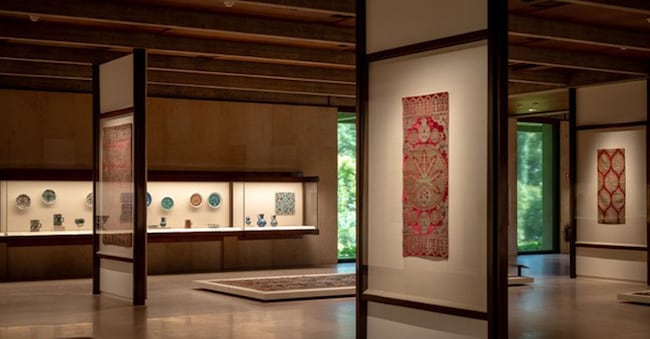
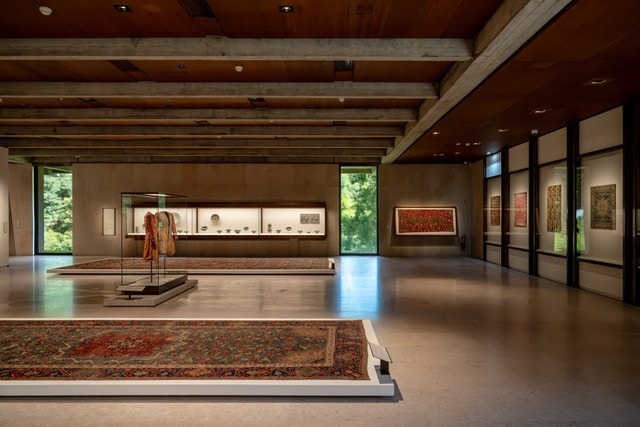
Most international museums use expansion projects to increase their services, exhibition space and visitor numbers, but the Gulbenkian Museum in Lisbon, following a closure of around 12 months, has chosen to “take a step back”: returning the museum to its 1969 design, prioritising the aesthetic experience over the pursuit of large visitor numbers. Seventy years after the founding of the Fundação Calouste Gulbenkian and almost sixty years after the museum’s opening, the institution is returning to its roots with a €7.7 million project, as outlined in the 2025 budget, which aims to restore the architecture, the exhibition layout and the atmosphere conceived in 1969, whilst updating the facilities without altering its identity. This is a counter-trend decision at a time when many museums are investing to expand their spaces, increase services and attract new visitor numbers.
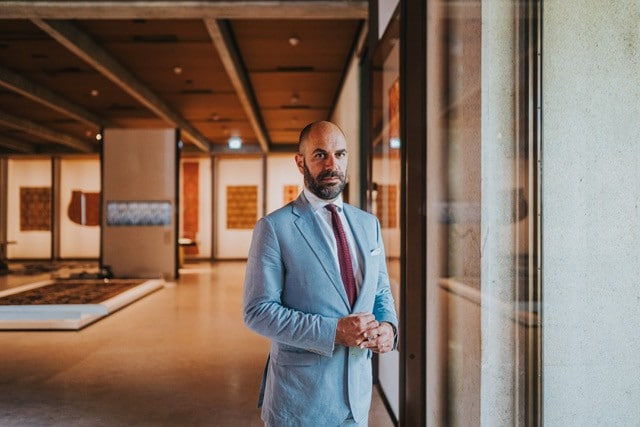
Leading this new phase is Xavier F. Salomon, an art historian born in Rome, formerly a curator at the Metropolitan Museum of Art in New York and Deputy Director of the Frick Collection, where he also oversaw the institution’s complex process of transformation and reopening. Appointed director of the Gulbenkian in July 2025 and taking up his post in early 2026, Salomon thus found himself, for the second time, managing the delicate balance between a historic collection, an architectural legacy with a strong sense of identity, and the demands of a contemporary museum.
A choice that goes against the grain: a return to authenticity
At the heart of this new challenge lies a collection born of the vision of Calouste Sarkis Gulbenkian (1869–1955), an Armenian oil magnate who built up one of the most extraordinary private collections of the 20th century. Manet, Renoir, Rembrandt, Guardi, as well as one of the most important collections of René Lalique and artefacts from ancient Egypt, Greece and Mesopotamia: an encyclopaedic collection that reflects its owner’s cosmopolitanism and which, following his death, was transformed into public heritage.
It is precisely this concept of a collection, rather than the quality of the individual masterpieces alone, that makes the Gulbenkian a unique case. The museum brings together different eras and cultures within a modernist building designed by Ruy Jervis d’Athouguia, Pedro Cid and Alberto Pessoa, where art, space and nature form part of the same experience. The reopening has chosen to preserve this relationship and, alongside more discreet LED lighting, anti-reflective glass, the return of fabrics on the walls and, above all, concise captions without multimedia screens, because – in Salomon’s view – “nothing must compete with the works or the architecture”.
Behind this decision, however, lies a factor that sets the Gulbenkian apart from much of the European museum system: the financial strength of the Fundação Calouste Gulbenkian, one of Europe’s leading private cultural foundations, which supports the museum and the Centro de Arte Moderna – CAM – where, until 28 September, Rosa Barba is presenting ‘Drawing Vocabularies’, a site-specific installation and the Italian artist’s first exhibition in Portugal.

