Pilot Project

The hinterland experiments with solidarity-based renting

In Cinisello and Sesto San Giovanni a fund helps tenants who cannot pay their instalments: it can count on 80,000 euro of resources

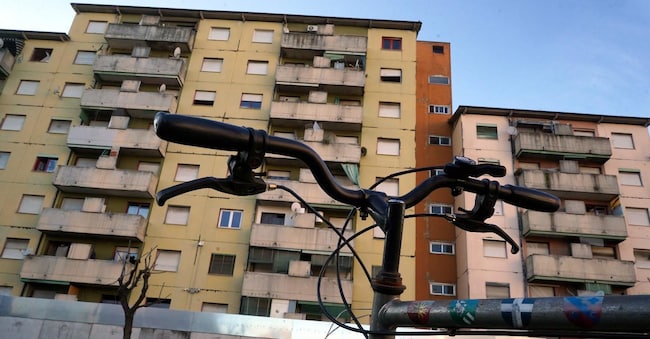
by Sara Monaci

Case popolari Aler via Bolla edilizia abitativa popolare

3' min read

3' min read

In the Milan hinterland there is a pilot project that could also be reproduced in other cities, starting with the capital city, considering that housing hardship for low-income groups is now high on the political agenda.

In Cinisello Balsamo and Sesto San Giovanni, the 'Allarghiamo gli spazi' project has a number of partners: the Auprema Foundation in partnership with the Dar Foundation and the Torpedone Cooperative, also supported by a wide local network, including parishes and the UniAbita Cooperative.

Loading...

It was created as a spin-off of the 'Spaces for Sustainable Housing' initiative, which came into being as part of the Fondazione Nord Milano, Fondazione Cariplo and Fondazione Vismara's anti-poverty programme, which together created an active network on housing and services to support not only access to housing but also its maintenance. Now the 'Allarghiamo gli spazi' project is articulated in various steps: from the search for a house, to the accompaniment in the stipulation of contracts, to the search for funds to concretely support tenants in the payment of instalments but also expenses.

First of all, the funds. It is awaiting a contribution of EUR 80,000 from the Fondazione Nord Milano in collaboration with the municipalities of the Cinisello Balsamo Ambit (Cinisello, Cormano, Bresso, Cusano) and already benefits from a contribution of EUR 200,000 for 24 months.

The initiative is based on the idea of 'adopting' a rental, i.e. a territorial awareness-raising campaign, with the aim of mobilising the vacant property of small landlords and attracting new resources (donations of money and goods, volunteers, new partners and collaborations). The campaign is devised by the proponents but also by the parishes of Cinisello Balsamo, all convinced that today the challenge for accessible housing is a topic of public interest "and a mobilisation to raise awareness as was done in past decades, for example, for the fight against smoking or for separate waste collection", say the organisers.

Immediately afterwards there is the development of services for landlords who join the campaign, with accompaniment to the conclusion of the contract and voluntary social accompaniment for tenants, supporting the trust guarantee. "In summary we ask the owner of a vacant flat to trust us, we propose people and families we know, we identify a tenancy contract tutor and organise regular meetings in and outside the flat. Inhabitants and landlords are not left alone,' the organisers explain. Landlords are basically given guarantees about tenants by a local network, which makes them feel calmer and more willing to rent out their home.

In the meantime, the UniAbita Cooperative makes some housing available to experiment with forms of accompanied entry into the world of cooperative living, to help people who have embarked on paths of autonomy and need economic support and social accompaniment. After two years, if the experimentation is positive, the allocation becomes permanent, at a lower than market rent.

Lastly, there is the integration of the 'dote casa' fund, to help households with the start-up costs of new leases or for small delinquencies. This action makes use of the partnership with Fondazione Welfare Ambrosiano, which provides microcredit tools, including the new solidarity microcredit for housing.

The model being tested is inspired by what is already happening in Northern Europe, where the public and private sectors jointly support the continuity of housing pathways between the insertion, accompaniment and autonomy phases.

Recalls Pierpaolo Forello, president of UniAbita, that 'the experimental project we have launched with a priority of subjects aims to combat the phenomena of vacant houses and incolpevole delinquency that swell the numbers of the housing emergency in Milan and the municipalities of the Metropolitan City. At the same time, it allows us to build and strengthen community networks between potential tenants, homeowners and social workers in order to create a habit of doing that will concretely help alleviate the housing needs of so many".

Obviously, the most critical situation is in Milan, where at least 10,000 people are waiting for social housing, as they cannot turn to the free market. In total, there are 27,887 social housing units in the hands of the municipality in Milan, but they are clearly not enough.

Moreover, about 3,000 houses are currently empty: 2,461 are vacant to be renovated and reassigned, while another 529 are in the process of renovation. Another 453, still empty, are now being assigned. To all this must be added a further 2,181 that are currently blocked because they are earmarked for other projects, including demolition and reconstruction.

Copyright reserved ©
Loading...

Brand connect

Loading...

Newsletter

Notizie e approfondimenti sugli avvenimenti politici, economici e finanziari.

Iscriviti