
The saint by the hand with Piovani, Peppe Barra and Sophocles

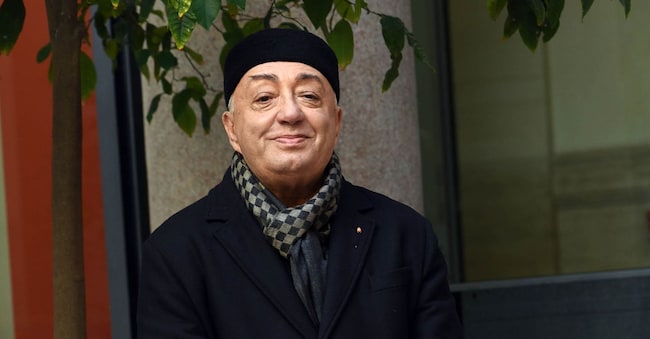
The poverello of Assisi appears to us as a determined, courageous man, close to the poor and disinherited in Dario Fo's famous text Lo santo jullare Francesco, now brought back to the stage by Ugo Dighiero, while his encounter with the Sultan of Egypt is recalled by the new play commissioned by the Festival, Il santo folle, written by Guido Barbieri (see Raffaele Mellace, opposite). In memory of the first nativity scene, commissioned by Francis himself, Peppe Barra revives La cantata dei pastori, a seventeenth-century work by the Jesuit Andrea Perrucci. And again, around the evocation of the holy night moves the poem by Eduardo De Filippo, Pre Padre Cicogna, the story of a priest who abandons his vows to get married, intending then to put on a Christmas play together with his children. Set to music by Nicola Piovani for Luca De Filippo, the opera is revived in Ravenna with the direction of the composer himself and the voice of Toni Servillo.
Many of the festival's events, if they do not explicitly mention the saint, nevertheless investigate deeper human values and the idea of peace and coexistence. This is the case for Sophocles' Antigone, rewritten by Marco Martinelli together with school children from the Neapolitan hinterland, which arrives here after its debut in Pompei, while director Luigi Dadina sets up Viaggio in Occidente with the multiethnic community of Lido Adriano, based on an ancient Chinese novel that tells of the journey of four Buddhist monks towards India.
Just as the protagonist of The Mysterious Disappearance of W, from the short story by Stefano Benni, tries to reconstruct her memories and her identity, in the version given by Ambra Angiolini, Ermanna Montanari takes up the story of Belda, a woman believed to be a witch, from the poem Lus by Nevio Spadoni.
Then there is, in addition to The English Child intertwined with music (see Mellace, next), Story of the New Surname by Fanny & Alexander, inspired by Mara Cerri's comic strip based on Elena Ferrante's work. The playbill closes OperaPaese for Ravenna, on the trail of Giorgio Battistelli's historic musical creation, with the artisans of the territory and their stories, collected and proposed by Guido Barbieri.

