The hotelification phenomenon: when the office is five-star
From Silicon Valley to Bolzano, workspaces become hybrids and borrow couture services and features of luxury hotels (including swimming pool and spa).

In the narrative of the services and environments that a luxury hotel offers guests, one word that recurs is experience: personalised, exclusive, attentive to detail. In a five-star hotel, one has access to wellness centres, a gym, gourmet restaurants and cocktail bars, as well as meeting rooms and event spaces. That hotels are equipped to allow you to organise a meeting, or to carry out activities that normally take place in an office, is nothing new. Interesting is the reverse, i.e. the current trend in the design of luxury office spaces to be inspired by the atmosphere and services of a large hotel.
The modalities of office work and its definition have changed. Nomadic connectivity and the widespread practice of smart working have given rise to new types of use of workspaces, challenging the rigidity of an impersonal model that has endured for decades. The office is changing skin and the monofunctional model is facing an inexorable decline, to make way for increasingly hybrid places, the result of contamination between various souls, and above all pervaded with new potential.
Tim Oldman, founder and ceo of Leesman, a British company that measures and analyses the work experience of employees on behalf of large global organisations, in a recent article in WorkLife - a website dedicated to human resources management issues - argues that a parallel can currently be drawn between hotels and offices in terms of the interaction with those who frequent these two types of places: "In a hotel, there are things that justify its cost: for example, customer-focused staff, available spas and pools, excellent linen and toiletries in the room. And the more hotel guests feel pampered, the more a dynamic of respect and involvement with their surroundings is triggered. Even office-goers pay a price in terms of time and expense to get there. And if offices today are used in a more nomadic and flexible way, perhaps by booking a workstation, the new perspective of workplaces, just like a hotel, must have the attractiveness to justify the time spent and the costs incurred to get there".
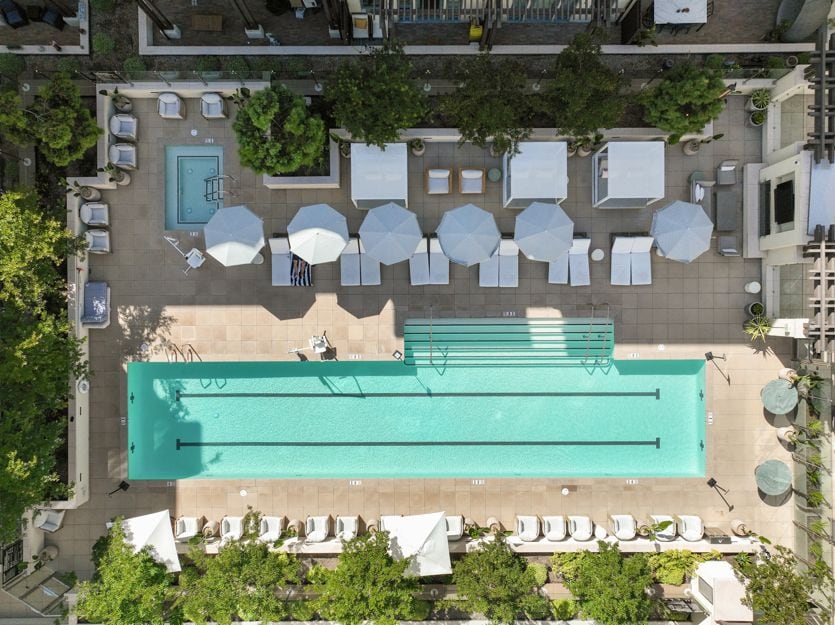
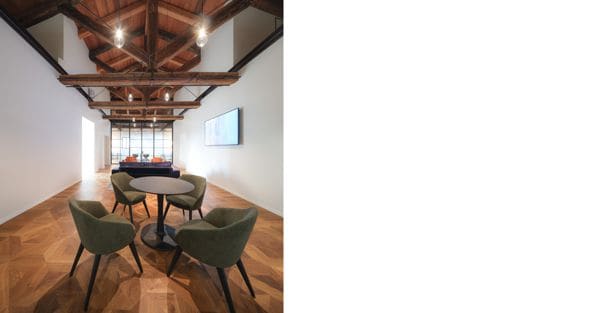
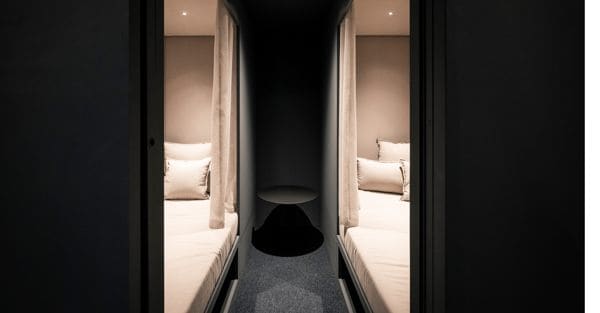
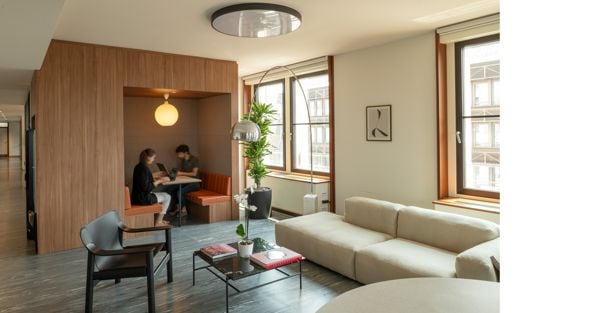
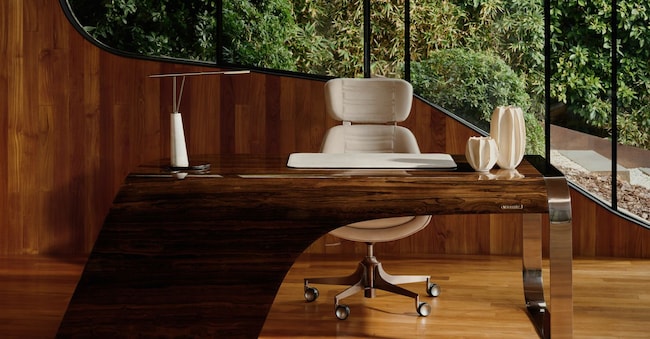
This is the origin of what, with a somewhat clumsy term, is referred to as hotelification of the most innovative and prestigious service industry locations. From an aesthetic point of view, hotelification brings high quality interior design to the offices, reflecting the atmosphere of a multi-star hotel: innovative layouts, precious materials and furnishings, specially designed lighting. But that's not all: high-end offices are enriched with functions and possibilities that offer employees and customers exclusive moments of relaxation and sharing, generating a sense of belonging that influences the well-being of individuals and, also, their productivity. In the Anglo-Saxon world, where this trend was born, examples are on a large scale. Springline is a 25,000 square metre mixed-use destination in the heart of Silicon Valley. Developed by Presidio Bay Ventures, it combines luxury residences, a lively gastronomic offer and two hospitality-inspired office buildings occupied by venture capitalists, technology companies and law firms that can enjoy privileged moments: from golf simulators to a swimming pool and outdoor workspaces. In Paris, Mathieu Billard, with his long experience in the sector, has created Gustave Collection, a company aimed at large companies that provides, in its prestigious locations in the heart of the capital, luxurious workplaces combining the codes of haute couture, the art of French hospitality and the performance of a modern office. The latest opening, the fourth, is at 232 rue de Rivoli: 2,500 square metres on five floors, three of which are dedicated to private offices and a 200 square metre tree-lined terrace overlooking the Tuileries gardens, Eiffel Tower and Grand Palais. The gastronomic offer is entrusted to chef Victor Chollet, who proposes a seasonal menu renewed every month. The top floor houses a gym and spa with hammam and sauna, and there is also a dedicated concierge.
In Italy, a holistic vision of places that house the service industry, also linked to the cultural and artistic values of our history, is gaining ground. Architect Roberto Murgia, who has designed a number of large law and professional firms, includes elements in his projects that make them particularly attractive to clients and collaborators, such as the bright restaurant room in the Milan headquarters of the American law firm Cleary Gottlieb. "Talking business over a good plate of spaghetti," he says, "is a pleasant prospect, like having a kitchen in the office that can become the setting for informal meetings. In my office projects, I have often included a space for the library, which I interpret as a place where, despite the virtuality that now pervades our lives, the magic of leafing through a paper book in the soft light of a lamp is renewed and you can perhaps compare notes with a colleague sitting next to you. It is in these environments that moments of professional and human enrichment can take place'.