
The human safari in Sarajevo: if these are men
At the Pordenome Docs Fest, Miran Zupanič's film on the network of foreigners who paid to shoot civilians and which the Milan Public Prosecutor's Office is investigating
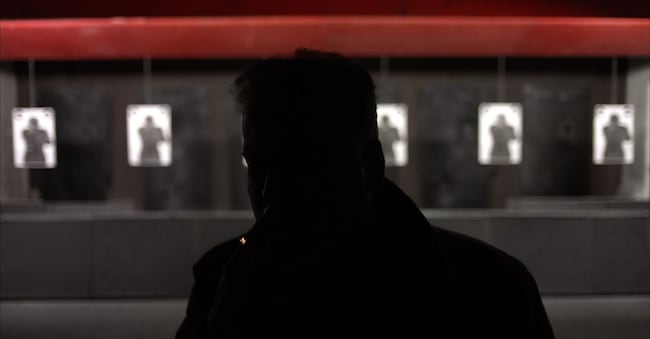
Between 1993 and 1995, hundreds of foreigners arrived in Sarajevo, the city besieged from 1992 to 1996 during the war in the former Yugoslavia, paying large sums of money to take the place of Serbian snipers against defenceless civilians. There was a price list: the most expensive victims were children, then women and the elderly. Having tasted the frisson, the war tourists would return home via Belgrade or Trieste, from where they had left. It is Miran Zupanič, a Slovenian director who lived through the implosion of his country (he was born in 1961), who reconstructs the event in his film Sarajevo Safari, screened at the 19th edition of the Pordenone Docs Fest (which closes today), along with a commendable retrospective 30 years after the end of the siege of the Bosnian capital. The documentary sheds light on an affair, long branded as a legend, on which the Milan public prosecutor's office has been investigating since last November with the collaboration of French, Swiss and Belgian authorities.
The Milan Public Prosecutor's Inquiry
The investigation is based on the evidence collected by Zupanič and the journalist and writer Ezio Gavazzeni in the book I cecchini del weekend (PaperFIRST, p. 288. € 18.50, now in bookshops), according to which the Italians involved are 230 out of 500 'clients'. For now, there is an 80-year-old Italian man under investigation for murder.The documentary's impervious and successful task is to reconstruct the affair with an unexpected, accurate and stubborn correspondence between images and testimonies, relying on the fact that this was the first war, thanks to the advent of new technologies, to be largely video-documented. The director managed to find 'material' recorded inside Sarajevo and on the Bosnian and Serbian front and reads like a kind of indictment in images. The director's thesis is that the army of the Republika Srpska is mainly responsible for the idea of the 'sniper for a day', as the 'guests' were shooting from their lines, such as the Grbavica neighbourhood, also the title of a magnificent film by Jasmila Žbanić, in Italian Il segreto di Esma, winner of the Golden Bear in Berlin in 2006.
Key Witnesses
The film is built on two key testimonies. The first is that of a deep throat, deemed reliable by the producer and director, of a Slovenian soldier who appears in the film with his face obscured. He, who is well known in Ljubljana, recounts his experience with paid visitors and states that he refused to shoot. The other is that of Edin Subašić, a former secret service agent of the Bosnian army, who explains the logistics for the safari clients and how the Sismi and Sisde had been warned, merely stating that the phenomenon had been 'neutralised', without initiating criminal investigations.
The victims
Then, the stories of the victims: Stana and Samir Ćišić, who lost their one-year-old daughter, Irina, in 1993, shot while playing next to her mother. The other, of Faruk Šabanović, reduced by a bullet to a wheelchair that same year. A physics student, he had just left the faculty to enjoy the first day of spring during a ceasefire. In front of the camera, he expresses himself in a pacified and vivid philosophical dissertation on the inscrutable reasons for evil. As Šabanović speaks, images of the wounding, caught on camera, are shown: one recognises his face, then almost childlike, in complete surrender. And the sequel: him intubated in hospital with other boys who suffered the same fate. Today Šabanović is a director who combines traditional, digital animation with live-action filming. With Amela Ćuhara in 2017, he directed Birds like us, a free animated adaptation of the Persian Attār Nīshāpūrī's poem, The Conference of Birds, for which Peter Gabriel specially composed Everybird.
In streaming
Sarajevo Safari was initiated by the film's producer, Franzi Zajc, who relied on Zupanič, the author of many works on the former Yugoslavia, including Run for Life, who, in 1990, the year before the war began, had investigated Goli Otok, the toughest political prison in the country led by Tito. The documentary is now available for streaming on the OpenDDB platform (openddb.co.uk). The images are harsh but necessary. And now let justice take its course.


