The identity crisis of American museums: are they political spaces or neutral spaces?
The social clash between groups with different values, religions and practices resulted in executive orders targeting federally funded museums

Key points
In the United States there is a real culture war going on that, perhaps, we are talking too little about in Europe. It is a social conflict between groups with different values, religions and practices, which has resulted in a series of executive orders and other acts targeting federally funded museums, first and foremost the Smithsonian Institution in Washington D.C.
It is a retaliatory strategy. But why? In essence, museums have been put on the stand and convicted without even being able to defend themselves for using - or even endorsing - language that is considered 'woke', or deemed as such by the White House.
The Executive Order
To counter this ideology, deemed progressive by Washington, on March 27, 2025, the US President issued an Executive Order, entitled Restoring Truth and Sanity to American History, which states: "Over the past decade, Americans have witnessed a concerted and widespread attempt to rewrite our Nation's history, replacing objective facts with a distorted narrative driven by ideology rather than truth. Under this historical revision, our Nation's unparalleled legacy of promoting freedom, individual rights, and human welfare is reconstructed as inherently racist, sexist, oppressive, or otherwise irredeemably flawed." Trump devoted an entire section of the order to the need to 'save' these institutions from a 'divisive, race-centric ideology'.
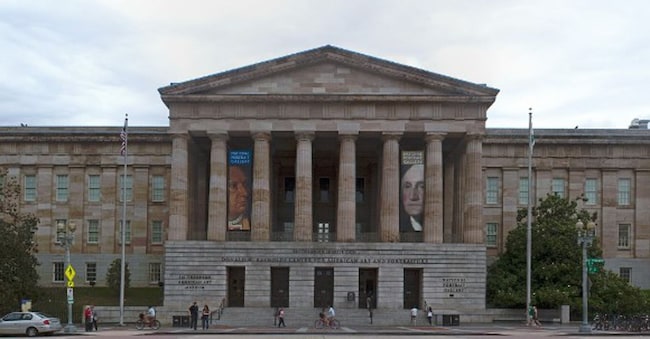
Among museums, the most impressive is certainly the Smithsonian Institute complex in Washington, DC. This is the oldest museum complex in the United States, established in 1846 as a public trust by an act of Congress, which also created the governance body: the Board of Regents. A number of well-known institutions belong to this complex (e.g., the National Museum of American History to the National Museum of Natural History, theNational Museum of African American History and Culture, the National Museum of the American Indian, the National Air and Space Museum, the Smithsonian American Art Museum, the National Portrait Gallery and the Hirshhorn Museum and Sculpture Garden). According to the White House, the museums of the Smithsonian complex held overly progressive attitudes, expressed through their website language and exhibition programming, which are funded, for the most part (62% of the annual budget), by the currently conservative majority government. The Smithsonian has thus been accused of not being an 'inclusive' space for some citizens, such as Republicans, who do not feel represented by its content and policies.
heavy accusations, launched just as the institution is preparing to celebrate (in 2026) its 250th anniversary. After the executive order, a 'Letter to the Smithsonian' opened the dances of internal audits and reviews of the museum complex. Museums will have to provide a wide range of materials and documents to initiate an internal review of their exhibitions and curatorial processes. These include: plans and materials related to 250th anniversary programming, catalogues and content of current exhibitions, digital files of panels and captions, proposals and budgets for future exhibitions, internal guidelines, governance documentation, permanent collection inventories, educational materials, information on digital presence, external partnerships and funding documentation. They will also need to designate a primary contact person and ensure full access to the required materials, including online content, internal communications and visitor experience evaluations.