
The imperative of beauty: Snapchat Dysmorphia spreads among young people
More than an ideal, a formula. Aesthetic canons increasingly respond to standardised mathematical proportions. A personal and social performative model, where the body becomes the stage.

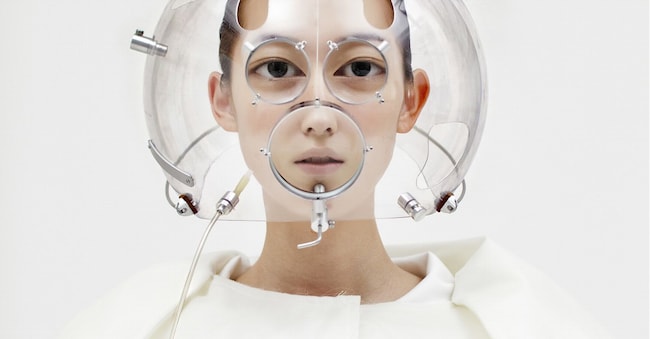
There is a filter for everything: to smooth the skin, enlarge the eyes, lengthen the oval of the face, modify the light and even rewrite the symmetry of the body. But behind that apparent game of pixels moves a silent power - that of the algorithm - which today dictates the canons of beauty more than any catwalk or cover. Beauty, in the digital age, is no longer an ideal, but a formula. Scrolling through a personalised home page, the gaze incessantly encounters smooth faces, calibrated smiles, almost mathematical proportions. It is no coincidence: recommendation systems learn to favour what catches the eye - and therefore what appears perfect. Thus, through the invisible cycle of clicks, likes and shares, the algorithms end up selecting and reproducing the same traits again and again. The result is a new aesthetic, performative and standardised, which shapes desires, identities and power relations. The most emblematic phenomenon is Snapchat Dysmorphia: people bringing to the surgeon images of themselves modified by digital filters, asking to become their own algorithmic version. The term began circulating in 2018, when dermatologists and plastic surgeons reported an increase in requests inspired by filtered faces, rather than real stars or models. In that desire to match the artificial image is condensed the psychological impact of filter culture: self-objectification, the distance between the lived body and the shown body, the birth of a new form of aesthetic alienation. "The phenomenon has started here too," explains Andrea Spano, surgeon and founder of The Clinic, an institute of aesthetic medicine and surgery in Milan. "There are now many patients who ask us to intervene to achieve that ideal represented by their digital image modified by filters. The problem is also that, behind the algorithm, there is a continuous modification of the parameters, so the same person who had come three months earlier to ask you for high cheekbones might come back after a short time to ask you for something different. So you never find peace, it's a constant chasing of artificial ideals. Because behind every glossy selfie there is a machine, which learns what works. Artificial vision algorithms recognise visual patterns that generate engagement and reward them, creating a reinforcement loop: the more attention a certain face or body gets, the more similar content is proposed. Repetition turns trend into norm, and norm into value.
Recent studies show that prolonged exposure to images focused on physical appearance increases body dissatisfaction and perceptions of inadequacy, especially among adolescents and young women. But filters are not neutral. Many embellish following precise aesthetic logics: they lighten the skin, shrink the nose, amplify the eyes. Behind that apparent customisation lie cultural biases and technical partialities: unbalanced training datasets, metrics built on European-centric parameters or limited colour ranges. As a result, many recognition or visual generation systems work worse for certain phototypes, while others are represented as deviations from the standard. This is not only a technical problem, but a symbolic one: the algorithm decides who deserves visibility and who remains on the sidelines. "This is also why the cosmetic surgeon's task is to advise against certain changes, to make people understand that self-image must be evaluated in a healthy way," Spano concludes. 'Using filters is fun as long as it remains a game. You edit yourself, you send the photo to friends, you laugh.... It cannot become the pole star to be pursued on a real aesthetic path. More and more often it is the young and very young who come to us: that is why I collaborate with psychologists who can support a path of acceptance and adherence to reality'. Algorithmic aesthetics is also a performative aesthetic. On social networks, identity is constructed through images: the body becomes a stage. Likes and views become a form of social capital, and beauty - or rather, its representation - is transformed into currency. In this economy of attention, the digital self risks engulfing the real self: the distance between person and character thins to the point of vanishing. Platforms, under pressure, begin to move. TikTok has introduced 2024 restrictions on filters that alter facial features for those under 18; Instagram is experimenting with labels to flag retouched images. These are steps forward, but partial ones. Technology evolves faster than policies, and each update risks shifting the problem without solving it. What is needed, then, to reverse course? Experts speak of responsible algorithmic design: more representative datasets, cross-cultural metrics, transparency on recommendation logics. But this is not enough. Digital education is also needed, to help users - especially the youngest - decode the strategies of aesthetic persuasion and recognise filters as constructions, not truths. And a shared cultural reflection is needed, capable of restoring plurality to the bodies and faces represented. The medical community can also contribute by dialoguing with patients on the motivations that fuel certain requests. The algorithm is not an ineluctable destiny. It is a construction that reflects commercial choices, cultural models and social priorities and ends up influencing the way we ourselves learn to look at ourselves. Perhaps the real aesthetic revolution will not take place in artificial intelligence laboratories, but in the individual and free gaze of those who choose not to let themselves be defined by a screen. Because we are something else, we are human.

