
The indescribable element that needs to be captured to make a good film
Carlotta Cristiani explains the craft of film editing, from *Bread and Tulips* to *My Brilliant Friend*

Key points
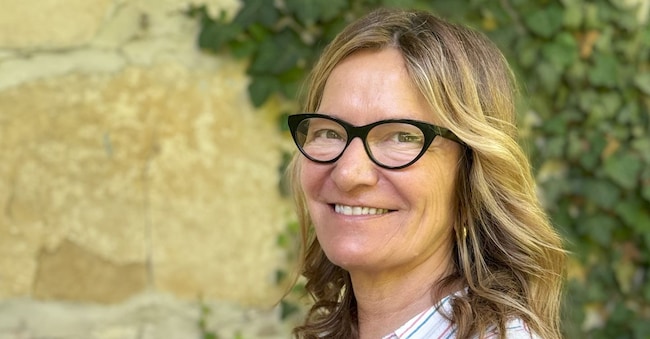
Carlotta Cristiani is one of the most accomplished film editors in Italian cinema. She has worked on famous, multi-award-winning films with Silvio Soldini (Bread and Tulips, 2000, I Burn in the Wind, 2002, Agata and the Storm, 2004, Days and Clouds, 2007, The Hidden Colour of Things, 2017, The Tasters, 2025); Leonardo Di Costanzo (L’intervallo, 2012, Ariaferma, 2021), Laura Bispuri (Vergine giurata, 2015, My Daughter, 2018); but also, amongst others, Luca Lucini, Edoardo Winspeare, Piergiorgio Gay, Alice Rohrwacher.
She edited several episodes of My Brilliant Friend, the HBO-Rai series based on the novels by Elena Ferrante, in Season 2, The Story of a New Name (2020), in episodes 4 and 5, directed by Laura Bispuri. In Season 4, The Story of the Lost Child (2025).
He taught at the Luchino Visconti Civic School in Milan and at the IED Cinema School.
The editor’s craft
What does a film editor do?
He brings together disparate elements to form a whole, finding continuity and a sequence that brings the director’s imaginative world to life, whilst striving to ensure the various parts of the film function as a cohesive whole. In a way, he puts himself at the service of everyone who has worked to ensure the film’s success, from the screenwriter to the director of photography, the production designer and the composer.
The viewer should not be aware of the editor’s work; the editor’s work should enable the viewer to have an experience.
How did she learn to be a film editor?
I’ve had a very traditional career: I attended the film school at DAMS in Bologna and started out as an assistant editor. Then a friend of mine, Jacopo Quadri, who had just begun his career as an editor, needed an assistant and called me to Rome. I worked there for a while, but life brought me back to Milan, where I live, although I do commute to Rome. I’ve always regarded Roman cinema as the real thing, but I think it’s actually been rather fortunate that I haven’t lived and worked there permanently, because being on the periphery of the major industry has brought me into contact with a more fringe cinema. And when they call me to work in Rome, I realise they appreciate my professionalism, and that flatters me. Besides, my roots are in Milan, and that also plays a part in how you do your job. The editor’s craft is the result of who you are and how you express yourself creatively, of what your own world is like and recognising that of the other person you’re working with. I always feel the risk of not making it, of not being able to… Over time – the only advantage of getting older – I eventually find myself thinking, ‘Yes, I’ll manage it.’
Close ties with the directors
A number of names recur in your CV, such as Silvio Soldini, Leonardo di Costanzo, Laura Bispuri and Luca Lucini… What kind of bond is formed between the editor and the director?
It’s really lovely because we know each other, we’ve become friends, we speak the same language, but each of their films presents a different challenge; so, whilst having a pre-existing relationship is important, we work on the films themselves, not on the relationship. Knowing each other makes it easier to ask the right questions. What’s really important for an editor isn’t sticking to the script or a subject, but understanding the true nature of the project, because every film presents you with different challenges.
Have you ever found yourself at odds with a director because the film worked better when edited in a certain way, but the director wanted it done differently?
DAbsolutely yes, it’s happened to me, but I’ll never name names. Fortunately, it’s only happened a few times, because the editor and the director work together to make the film work. Sometimes the editor gets the upper hand, other times the director does. Once, however, I actually walked away from a film, and on another occasion I didn’t because the clash wasn’t quite so intense, though I still think that was a mistake.
The project timeline
When does the editor start work?
Nowadays, it’s common to start working on your own during filming to get to know the material. I have the script next to me, but I don’t always refer to it; it’s never my ‘Bible’, unless I don’t understand the material. I work with the footage – with the images, sounds and music – not with the words.
Isn’t it counterproductive to start editing whilst filming? Isn’t it better to wait until filming is finished?
When editing, you always have to be ready to turn everything on its head, so I wouldn’t say it’s counterproductive. It really helps to have a personal connection with the footage, because ours is a rather inexplicable line of work. There’s an intuitive aspect to your relationship with the footage; you enter its world, you understand what works and what doesn’t, the beautiful things and even those that seem beautiful for no particular reason.
Does it ever happen, whilst editing, that you realise you’re not interested in that film?
That’s an impression that strikes you at first – that something hasn’t quite worked out in the filming or in certain decisions. Then you tend to forget about it a bit, because whilst you’re working, you try to bring out the best and most constructive aspects for the project. In a way, you grow attached to it, but then that initial impression comes back when you watch the film with someone else and revert to being a viewer.
Luca Bigazzi, the film editor, says that a film works if the script is good; otherwise, it’s unlikely to turn out to be a good film… Do you agree with this statement?
Quite a lot. Almost always.
Has it ever happened that one of your ideas has improved the film, even though the director didn’t agree at first?
I hope so. But it’s not as though the director and editor are pulling in opposite directions: we discuss things and try things out. For example, with Leonardo Di Costanzo in Aria ferma, a character was missing a moment of reflection, and we created it during the editing process. But I can’t remember now whether the idea was mine or his; it was probably his need and my solution. In L’intervallo, several early scenes depicted the social fabric in which the film was set. As we worked on it, we decided to cut them out. It’s part of our job to spot what’s missing or to recognise what’s redundant.
The music in the film
When is music added to a film?
I try not to use it straight away and only if it’s necessary, but it varies from film to film. For example, Laura Bispuri is very sparing in her use of music; it’s almost always composed for a single scene and almost never to span multiple scenes. It’s lovely to work with music, but it’s just as difficult to ensure it adds something that isn’t already present in the visuals and sounds – and that it therefore truly plays a narrative or emotional role.
Did you study music?
No, but I believe that the editor develops or learns to have a sense of music. I hate hearing that editing is rhythm, but it is also rhythm. The moment you realise that removing one or two frames from an image makes sense, it means that in some way you’re following a musical rhythm, or even an emotional one, or at any rate an instinct that connects you a little to music. I’ve tried many times to study music in greater depth, but I’ve only gone as far as I needed to for my work. I do pay close attention to it, though.
TV series
How different is it to edit a film and a TV series?
These are truly intrinsic characteristics because, in films in our cinema, you can intervene by removing characters and altering the narrative timeline. In a series, this is very difficult, because the character reappears in the next episode and, if you haven’t told that part of the story, it’s impossible to make up for it. If you haven’t included the character who delivered that line, it doesn’t work. You can also try moving sequences around, but you need to have a clear picture of the project, which is long and complex. In My Brilliant Friend, we shoot in different locations, so during filming, for example, we jump from the first to the seventh episode, from the fourth to the second and then to the fifth. I’m currently editing another series and I realise just how much I’ve learnt from My Brilliant Friend.
Did you find it difficult at first?
In My Brilliant Friend, there was a significant legacy. Apart from the two episodes featuring Alice, I was working on the Ischia episodes, so outside the neighbourhood. It was a world of its own, but you’re carrying over characters who already have a backstory, and you have to take into account what had already found its way into the hearts and minds of the viewers up to that point. If you start another series, there’s a change, but you can’t betray the path you’ve already set out on. I feel I’ve learnt a great deal from that experience, now that I’m editing another TV series.
The working method
Is the editor involved right from the start, before the film begins?
Well, I do talk quite a lot, especially with the directors. It doesn’t happen often, but it would be nice to have group meetings where we discuss the film we’re about to start. I went onto the set of Leonardo Di Costanzo’s last two films because I wanted to understand how he approached the scenes as he was putting them together. I felt I was getting a better grasp of what he was aiming for. It’s very useful to know what lies behind a scene, what the underlying philosophy of the film is.
Can we talk about a shared journey when an editor works with the same director for a long time, as was the case for you with Silvio Soldini?
We can talk about a journey in the sense that each person enriches the other with their life and work experience. Then there is the awareness of mutual trust and of what we have built together.
The future of editing
How has it changed with digitalisation?
With the advent of digital technology, the amount of footage we shoot is constantly increasing, and our work has become a little more demanding. We’re given more scope, but also a greater workload, something which I feel isn’t really recognised at all. The way we film has also changed a bit, but our whole way of life is evolving alongside technology. These days, we shoot much more footage, sometimes with multiple cameras; for an editor, this means greater responsibility and often tighter deadlines, especially on TV series, where delivery dates are very strict. As it is a very thoughtful process, editing has become more demanding and difficult.
Do you miss the physicality of film, the hands-on process, that kind of editing?
I feel nostalgic for the happiness that came from the relationships between those who worked there. Apart from the ‘grab the pizza, put the pizza in, take the pizza out, find the shot’ routine, there was a different kind of vitality to it all. Now we work with assistants who are often in another room, so the relationship becomes purely mental. Perhaps we’ll have a chat over lunch, but back then we really did spend all our time together. I remember, when I was a film assistant, we’d make a right mess of things because I couldn’t find a frame. I even got kicked out of the moviola once because I started laughing: there was such a lovely energy there.
The work of film editing has inevitably changed, because the language of cinema has changed. It’s essentially the same as it was back then, even if it lacks a bit of that, shall we say, artisanal and cheerful atmosphere. I can’t say I’m nostalgic for the moviola, because we had two, at most three, sound tracks… The whole aspect of effects, titles and sound mixing had to be imagined. Now we can see the film much more as it will actually be – that’s a huge advantage.
The younger generations and editing
You taught at the Civica in Milan and still teach whenever you can. What are young people’s views?
I enjoy working with young people because it broadens my perspective: young people always bring fresh ideas, and it’s a very fruitful exchange. In a different way, I also engage with the editing assistants – who are often younger – and through these exchanges, you get a sense of their perspective.
What is the first lesson?
We need to learn how to look at images, and this is essential in our profession. There is a great deal to see within an image, so many things to bear in mind and keep under control: whether the lighting is right, whether the set design works; the same goes for the actors, the narrative, the dialogue... Then there’s something important and indescribable that you have to grasp. It’s not just about learning a trade and being ready for the market. I believe you have to learn to love this work. And to always want to delve deeper, to always seek out different ‘solutions’, the possibilities of images and how they’re put together. I believe it’s important to learn to love films, to have the tools to understand them. We work with simple software; if I’ve learnt it, anyone can. That’s certainly not the point, and, in any case, there’s always something new to learn, wherever you are.

Cristina BattoclettiCaposervizio
Luogo: Milano
Lingue parlate: inglese, francese
Argomenti: cinema, mitteleuropa, balcani
Premi: Comisso, Latisana, Manzoni, Martoglio
Brand connect

