The influence of psychoanalysis: collecting the thoughts that dwell within us
Among the first to invest in video art in France, Josée and Marc Gensollen – both psychiatrists – explain their selection criteria. And their decision to focus on conceptual works as a catalyst for reflection.
by Patrizia Sandretto Re Rebaudengo
 Aggiungi Il Sole 24 Ore
ai preferiti su Google
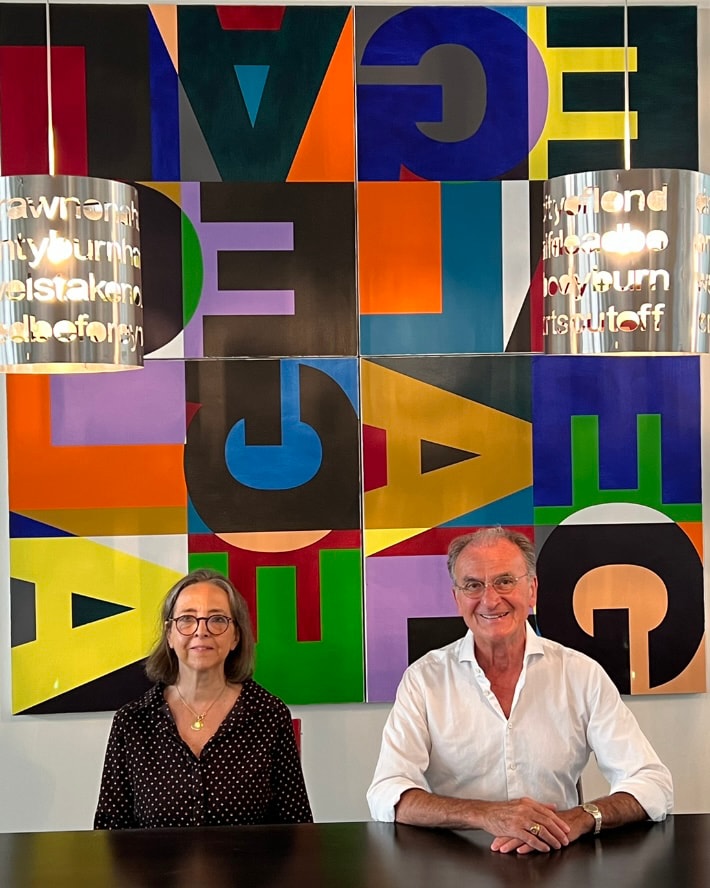
Marc and Josée Gensollen, originally from Marseille, are both psychiatrists and live in their hometown. They are married and have two children – one a psychiatrist and the other a film producer – and five grandchildren. Regarded as among Europe’s leading collectors of contemporary conceptual art, they began collecting works in the 1970s, gradually building a collection recognised for its strong coherence around the themes of language, meaning and the communication of ideas. In Marseille, they founded La Fabrique, a space created from a former industrial site and gradually transformed into a house-museum and meeting place, designed to share their collection and foster an ongoing dialogue between the works, the artists and the ideas that underpin them. I have known Marc and Josée for many years and we share a deep interest in the language of video and in artistic practices linked to the moving image. We have met on several occasions at LOOP Barcelona and through the activities of CIMAM, the International Committee for Museums and Collections of Modern Art, and met up again in Turin last November for the 57th Annual Conference.
WHEN DID YOU START COLLECTING?
We started fifty years ago, when we were young students. Influenced by psychoanalysis, we were initially interested above all in the graphic works of the Surrealists. Then we had a change of heart: we would collect, yes, but the art of our own time.
WHAT WAS YOUR FIRST PURCHASE? AND YOUR LAST?
The first conceptual artwork we acquired was Joseph Kosuth’s Blow Up, a definition of the word abstract from 1967. Subsequently, we selected conceptual artists such as Lawrence Weiner, On Kawara, Dan Graham and Daniel Buren; then, in the 1980s, Gerhard Richter and Bertrand Lavier. In the 1990s, Pierre Huyghe, Philippe Parreno and Maurizio Cattelan were added to the collection; in the 2000s, Tino Sehgal, Gianni Motti and Roman Ondak, and we continue to follow artists who are part of the same line of inquiry. Our latest acquisition is an installation by Renato Leotta (capriccio), from Niccolò Sprovieri.