Market and Industry

The great anxiety over speed cameras: between an obsession with fines and road safety

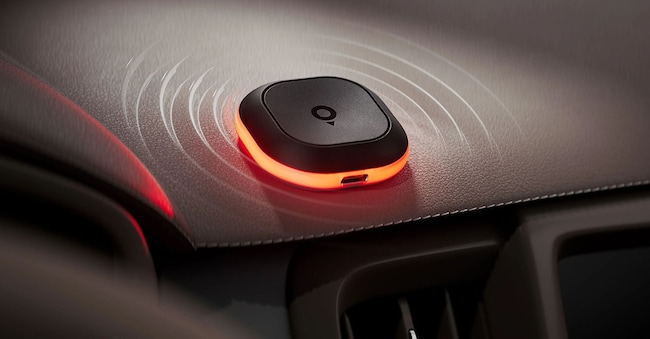
The relationship between motorists and speed cameras in Italia remains strained amid the red tape surrounding the new decree. It is against this backdrop that Tom by TomTom has been launched: a small, pocket-sized device that alerts drivers to speed cameras and traffic jams without distracting them with screens or voice commands

Tom by TomTom Hero

4' min read

Translated by AI
Versione italiana

4' min read

Translated by AI
Versione italiana

There’s a slight sense of anxiety that has accompanied the journeys of anyone who gets behind the wheel in Italia for years: the sudden beep from the sat-nav, followed by that instinctive jolt on the brakes that makes the speedometer needle drop suddenly. It is the conditioned reflex of the average motorist, a mixture of anxiety and annoyance. Because let’s face it, the relationship we have in this country with speed cameras is a sort of national psychodrama that shows no sign of abating. On the one hand, there are those who invoke road safety – sacrosanct and indisputable. On the other, there is the distinct and widespread feeling amongst millions of drivers that behind those colourful boxes often lies an all too convenient way of padding local councils’ coffers.

Today, this age-old conflict is being enriched with new chapters, comprising ministerial decrees that promise to restore order, mayors in revolt, and the arrival of technologies that seem straight out of a science-fiction film.

Loading...

The mirage of the ‘Speed Camera Decree’: order or just smoke and mirrors?

It has been talked about for months, as if it were the ultimate solution to all road traffic problems. The much-heralded decree, which was supposed to put a stop to the ‘uncontrolled’ installation of these devices, has finally sought to lay down the rules of the game. The stated intention was clear: no more speed cameras hidden behind hedges or positioned at points where the speed limit drops suddenly without any real safety justification, perhaps just to catch distracted drivers out.

On paper, the new regulations impose minimum distances, crystal-clear signage and, above all, the requirement to justify the installation based on actual accident data for that specific stretch of road. But the reality, as is often the case when it comes to Italian bureaucracy, has proved far more complicated. Amidst appeals, exemptions and the inevitable buck-passing of responsibility between local authorities and prefectures, many motorists continue to feel they are being targeted. The impression is that there has been a great deal of hype, yet very little has actually changed in day-to-day reality.

Whilst politicians debate the rules, technology is racing ahead. In fact, it’s racing ahead at breakneck speed. Forget the old grey boxes or the early speed enforcement systems that only monitored average speed from point A to point B. The new models popping up on our roads are veritable powerhouses of artificial intelligence applied to speed enforcement.

We’re talking about devices capable of monitoring multiple lanes simultaneously, day and night, even in very poor visibility. They are no longer limited to simply calculating whether you are exceeding the speed limit by a few kilometres per hour. These new systems are capable of detecting whether you are not wearing your seatbelt, whether you are holding your mobile phone whilst driving, or whether the vehicle lacks valid insurance or has not passed its MOT.

The real crux of the matter, however, remains ethical and cultural. No one with any common sense would ever question the importance of speed limits near a school, in the heart of a built-up area or on bends that have historically been dangerous. In such places, speed enforcement is a form of prevention, and it is good that it exists.

The frustration building up amongst drivers reaches boiling point when speed cameras appear on endless three-lane straights, where the speed limit may have been inexplicably reduced to 50 per hour because of a phantom roadworks site that has been abandoned for weeks. It is at that very moment that, in the eyes of the public, road safety measures are perceived as a hidden tax. And when trust in the institutions breaks down, worrying phenomena arise: from repeated acts of vandalism against the speed camera columns to the avalanche of appeals that clog up the offices of magistrates, costing the public more than the fines themselves have raised.

There is still a long, long way to go before a balance is struck. Until then, the only real defence for motorists remains caution, along with a few gadgets that can help when approaching speed cameras and, perhaps, if necessary, taking your foot off the accelerator.

Tom by Tom Tom, your wallet’s best friend

When we talk about TomTom, the first thing that springs to mind is the sat-navs you put in your car, which for years have helped drivers get from point ‘A’ to point ‘B’ without taking a wrong turn. Now, whilst staying true to its roots, the company has developed a small device designed specifically to detect speed cameras – and more besides. The concept behind Tom is simplicity at its best. It’s a pocket-sized box that attaches inside the car. If sudden traffic jams, accidents, speed cameras or any other hazards appear along the route, the device alerts the driver using audible signals and small LED lights. There’s no need to set a destination on the sat-nav or fiddle with the menus: if the road is clear, it remains silent. The decision to do away with a screen and voice commands was a deliberate choice by the designers, specifically to eliminate at source any possible source of visual or auditory distraction whilst you’re holding the steering wheel.

Loading...

To work at its best, the device pairs via Bluetooth with the new TomTom app (which can be downloaded onto any Android smartphone or iPhone). It is the app itself, running silently in the background on your smartphone, that transmits all the necessary data to the device. Once you’ve set it up for the first time, there’s nothing else you need to do: just get in the car, set off, and the system takes care of the rest.

If, during your journey, you’d prefer a traditional sat-nav – with a map right in front of you, clearly visible speed limits and detailed turn-by-turn directions – simply use the app on your phone. Here you can use the ‘famous’ TomTom maps, backed by over thirty years’ experience in the sector, billions of pieces of road data processed every day thanks to a network of over 600 million connected users, and constant real-time updates on traffic and speed cameras. Tom by TomTom is available to buy directly from the official TomTom website for 80 euros.

Copyright reserved ©
Loading...

Brand connect

Loading...

Newsletter

Notizie e approfondimenti sugli avvenimenti politici, economici e finanziari.

Iscriviti