The deep blue at the heart of photography
Ever since anyone with a smartphone has been able to take photographs, collectors’ attention has shifted to the process itself, even more so than to the end result. This is where the interest in cyanotype printing stems from.

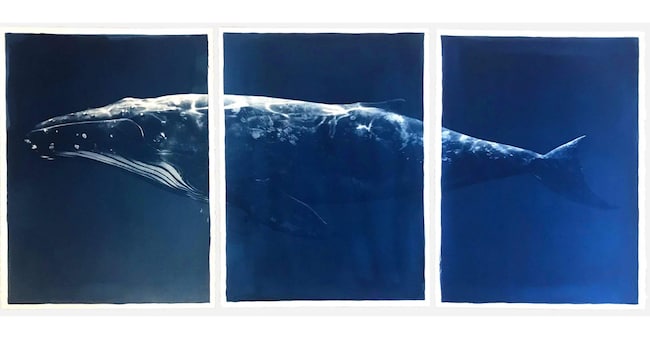
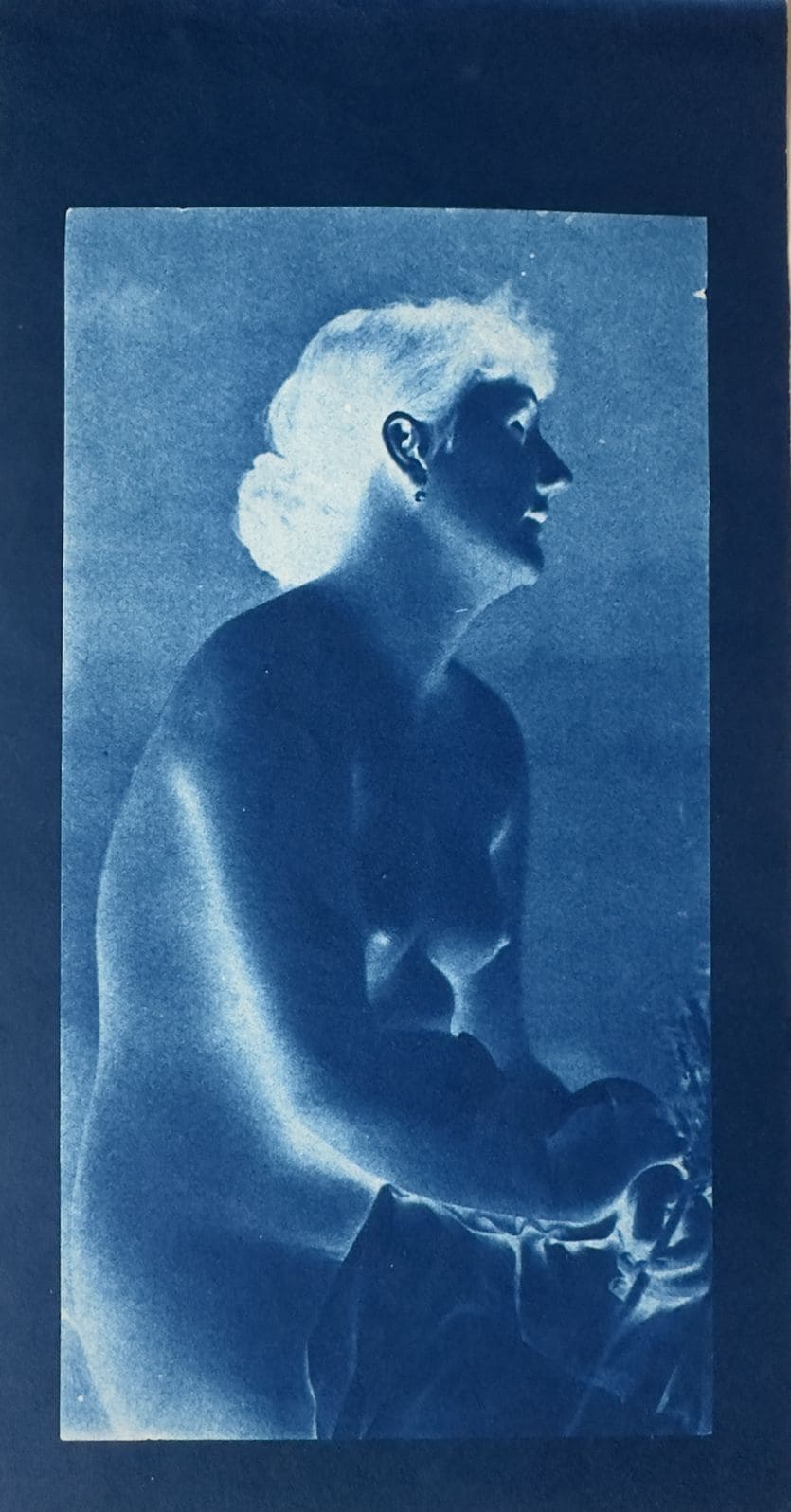
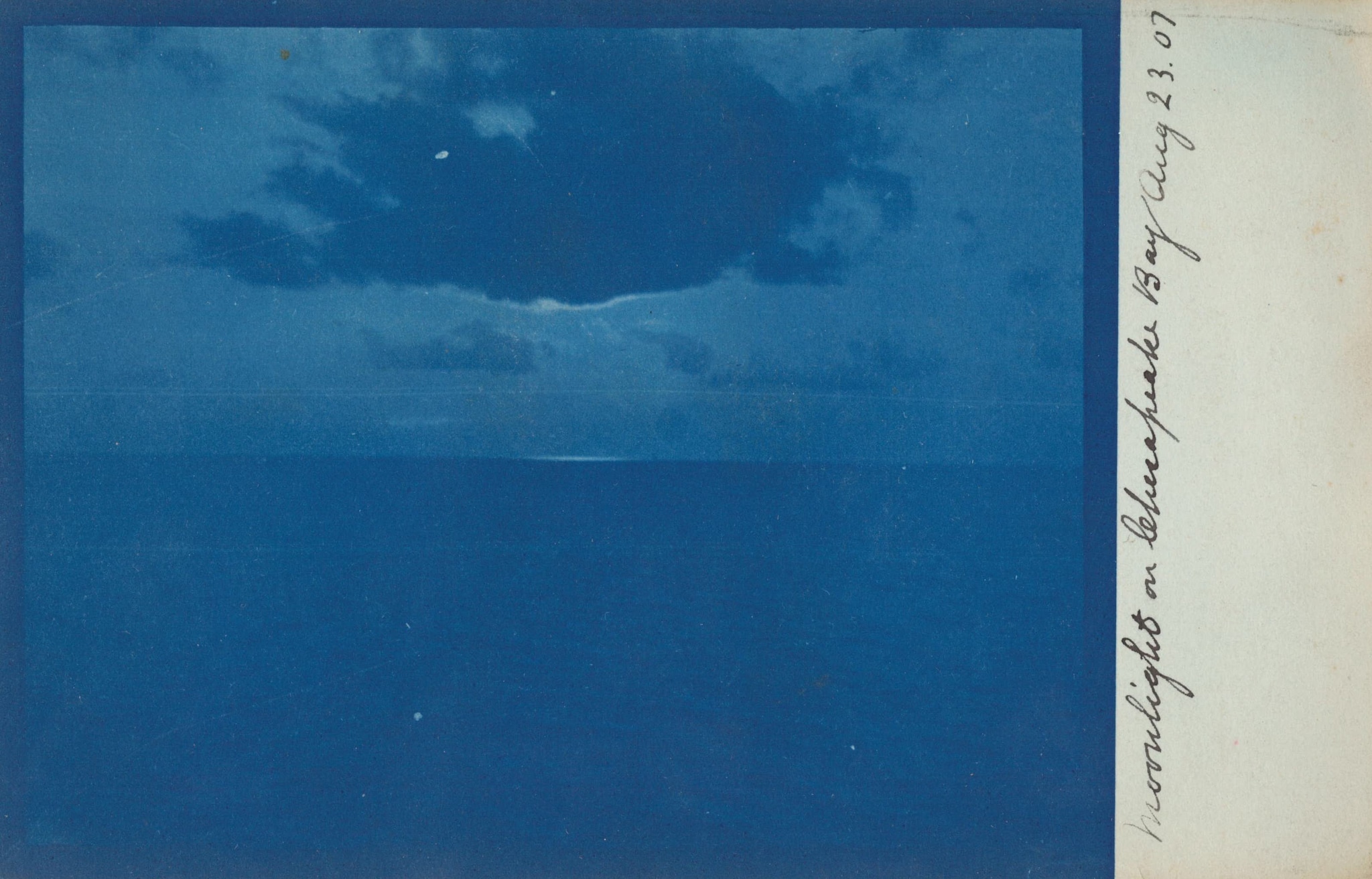
Look at it and you find yourself plunged into a sea that does not exist on any map, but which does exist within you – a deep, secret sea, both physical and mental, a sea that envelops the photograph at its very origins and invites it to sail confidently through the chromatic storm of life, choosing the one colour that unites the extremes of the earth, from the ocean’s surface to the height of the sky, when it is still blue before yielding to the darkness of the infinite. The cyanotype possesses this power; it is the blue – as the Greek kýanos suggests – that keeps you here, amongst the things that have left their mark on the paper, whilst at the same time transporting you elsewhere: pure monochromatic madness that nourishes every nuance of mood. So you think that such complexity belongs solely to Pablo Picasso’s Blue Period, between 1901 and 1904, or to Claude Monet’s water lilies, pure freedom of painting, and again to the clarinet solo that opens George Gershwin’s Rhapsody in Blue, in the year of grace 1924, or finally to the monochromes of that particular blue, which since 1960 has been known as International Klein Blue, IKB.
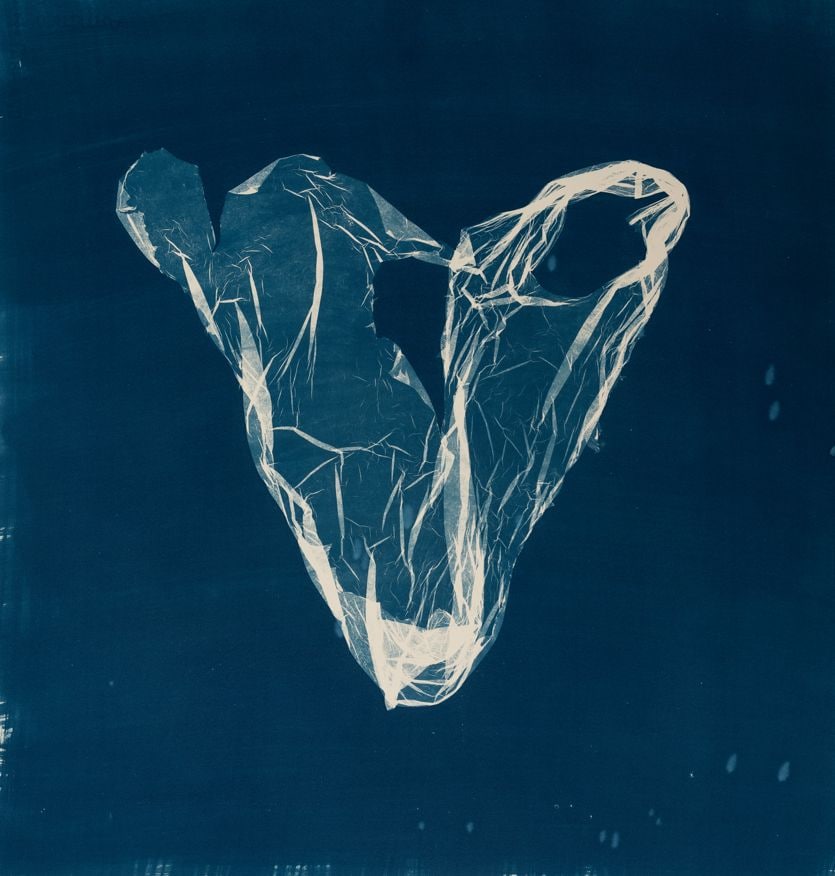
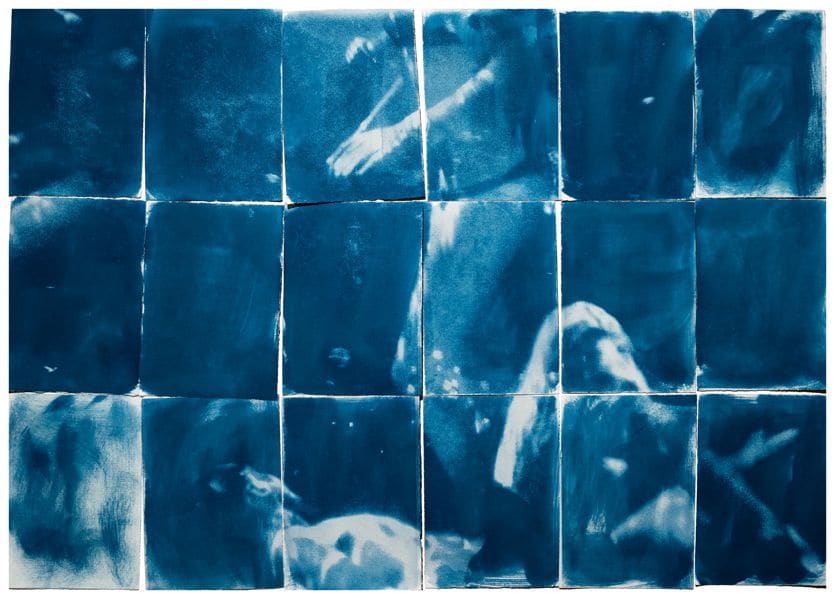
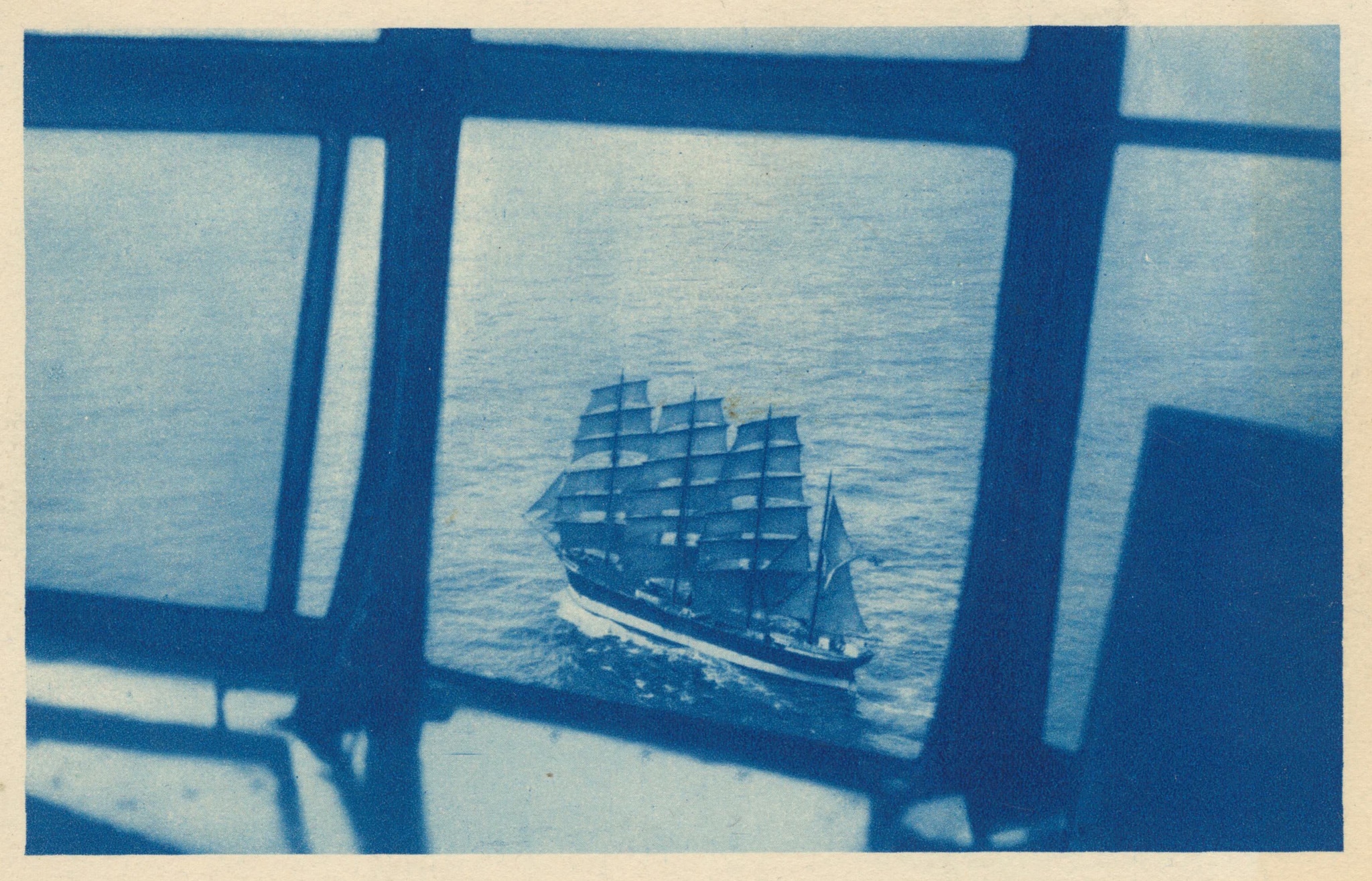
That 20th-century presumption, when we believed that all revolutions belonged to our recent past: yet the libertarian and surrealist blue of the cyanotype – to which, not coincidentally, Rotterdam’s spectacular new Nederlands Fotomuseum has dedicated its inaugural exhibition, Awakening in Blue: /i<, which has just concluded – began to shine in 1842 when Sir John Herschel, an English scientist, discovered the photosensitive nature of certain iron salts – potassium ferrocyanide and ammonium ferric citrate – which, when mixed together, react to sunlight and, when spread onto a sheet of paper, produce an electrifying shade of blue, whilst leaving the outlines of objects – including photographic negatives – in contact with the same paper support white.
The first person to realise that this apparent technical simplicity concealed an extraordinary wealth of meaning – especially when viewed in the context of the future – was a woman. Her first and surname both begin with A, the letter of pioneers, the alpha of discoveries that divide the world into a ‘before’ and an ‘after’. It is a pity that Helmut Gernsheim, the eminent historian of photography and author of the monumental The History of Photography (1955), had interpreted those two letters as the initials of a mysterious Anonymous Amateur. For the record, the anonymous amateur had produced a series of cyanotypes of seaweed from the waters surrounding Great Britain. A few years later, Helmut Gernsheim himself attributed those magnificent blue prints to Sir John Herschel, and the matter was left at that, with the assumption that the photographer was male. But in 1969, Larry Schaaf, a young photography historian at the University of Austin in Texas, who had in the meantime acquired Gernsheim’s archives, noted that those strange cyanotypes were unlike the rest of Herschel’s work.
During a trip to London and whilst exploring the deepest recesses of the British Library’s collections, Schaaf found a copy of Photographs of British Algae: Cyanotype Impressions and discovered that the ‘Anonymous Amateur’ was in fact Anna Atkins, perhaps the first woman in the history of photography – a scientist in her own right, thanks in part to her father, a member of the London Botanical Society and a friend of Herschel and Talbot – and certainly the author of the first book illustrated with photographic images. British Algae was published in very few copies – seventeen remain, and one was also found at the Jardin des Plantes in Paris – and was published in 1843, whilst William Henry Fox Talbot’s The Pencil of Nature appeared the following year. In 1985, Schaaf published the results of her illuminating research in the monograph Sun Gardens: Victorian Photographsby Anna Atkins, and today, anyone wishing to immerse themselves in those sun-drenched gardens simply must acquire the over six hundred pages of the box set published by Taschen, Anna Atkins. Cyanotypes, which brings together not only her research on algae but also that on ferns, published in 1853 under the title Cyanotypes of British and Foreign Ferns.
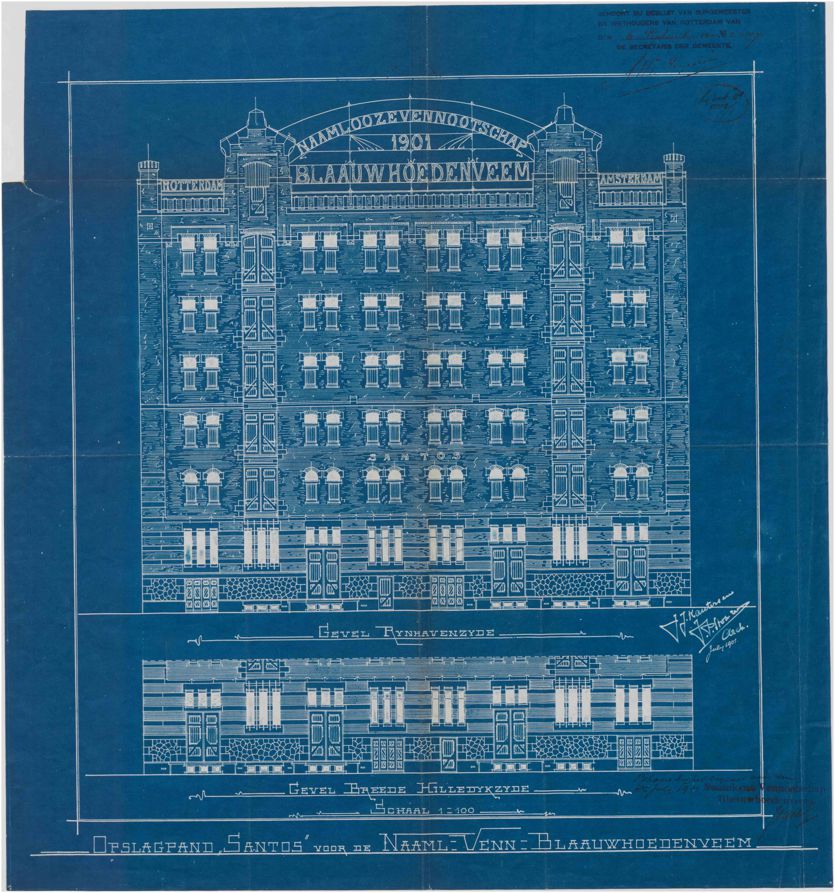
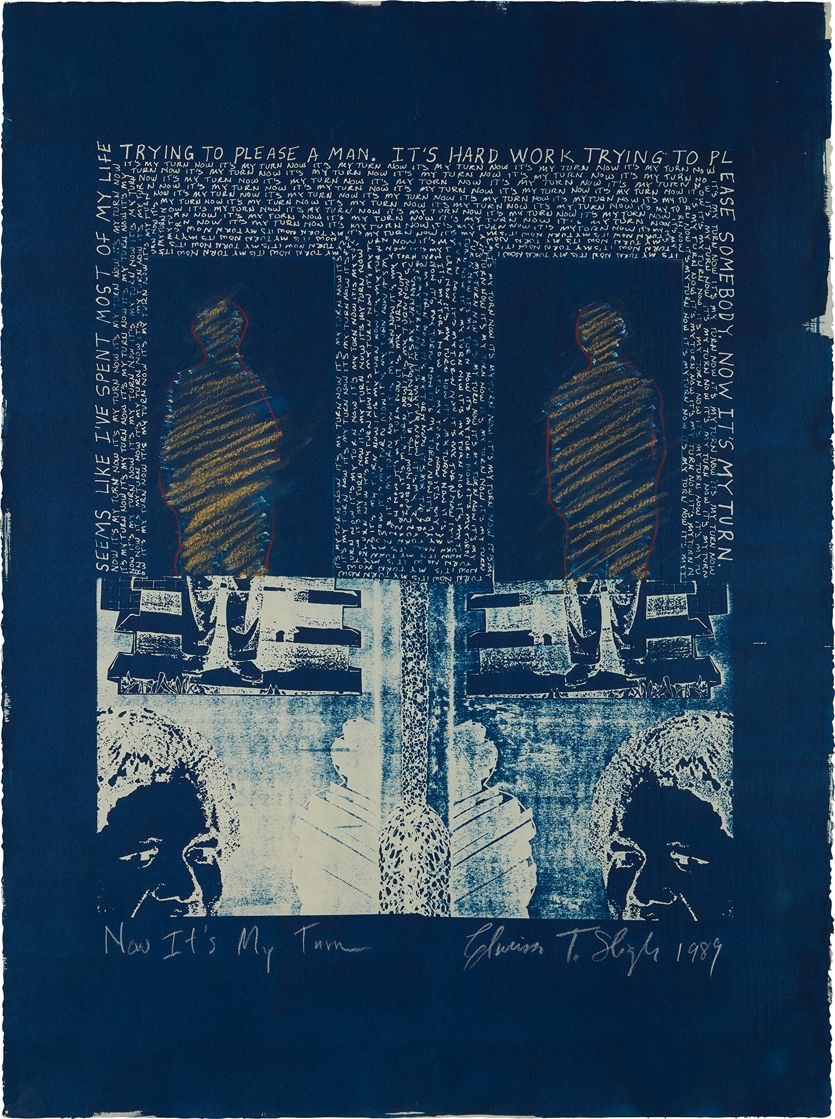
Yet, when it first appeared, the cyanotype did not meet with much enthusiasm. At the Great Exhibition in London in 1851, only a single example was exhibited, and Peter Henry Emerson, a master photographer, remarked that ‘no one but a vandal would print a landscape as a cyanotype’. Hippolyte Bayard in Paris had been more optimistic and, around 1860, had produced a number of cyanotypes from glass negatives for the Société d’Ethnographie and its Collection Anthropologique. In Granada, in 1878, Carl Curman, a Swedish scientist and photographer, had captured the Alhambra in a series of beautiful cyanotypes, whilst in America, photographers such as Edward Sheriff Curtis, Clarence Hudson White and Edward Steichen had embraced the ‘blue wave’. It was Edward Steichen himself, in his role as director of the photography department at the Museum of Modern Art in New York, who enthusiastically welcomed the cyanotypes of Susan Weil and Robert Rauschenberg in 1951, as part of the exhibition Abstraction in Photography. The biography in blue of this artistic duo, set against the backdrop of the Académie Julian in Paris and later the legendary Black Mountain College, takes us back to 1949 when Susan, at her home on Outer Island in Connecticut, revealed to Robert the fragile and poetic beauty of the cyanotype, a technique that Susan herself had used as a child. Thus, a family and childhood memory, shared by thousands of amateur photographers, becomes an artist’s play. Together, Susan and Robert lie down on huge sheets of blueprint paper (the old cyanotype sheets used in publishing and architectural practices), place objects against their silhouettes and wait for the sun, after ten or fifteen minutes, to work its magic.