
Invisible corruption: the Sicilian system between power, business and silence
From 2020 to 2025 more than 250 suspects in proceedings involving procurement management, public appointments and political-administrative exchange
by Nino Amadore

Key points
A shapeless mass of politicians, local administrators, middlemen and entrepreneurs. And the suspicion is that this is only the most obvious part, the tip of an iceberg, the part that is being investigated. Because then the larger part, as yet undetected, is the one that cannot be seen. This is how the story of corruption in Sicily can begin, a subject that has come back into the news in an overbearing manner in recent weeks due to the political effects of the investigation by the Palermo Public Prosecutor's Office involving the former President of the Sicilian Region Salvatore Cuffaro, known as Totò, until a few days ago secretary of the New Christian Democracy, which he refounded and made grow in Sicily.
The Big Business of Healthcare
The evil, it seems, is quite widespread: from 2020 to 2025 we counted just over 250 suspects in proceedings concerning the management of tenders, public appointments and political-administrative exchange, with at least two strands showing direct or indirect intersection with Cosa Nostra (Catania and Castelvetrano), and a structural centrality of healthcare as a lever of power. In 2024 alone, according to research by Libera, Sicily recorded 5 investigations out of 48 (10.4%) at national level and 82 suspects out of a total of 588 (13.9%), "confirming itself as one of the regions with the highest incidence of corruption cases in Italy".
The Opaque Relationships
These are obviously estimates and we can say with reasonable certainty that they are, ours, estimates by default. The judicial investigations that have affected Sicily in recent years reveal an articulated picture, where politics, bureaucracy and entrepreneurship are intertwined in a network of opaque relations: from the regional top management to sector technicians, up to professionals and so-called 'men of trust', the profile of the suspects covers the entire spectrum of administrative and economic power on the island. The investigations for corruption, bid-rigging and (as long as there was one) abuse of office are no longer isolated episodes but signs of a system that has evolved, moving its centre of gravity upwards, to the places where public expenditure is decided. This is not, it seems, a sudden wave, but a profound transformation: Sicilian corruption today may be less widespread, but it appears more organised and closer to power. "Our investigations in recent years have highlighted how corruption today manifests itself through more subtle and socially acceptable forms of exchange of favours. Bribes continue to be used, but even more often what takes place is an exchange of benefits that is based on consolidated relational ties built and cultivated over time,' explains General Domenico Napolitano, provincial commander of the Guardia di Finanza in Palermo. More often than not, these are forms of exchange that create dependencies destined to repeat themselves over time, also generating forms of loyalty'.
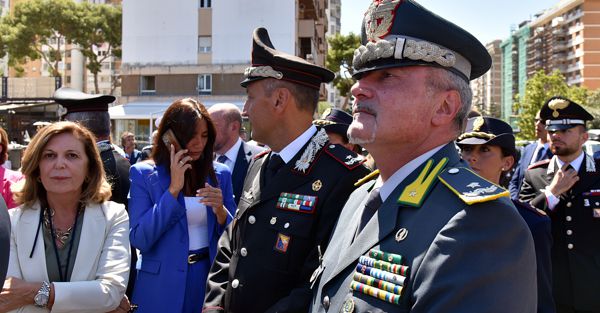
Politicians always in the foreground
At the top of the pyramid are politicians, who are accused of having exploited their position to influence appointments, contracts and tender procedures. And the latest investigation into the regional health system is one of the most emblematic cases: among those under investigation are a former regional president, whom we have mentioned, a former minister and a group leader in the Sicilian Regional Assembly. The suspicion of the investigators is that a power system capable of conditioning the management of public resources was built through political leverage. On the municipal front, minor investigations between 2022 and 2024 involved mayors, councillors and municipal councillors. These are mainly proceedings related to public procurement or bid-rigging, which often have their roots in networks of local favours. Alongside the institutional players emerge the intermediate figures, often decisive in maintaining the links between the public and private sectors: drivers, consultants, business contacts and 'facilitators'. "From our detailed observatory, there is an insistent search for public funds on the part of the private sector," Napolitano continues, "The entrepreneur is confronted with public managers who act as a vehicle with the political component (which materially manages the funding) in identifying those projects with the greatest chance of financing. Towards the latter are directed the entrepreneurs who are exclusive in the provision of the given service and who are already known to be inclined to 'repay the service' through the giving of utilities of various kinds, ranging from appointments and consultancies to recruitment. These are forms of corruption that are increasingly difficult to intercept and eradicate, because they are carried out through elusive forms or by trying not to break the law directly'.
Cracolici (Regional Anti-Mafia): "Region as intermediary"
"The Region has returned to being a place of mere intermediation where the practice of corruption is spread, with an overall lowering of rigour and prudence. Everything is done in the light of day, without shame,' says the president of the anti-mafia commission of the Regional Assembly Antonello Cracolici. "Mafia, business, politics: there is a strong involvement of regional institutions, notwithstanding criminal responsibilities. Politicians should take initiatives independent of trial issues,' says Alfio Mannino, regional secretary of the CGIL. To put it another way, this is 'pulviscular, systemic, organised corruption' according to a definition Libera gave in a report on corruption in Italy in 2024. And often, very often, there is no longer any need for bribes: the new language of corruption is that of consultancies, appointments, extensions, sponsorships, administrative favours. Exchanges that produce political dependence and bureaucratic control. Power is exercised no longer only through money, but through the ability to distribute opportunities: who decides where to invest - in a tender, in an appointment, in a position - also decides who counts and who is left out.


