Mind the Economy/Justice 168

The Invisible Geography of Power

12' min read

Translated by AI
Versione italiana

12' min read

Translated by AI
Versione italiana

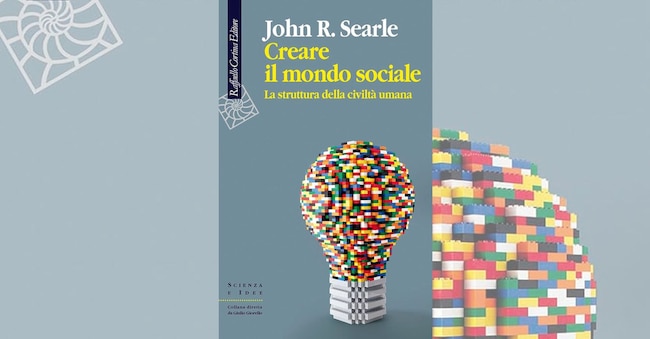
“All political power, even when exercised from above, comes from below,” writes John Searle in Creating the Social World: The Structure of Human Civilisation (Raffaello Cortina, 2010). It seems like a paradox, but it is not at all. The president signs a decree, the judge hands down a judgement, parliament passes a law, the civil servant grants a licence. In all these cases, power appears to flow from the top down, from those vested with it to those who are affected by it. Yet, Searle argues, none of these powers truly resides in the person who exercises them. A president does not possess, in his physical attributes, the power to enact a law, just as a judge does not possess, in his voice, the power to convict someone. If tomorrow they were to cease holding those offices, they could utter exactly the same words without producing the same effects. Where, then, does their power come from? The answer takes us a step beyond the reasoning set out in last week’s Mind the Economy.

We have seen that institutions attribute statuses to people, objects and actions which confer upon them functions that their physical characteristics alone could not justify. But we had left the perhaps most important question unanswered: why do we do this? What purpose do such statuses serve? Searle’s answer is surprisingly clear. They serve to create power. In fact, whenever we attribute an institutional status, we are not simply giving someone or something a new name. We are altering the structure of relationships between people. We are establishing who can do what to whom.

Loading...

The Power of a Signature

Let’s imagine two people sitting at the same desk. Both take a sheet of paper and sign it. Physically speaking, they are doing almost exactly the same thing. A pen is moved across a piece of paper, leaving a trail of ink. Yet that same signature can authorise a payment of ten million euros, whilst the other is worth nothing. Two people utter the same phrase: ‘You’re hired’. If a colleague says it, probably nothing happens. If the head of human resources – the figure with the authority established by the organisation – says it, it can instantly change the listener’s life. The difference lies neither in the signature nor in the words. It lies in the status of the person uttering them. It is to clarify this point that Searle introduces one of the central concepts of his social theory: deontic powers, ‘deontic powers’. Status functions – he writes – invariably entail rights, duties, obligations, requirements, permissions, authorisations and entitlements to demand something. Some deontic powers are positive; that is, I possess the right or authorisation to do something; others, however, are negative. They represent obligations to do or not to do something. They may also be conditional. I may, for example, enjoy the right to vote only if I fulfil certain conditions. Owning a house, then, does not simply mean that there is a particular relationship between a person and a building. It means that that person may live in it, sell it, let it out, bequeath it and, at the same time, that others may not enter it without their consent. Being a judge does not mean possessing certain legal knowledge or wearing a robe. It means being able to perform acts such as passing judgement or ordering a restrictive measure – acts which the same person, once they have ceased to hold office, would no longer be able to perform. And being a citizen, a creditor, a chief executive, a Member of Parliament or a student means occupying a position within a network of possibilities, claims, obligations and authorisations. Viewed from this perspective, the institutional reality appears in a different light; it appears to us as a vast architecture of regulatory relationships.

To confer status is to distribute power.

A wall can prevent me from passing through because of its physical characteristics. An armed man can force me to stop by means of a threat. But a line drawn on a map cannot physically prevent anyone from crossing it. Yet, crossing that line can turn a journey into illegal entry, the transport of goods into smuggling, or a police officer’s intervention into a violation of another state’s sovereignty. Institutional power does not function in the same way as physical power. The point, for Searle, is precisely this. When we recognise someone as a judge, president, owner or creditor, we simultaneously recognise that that person can perform certain acts, make certain claims or demand certain behaviours. In Creating the Social World, the philosopher explicitly formulates this relationship. We recognise that a certain status Y exists and, precisely because a subject occupies that status, we recognise that they ‘possess the power to perform A’. This is why he goes so far as to say that the point of the creation and maintenance of institutional facts is power, but also that, less intuitively, ‘The whole apparatus – the creation, the maintenance and the resulting power – functions only thanks to collective acceptance or recognition (…) The institution and the institutional facts within it require continuous recognition or acceptance because they exist only as long as they are recognised or accepted’. The entire mechanism has a unique characteristic: it functions only as long as those powers are recognised. This does not mean that we must like them or agree with the way they are used. Searle is very careful on this point. Indeed, he speaks of ‘recognition’, not ‘acceptance’. Precisely because the word ‘acceptance’ might suggest approval. I can recognise the authority of a court whilst still considering its judgement to be unjust. I can recognise my country’s government whilst still considering it to be terrible. I can recognise the institution of private property whilst wishing for its radical transformation. Recognition can range from enthusiastic endorsement to the resigned realisation that one cannot change things. It is not, therefore, necessary to believe that those in power are right. We must, however, continue in some sense to recognise that the legitimacy of the power to command derives from the collective acceptance of the status accorded to it from below.

Why do we keep a promise?

There is another, even more profound consequence of this approach. Let’s suppose I promise a friend that I’ll take him to the airport early tomorrow morning. When the alarm goes off, it’s raining, I’ve had little sleep and I really don’t feel like getting up. Why should I do it anyway? I could say that I value our friendship, that I’m worried he’ll be angry, or that one day I might need a favour from him. These are all good reasons. But none of them quite captures the nature of what happened the moment I said, ‘I promise you.’ If someone were to ask me why I got up at five in the morning, I could simply reply, ‘Because I had promised him.’ And no one would find that answer incomplete or unsatisfactory. The promise created something that did not exist before: an obligation for me and a corresponding legitimate expectation for him. Above all, that obligation continues to provide a reason to act even when, the following morning, in the rain and after a sleepless night, I no longer wish to carry out that action.

This example allows us to introduce a second key concept in Searle’s social ontology: the so-called ‘desire-independent reasons for action’. Once recognised, deontic powers provide us with reasons that do not depend on our contingent inclinations. It is precisely for this reason, Searle argues, that these ‘status functions (…) are the glue that holds human civilisation together, for it is to them that we owe the mobilisation of deontic powers’. Consider the number of everyday actions that appear more intelligible to us in this light. I pay a debt even though I would prefer to keep the money. I honour a contract even when, having signed it, its terms no longer suit me. I attend a meeting because I have made a commitment. I respect other people’s property even when I could infringe upon it. A civil servant grants a licence that they personally would not grant because the conditions laid down by law are met. The fact that a breach of such commitments would be considered contrary to the law and therefore penalised seems almost secondary here. It is not the fear of punishment – as a long tradition, from Machiavelli to Oliver Wendell Holmes, maintains – that underpins compliance with the rules, but the construction of those rules as social facts legitimised by shared consent. In all these cases, between what we desire and what we do, there appears something that would not exist without the institutional reality: what we are justified in doing by virtue of the commitments we have undertaken and the statuses we occupy. It is difficult to overstate the importance of this point. A society in which individuals could act solely on the basis of their own contingent preferences would face enormous difficulties in producing stable forms of cooperation. How could we enter into contracts, lend money, delegate someone to represent us, entrust property to others, or build organisations designed to outlast the momentary motivations of their members? Institutions matter because they allow us, amongst other things, to commit to future behaviour.

Constraints that create possibilities

Loading...

One might therefore conclude that institutions are essentially mechanisms of coercion. They give rise to obligations, prohibitions and requirements. They restrict the range of actions we can legitimately carry out. Searle, on the other hand, emphasises the opposite point when he states, for example, that ‘Human institutions are primarily enabling, and human institutional facts give us an enormous range of powers that we could not otherwise possess’. Without a promise, I would not have the power today to take on an obligation for tomorrow simply by uttering a few words. Without a contract, we could not create, with a simple signature, a system of reciprocal obligations intended to last for years. Without property rights, I could not sell a house to someone a thousand kilometres away. Without public limited companies, millions of strangers could not simultaneously own a share in the same business. Without political representation, we could not authorise certain people to make decisions that are binding on millions of others. The interesting point is that the very mechanism that creates all these possibilities also creates corresponding constraints. Institutions, Searle observes, allow free agents to do things they could not otherwise do, but, precisely by making them possible, they bind them in ways that are necessary for the functioning of the institutions themselves. I can buy a house because property exists, but for that very reason I must recognise the property rights of others. I can demand that a contract be honoured, but at the same time I am obliged to honour the terms of the contracts I myself sign. I can vote because there is a political system that grants me that right, but I must recognise the same right in others and accept that the outcome of the process may have consequences I do not like. Institutional freedom therefore contains an apparent paradox. We can do more things precisely because we cannot do just anything.

An armed man and a judge

We can now return to the nature of political power, the example with which we began. Let us imagine two people ordering me to hand over some of my money. The first points a gun at me. The second is a judge ordering me to pay a debt. In both cases, I could do exactly the same thing: that is, transfer money to someone else. But the same action conceals an invisible, deeper and radically different reality. In the first case, in fact, I have an obvious reason to obey: fear. The power of the armed man depends on force and on my desire to preserve my own safety. In the second case, however, the order claims to provide me with a different reason. I must pay because there is an obligation I have voluntarily undertaken and because I recognise the judge’s authority to enforce it. It is clear that although the outcome may be the same, the reasons – force and authority – are not the same thing.

“All political power is a matter of status functions, and for this reason all political power is deontic power,” writes Searle. He continues: “Deontic powers are rights, duties, obligations, authorisations, permissions, privileges, authority and the like. The power of local party leaders and town councillors, as well as the power of more prominent figures such as presidents, prime ministers, the US Congress and the Supreme Court, all derive from these entities’ possession of recognised status functions. Political power thus differs from military power, police power and the power of brute physical force that the stronger wields over the weaker.” Of course, the state also possesses force: the police, the army and prisons. Searle does not in any way deny the intertwining of political, military, economic and coercive power. He argues, however, that their logical structure is not the same. An army occupying a country can secure obedience through brute force. But as long as those under occupation obey solely because they fear the consequences of disobedience and do not recognise any validity in the occupiers’ status, we are still in the realm of coercion. Political power begins when something else emerges, namely the recognition of authority.

Power comes from below

We can now better understand the apparent paradox we mentioned at the outset. If institutional power depends on statuses, and if statuses exist only to the extent that they are collectively recognised, then those in power do not possess their power in the same way as one possesses an object. It is constantly dependent on a network of recognition involving civil servants, judges, police officers, the military, citizens, organisations and codified procedures. For this reason, according to Searle, ‘All political power, even when exercised from above, comes from below’. He then adds something that makes this argument far less reassuring than it might seem at first glance. This holds true in democracies just as much as in dictatorships. ‘Hitler and Stalin,’ he writes, ‘were both constantly obsessed with the need for security. They never took the acceptance of their system of status functions for granted as something that was part of reality. This system had to be constantly maintained by a vast system of punishments and rewards and through terror. Lenin’s greatest invention, imitated by both Mussolini and Hitler, was the party – not the traditional political party, but an elite organisation of committed and disciplined fanatics who would work to subvert the old system of status functions and seize power once the system had been subverted, in order to then create a new system of status functions”. The fact that power comes from below, therefore, does not mean that it is necessarily democratic. It means that even power exercised from above requires a sufficiently large number of people to continue behaving as though those at the top have the right to be where they are and to exercise the power they wield. A presidential order does not produce consequences because the president possesses a particular causal capacity. It produces consequences because ministers, civil servants, judges, law enforcement officers and citizens recognise a chain of status, competences and obligations. When this chain is broken, power can dissolve with surprising speed. Searle even interprets the collapse of the communist regimes in Eastern Europe in this light. From the point of view of logical structure, they collapsed when collective intentionality could no longer sustain the system of status functions.

And what does justice have to do with it? It has a great deal to do with it, given that if social statuses confer deontic powers, the structure of a society is not determined solely by the distribution of resources amongst its members. It is also defined by the distribution of rights, obligations, authorisations and decision-making powers. Who can give orders, who must obey, who can enter and who can be excluded, who can make decisions, who can challenge a decision, who can speak on behalf of others, who can demand an explanation. This perspective reveals inequalities that a snapshot of the distribution of income or wealth fails to capture. Searle gives a particularly significant example. A society may attribute different deontic statuses – that is, different rights and responsibilities – to people of different races, even if its members do not regard themselves as racists. From an institutional point of view, what matters is not the name by which they describe the system, but the deontology they actually recognise: which rights and which obligations are attributed to different people. It is an insight that takes Searle’s theory far beyond the ontological curiosity of explaining why a piece of paper can become money. To understand a society, it is not enough to ask who owns what. We need to reconstruct what we might call its ‘invisible geography of power’. Who can make promises. Who can grant authorisation. Who can prohibit. Who can own. Who can represent. Who can dismiss. Who can judge. Who can vote. Who can hold someone to account for a particular decision. And above all, who holds the power to alter these very powers?

Perhaps this is precisely the most interesting consequence of the paradox with which we began. If political power, whilst exercised from above, actually stems from below, then is it not enough simply to ask who is in charge? Do we not need to understand what role we play – often without realising it – in ensuring that someone can continue to be in charge?

Copyright reserved ©
Loading...

Brand connect

Loading...

Newsletter

Notizie e approfondimenti sugli avvenimenti politici, economici e finanziari.

Iscriviti