
The iPhone 18 Pro Max review: a substantial evolution
The new model is further proof of the Pro range’s innovative spirit. The most interesting new features are hidden beneath the bodywork

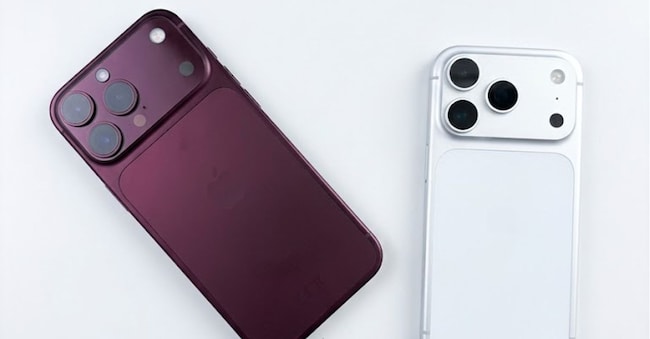
Key points
Apple is expanding its range of iPhones to cater for different types of consumers and, under the leadership of John Ternus, rumours suggest we will have to get used to a faster pace of new product launches that go beyond smartphones. Last year saw the first sign of this new strategy: iPhone Air, a completely new phone that laid the technological foundations for the iPhone Duo, which is due to arrive in Italia in the coming weeks. Here, Apple is experimenting with new designs for its smartphones, including its first foldable model, whilst the iPhone 18 Pro (and Pro Max) continue the path of incremental innovation for the most professional and versatile models in terms of photography.
The new Dynamic Island
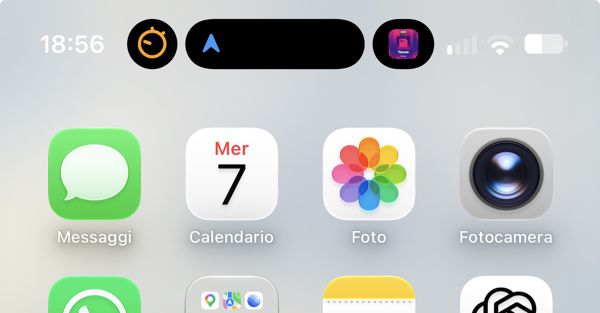
From the outside, the differences compared to the 17 Pro are hard to spot. The most obvious one concerns the Dynamic Island, which now takes up less space at the top of the screen. Apple has reduced its size by moving one of the infrared sensors – located in the top-left corner – beneath the OLED panel. Now, in that small space, you can see previews of three live activities at the same time – for example, Maps directions, a stopwatch and a podcast. With two activities active, however, each can be displayed with more information.
A major innovation
The new iPhone 18 Pro weighs 7 grams more than the 17 Pro (211 versus 204), whilst the 18 Pro Max, which I tested for two weeks, weighs 249 grams – 18 more than the 17 Pro Max’s 231. For statistics enthusiasts, the weight of the Pro models has slowly started to increase, model by model, from the 15 Pro onwards. The 15 Pro Max had dropped to 221 grams, the 16 Pro Max weighed 227, the 17 Pro Max weighed 231, and at 249 grams, the 18 Pro Max even exceeds the 14 Pro Max, which was made of stainless steel.
The 18 Pro, like the previous model, has an aluminium body, whilst the 15 Pro and 16 Pro were made of titanium. The trend has gradually moved towards lighter materials. The weight, however, has increased slightly, probably because Apple has improved battery performance and heat dissipation, and added components. It’s a trade-off that pays off. If you’re upgrading from the 15 Pro Max, you’ll notice the difference at first, but it’s not significant.
The A20 Pro effect
Apple’s new A20 Pro chip marks the transition to a 2-nanometre process, compared with the 3-nanometre process of the A19 Pro. The CPU has six cores: two high-performance cores and four energy-efficient cores. The GPU, on the other hand, has seven cores, each incorporating a Neural Accelerator, designed to speed up artificial intelligence-related workloads. Siri AI stands to benefit most from this, both now and in the future. However, it is not yet available in Europe due to the dispute between the company and the European Commission regarding the application of the Digital Markets Act. According to Bloomberg, a resolution is still a long way off and could take months.


