
The iPhone Air is the result of an obsession with chip efficiency
The new iPhones have more and more technology made in-house. And the European centre in Munich plays a key role. John Ternus, Apple's head of hardware engineering, explains why
from our correspondent Luca Salvioli
 Aggiungi Il Sole 24 Ore
ai preferiti su Google
3' min read
Key points
3' min read
The iPhone is often taken as an example of globalisation, because various parts of the world are represented in its design and components, in particular Cupertino, where Apple is headquartered, as well as California, China and India. In the growing category of Apple-made chips, Europe has taken a growing role over the years thanks to the 'European Silicon Design Center' in Munich, where over 2,000 engineers work.
The new iPhone Air, in particular, is the result of efficiency-driven miniaturisation work made possible by progressively building microscopic pieces of core technology, particularly processors, in house, reducing external suppliers and encouraging greater integration. Such as the debut of the N1 chip, with advanced Wi-Fi 7 and Bluetooth 6.0, and the C1X, an evolution of the C1, the first Apple-designed modem that arrived just over six months ago on the iPhone16e.
The role of the European Centre in Munich
.In the Munich labs, engineers work mainly on connectivity and 5G, power management and chip design inside isolated chambers where limit situations and various stress tests with extreme temperatures and high traffic density are created. They told us that the transition to the new modem, made necessary by the size of the Air, came in a few months, but the first one, the C1, took years. The obsession among those white rooms and corridors is efficiency. To reduce space and provide more for the battery.
"Much of the work done here in Munich has been fundamental to the creation of many of our products, particularly these new ones," John Ternus, Apple's Senior Vice President of Hardware Engineering, told Il Sole 24 Ore and several international publications. This year we introduced a completely new phone, iPhone Air, which we had wanted to do for some time, but which required the right technologies and capabilities to make it happen".

The Technological Primacy of iPhone Air
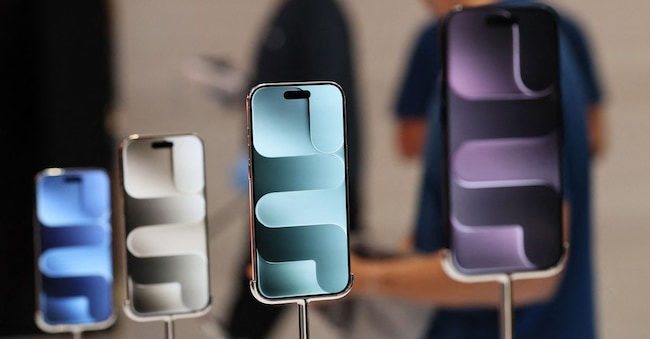
.iPhone Air is really thin (5.6 millimetres) and weighs little (165 grams, to give an idea iPhone 17 Pro Max weighs 240). It has a 6.5-inch screen, a good compromise between the 6.3 of the Pro and the 6.9 of the Pro Max. It shares the same A19 Pro SoC with the Pro, although the Air has a 5-core GPU versus the Pro's 6. This is the culmination of this technological effort, paving the way for a new generation of iPhones and, according to rumours, the first foldable in the future. According to Apple, the battery life is similar to that of the iPhone 16 Pro.


