Innovation

iPhone Duo: the era of passport-style smartphones has arrived

The launch of Apple’s first foldable phone confirms a new trend pioneered by Samsung and followed by Chinese manufacturers


Il nuovo iPhone Duo APN

5' min read

Translated by AI
Versione italiana

5' min read

Translated by AI
Versione italiana

Apple rounded off its 9 September event in Cupertino with the iPhone Duo, the first foldable device in its history, announced with the ‘one more thing’ line by the new chief executive, John Ternus. It’s an iPhone that opens like a small book to reveal a 7.6-inch internal screen (it also has a 5.4-inch external screen). And amongst its other features (you can find them all in this article), we find the A20 Pro chip, Touch ID integrated into the side button (meaning Face ID has been dropped) and the mandatory use of an eSIM.

The Duo is undoubtedly the iPhone that has brought the most innovation for many years now, because its format – which, when closed, has the shape and size of a passport – changes the way it is used.

Loading...

The point, however, is not Apple. Or rather: it is not just Apple. In fact, in the space of less than two months, four of the world’s leading manufacturers have unveiled a phone with the same design, and this convergence speaks volumes about the smartphone market.

Samsung was first off the mark, and the more cynical among us are convinced that it decided to bring its plans forward when it received orders from Apple for foldable displays of that size. So, on 22 July, at the Unpacked event, it unveiled not only the Galaxy Z Fold 8 Ultra – which retains the tall, narrow shape of previous generations – but also a completely redesigned Galaxy Z Fold 8: the ‘passport’ model. The South Korean firm expects this variant to account for around a third of its foldable sales in the United States.
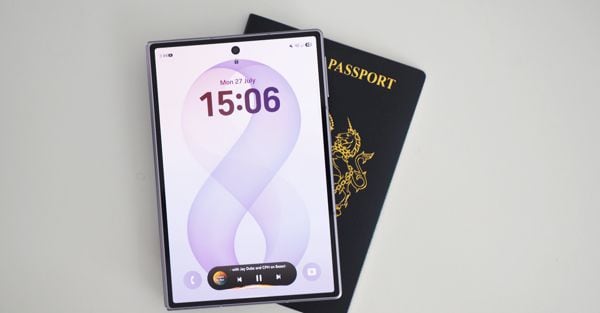
Il Samsung Galaxy Z Fold 8 comparato con un passaporto

Then, two days before the Apple event, the Chinese manufacturers also made their move. Xiaomi unveiled the 18 Fold, the most expensive phone the company has ever produced, which the group describes as a ‘mid-fold’ solution: when closed, this smartphone, too, is the size of a passport. On the same day, Huawei opted for the opposite and more complex route, unveiling the Mate XT2, the third generation of its dual-hinge foldable. It should be noted, however, that Huawei was the very first to introduce a ‘passport-sized’ format in China back in 2025 with the Pura X series (which, however, does not fold open).

The reason behind this shift towards wider, less elongated phones is less about aesthetics than it might seem. The traditional clamshell foldable was originally designed as a standard phone that unfolded into a tablet, and to do so it had to remain tall and narrow: when closed, the external screen was an awkward strip; when open, the aspect ratio was unsuitable for videos and only really suitable for two columns of text side by side. The passport-style format, on the other hand, changes the rules. Whilst it is true that, when closed, you forgo the convenience of using just one hand (it is no coincidence that the most frequently used apps are positioned in the area closest to where you hold the phone), when open – thanks to its 4:3 aspect ratio – it offers the ideal proportions for watching, reading and drawing.

The fact remains that this is still a small market. According to IDC, foldable phones will account for around 2.2 per cent of smartphone volumes in 2026 and will reach 3.3 per cent in 2030; the share of revenue is more interesting, rising from the current 6.9 per cent to a projected 10 per cent over the same period. These figures point to an expensive niche market rather than a revolution. But it is also true that Apple has only just entered the market, and the Cupertino giant is usually a market mover when it comes to devices.

The real hurdle remains the price: the new iPhone costs over 2,000 euros, whilst the Samsung is just under that. In short, these aren’t exactly prices to suit every budget. But behind these figures lies a complex and costly industrial process. A foldable phone is expensive because it incorporates three components that a traditional phone does not have: a flexible OLED panel with ultra-thin glass, produced with lower manufacturing yields than those of rigid panels; a second display unit, the external one; and a hinge that is a piece of precision engineering. Apple states that its hinge comprises over a hundred components, made from a titanium and aluminium alloy, housed within a Grade 5 titanium frame. An estimate by UBS of the material costs for the Galaxy Z Fold Special Edition put the figure at $790, compared with the $759 estimated for Apple’s first foldable: almost double the cost of manufacturing a conventional high-end phone. Added to this is the fact that low production volumes prevent economies of scale, and that servicing is more expensive, because the inner display is glued to the hinge assembly and repairing one part often requires repairing two.

Amidst all this, one detail that is by no means a minor one: the memory crisis. Foundries have diverted production capacity towards high-bandwidth memory for artificial intelligence data centres, leaving the consumer electronics sector to compete for what remains – at significantly higher prices. IDC estimates that memory accounts for between 10 per cent and 15 per cent of the bill of materials for a top-of-the-range device and between 15 per cent and 20 per cent for a mid-range model – figures which, at current prices, amount to tens of dollars per device.

In short, ‘passport-style’ smartphones seem to have the edge when it comes to innovation, following a long period in which upgrades were measured in millimetres of bezel reduction and additional megapixels. The real challenge they face, however, lies in pricing. For Apple, there is also a question of timing: the iPhone 18 Pro models hit the shops on 18 September, whilst the Duo models arrive on 23 October. A five-week gap between products unveiled on the same day almost always points to a manufacturing issue: how many will they be able to produce? For this reason, the verdict, at least for now, can only be partial. And perhaps, if it proves successful, we’ll only find out from the second generation onwards, when memory prices have stabilised and yields on flexible panels have risen enough to allow for versions priced below 1,500 euros. Until then, this iPhone will remain a product for those who can afford to pay over two thousand euros for a small tablet in their pocket, knowing that the first model in a new category is always the one that comes with the highest price tag.

Copyright reserved ©
Loading...
Loading...

Brand connect

Loading...

Newsletter

Notizie e approfondimenti sugli avvenimenti politici, economici e finanziari.

Iscriviti