
The Irish fish & chips? It's all made in Italy. Or rather made in Casalattico
History of the town in the province of Frosinone that made its fortune emigrating to Dublin after the war and cooking fried cod and chips

4' min read
4' min read
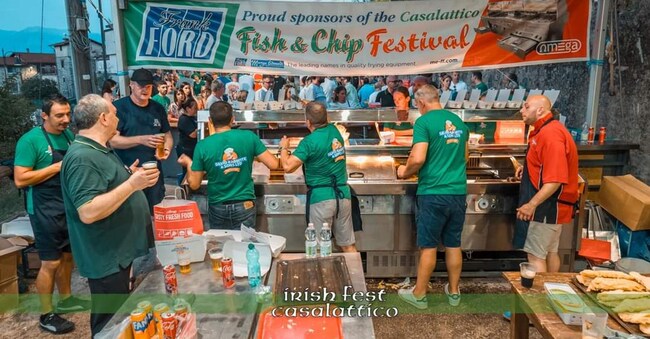
Every 14 August, the streets of Casalattico, 531 souls in the hills of Frosinone, are filled with mugs of Guinness, bacon, fried cod and green clovers. When there is an Irish fest, Celtic music goes on until dawn. But that of the people of Casalattico is not just an obsession with Dublin. The fact is that all the fish and chips of Ireland are pure Made in Italy. Indeed, made in Casalattico.
Fusco, Macari, Borza, Libero, Aprile. Ninety-five per cent of Irish establishments specialising in fried cod and chips belong to Italians. The first dates back to the late 19th century and was founded by Giuseppe Cervi. But the bulk came after World War II: 'My mother,' says Antonio Macari, one of the best-known surnames in Irish fish and chips, 'landed in Dublin in 1957 from Montattico, a hamlet of Casalattico; her sister had just opened her first shop, business was good and she needed help. When there was no family left, she turned to friends, then to friends of friends. Eventually, the whole valley emigrated to Ireland. On the boat that takes tourists around Dublin Bay, a recorded voice still recounts that there are more inhabitants of Casalattico in Ireland than in Lazio. And while the Irish emigrated to Boston, the Italians bought their homes and went into business. Strictly family-sized: small chains of three or four shops. When a son married, a new one was added.
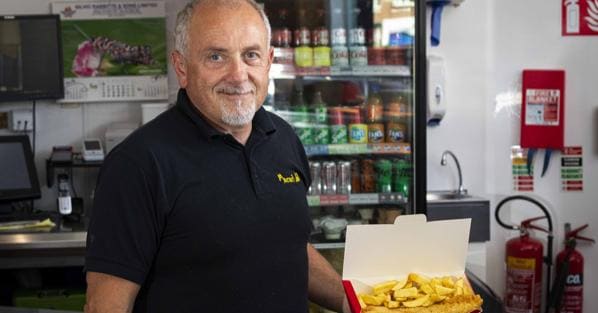
"Until the late 1970s, 80 per cent of the Italians in Ireland were from my village,' Antonio Macari recounts. In the post-war period people fled the hills of Casalattico because of hunger, and those who came to Ireland had nothing. But why not start with pasta or pizza, why fish and chips? 'My parents' generation was wise,' says Antonio, 'they chose to cook not what they liked, but what the Irish liked. Cod and chips, to tell the truth, were not even in the local tradition: 'It is a food that the Italians brought to Dublin from England,' says Teresa Di Nardi, whose maiden name is Borza, another historic brand of fish and chips, 'and it is precisely because there was no such dish in Ireland that we Italians were not experienced as those who took work away from the Irish. It is hard work, seven days a week, even in the evenings. People in Dublin didn't want to do it'. But you earned good money: 'The Irish,' Antonio Macari remembers, 'have always been very Catholic, on Fridays they make eve and eat fish. My mother used to tell me that in the 1960s the Friday takings were the same as the rest of the week'. Even today there is no village or neighbourhood in this nation of five million inhabitants that does not have at least one church, one pub and one fish & chips.
In the meantime, Casalattico has changed its face. Thanks to the remittances, the ruins from which people escaped have given way to cottages: 'The building boom in the village began in the 1970s,' says the mayor, Francesco Di Lucia, 'my uncle was a builder and was paid in sterling. Young people today either go to Rome, which is an hour and a half from here, or they continue to go to Ireland,' says Di Lucia. 'Besides, between Milan and Dublin, the latter is better: the plane costs the same, but everyone there has at least one relative or friend to lean on. On the contrary, there is now a lot of tourism in Casalattico: 'In the summer we have more than two thousand people,' says the mayor, 'those who have emigrated come back for their holidays, young and old together, but Irish people who have no relatives here are also starting to arrive. They come because we speak English, they rent houses, and they enjoy the Irish fest on 14 August'.
In Ireland, meanwhile, the third generation of chippers - that's what they call them, the Italians of fish & chips - prefers to move away from the family business: 'My brother had already chosen to be an accountant and my sister a teacher, they studied at university; my two sons helped me as students, but now they want to do something else', says Antonio Macari. So, in the last twenty years, a new wave of immigrants has come to Ireland: 'They come from Moldova, Belarus, Kosovo. Many from former Yugoslavia,' says Macari, 'they are the ones who are taking over the fish and chips business. And as we Italians did, they are bringing their brothers, sisters and friends along, as they expand the business'. The historical families of Casalattico sell, but they don't let them use their name, so the new generation renames the restaurants 'Roma' or San Marino'. Fried cod, however, they know how to do well: 'Before they became entrepreneurs they worked for us,' explains Antonio Macari. History repeats itself.


