
The iRobot lesson: starting first does not help when innovation is faster than you
The Roomba robot hoover created a global market, but competition eroded the pioneer's advantage: an industrial history that reminds us that starting early does not guarantee victory.

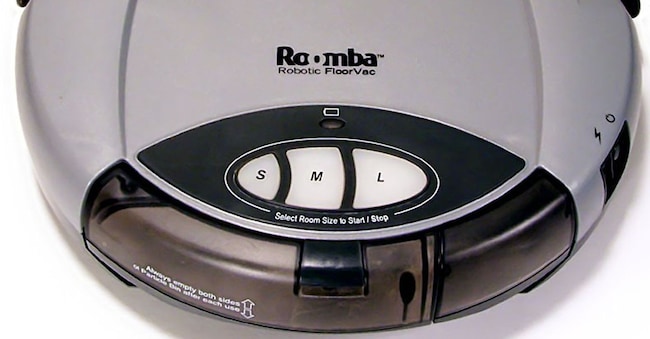
iRobot, the manufacturer of the Roomba hoover, filed for bankruptcy under Chapter 11 of the US Bankruptcy Act. Shenzhen Picea Robotics, iRobot's main contract manufacturer, will buy iRobot's assets. The collapse of the robot hoover manufacturer is not an isolated case but joins a long list of examples where the pioneer advantage failed to create lasting success. Let us try to understand what happened.
when iRobot came on the market, it taught millions of families a new domestic choreography: coming home and finding the floor clean without having used an electric broom or hoover. Before artificial intelligence became an overused word, Romba taught us how a minimal, almost invisible gesture, the push of a button could be the gentle beginning of the invasion of mass robotics into our homes. The company was born in 2002, cost $200, and at the time had become the Christmas rule along with the iPod and the first DVD burners. It was the right idea at the right time. But it was not enough. Twenty years later, iRobot has ended up in Chapter 11, the US bankruptcy proceedings. It will live on thanks to its Chinese creditors. But the illusion that starting first is a guarantee of lasting success will disappear. It is a lesson as old as the industry itself, but every time it makes noise because it hits a symbol.The company founded by two engineers at MIT in Boston created a market and then saw it turn into a commodity. It is the dynamic described by economist Bruce Greenwald: if you don't raise technological or economic drawbridges, everything sooner or later becomes a toaster. Robot hoovers today are dozens, often indistinguishable, with lower prices and faster innovation cycles. Brands like Roborock, Dreame or Eufy have replicated and improved on the idea, exploiting Asian supply chains, vertical integration and thinner margins. The numbers tell the parable better than any metaphor: iRobot takes five years to double its turnover to $1.4 billion in 2020; it takes only three to halve it from its peak of $1.6 billion in 2021. The $1.7 billion acquisition proposed by Amazon in 2022 was blocked by the European Union due to antitrust fears. The debate lasted for months. In the meantime iRobot went into debt with a $200 million loan from Carlyle, with onerous conditions. By the time the decision came, the market had changed. It is a textbook case of asynchrony between the timing of regulation and the speed of technological competition.iRobot's story is no exception. BlackBerry had invented the smartphone for managers, with a physical keyboard that many still regret today. Apple and Google won by focusing on software ecosystems and touch screens. Nokia dominated mobile telephony with shares of more than 40 per cent in 2007; the iPhone arrived in the same year and in just a few product cycles redesigned the industry. Kodak had developed one of the first sensors for digital photography back in the 1970s, but remained prisoner to the economic model of film. Xerox PARC invents mice, graphic interface and local area network, but it is others who turn them into mass products.Being a pioneer often means paying the cost of exploration. One invests in research, one educates the market, one makes mistakes visible to all. Those who come later can observe, correct, standardise. It has also happened in infrastructure: London is the world's first underground, but anyone who has travelled on Hong Kong's understands what it means to design with a century of learning behind you.The lesson applies today, in the age of generative artificial intelligence. OpenAI led the way with ChatGPT, but the gap with Google has narrowed rapidly; Meta and Anthropic are pushing from other corners. The time advantage is real, but fragile. Without an industrial strategy, proprietary data, process integration and the ability to withstand a price war, the innovation risks becoming a successful prototype and an ephemeral company.Roomba will continue to run under the sofas in some form, perhaps with a different logo. iRobot, on the other hand, remains as a case study.


