

‘Israel’s AI sector? An ecosystem that isn’t afraid of failure and leaves intellectual property in private hands’
Shahar Bracha, deputy director of the Israel AI Directorate, says: ‘The National Plan is based on reliability in real-world conditions, integration with the physical world, and the ability to achieve more in terms of constraints and security. The problem is not what is missing, but transforming a model that works in theory into a system that a doctor can rely on, a power grid can operate on, and a farmer can count on.”

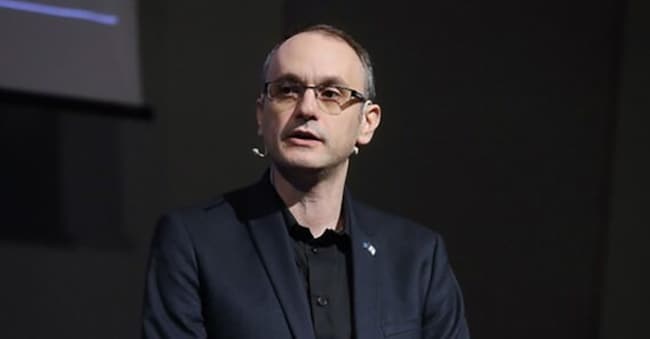
In 2025, exits by funds from Israeli start-ups totalled $58.8 billion, an increase of 340 per cent on the previous year. “But none of this was built by an abstract ecosystem. It was built by people, and those very same people are now turning their attention to AI,” explains Shahar Bracha, deputy director of the Israel AI Directorate. “We are responding by expanding research and teaching posts, and creating combined research and work pathways. Alongside this, a global Diaspora network linking Israeli AI experts, wherever they may be, with what is happening here, and a philanthropic channel for work that the market alone would struggle to fund. We are not just trying to retain our talent. We are trying to make Israel the place they would choose anyway.’ Tel Aviv has recently launched its own national programme for the development of artificial intelligence, a holistic model that is very different from the American or Chinese models and extremely different from the European approach. Shahar Bracha is the deputy head of the body responsible for coordinating government activities, managing computing capacity and overseeing development phases. At the same time, this involves agreements along the value chains – not only regarding chips – as well as energy agreements and, finally, relations with private companies that retain ownership of the intellectual property.
Deputy Director Bracha, what do you consider to be the main obstacle to the successful implementation of high-performance artificial intelligence? Is it computing power, talent, regulation, adoption in the public sector, or coordination between ministries?
‘Honestly, I would say there’s a bottleneck that isn’t on your list. Because that’s what really matters, and it’s not specific to Israel. And the gap between the AI revolution as it exists on a screen and the AI revolution as it exists in real life. Our national plan is based on this assessment. The revolution is being held back globally by five barriers: model reliability, adaptation to real professional needs, the difficulty of connecting AI to the physical world, economic models that have not yet found a balance, and cyber-vulnerabilities. So, reliability under real-world conditions, integration with the physical world, and the ability to achieve more in terms of constraints and security are precisely the four areas in which Israel has been developing expertise for over seventy years. The main challenge, therefore, is not what is lacking. Rather, it is transforming a model that works in theory into a system that a doctor can rely on, a power grid can operate on, and a farmer can count on. This is what we call ‘Lived AI’, and that is where the strategy is focused. We have established the National Institute for Impact-Driven AI (NIIA) as our executive arm and, within it, five acceleration programmes, at least two of which are in peripheral areas. Every challenge starts right from the outset with a business lead and an implementation partner – and this is the discipline that distinguishes a pilot project from a genuine implementation. We ensure that government departments, hospitals and regulatory bodies move at the same pace: by bringing them together around a concrete problem, with one person clearly responsible for the outcome.’
How does the public budget work?
‘The Plan is based on investment, not on full public funding. The State acts as a catalyst and is the primary institutional client. A country of our size that tries to spend more than the superpowers is bound to lose – and lose badly. Public resources are divided into two parts. Firstly, the sovereign base: a national target of at least 100,000 advanced accelerators driven by the private market; a quantum computer based on Israeli technologies; national preparatory work towards an advanced manufacturing facility operating at 5 nanometres or less; and a dedicated energy plan, because without energy there is neither computing power nor models. The lion’s share of public funding goes where capital alone could not compete. Whilst intellectual property remains with the entrepreneurs, provided that implementation in Israel is widespread. We are not seeking to appropriate the results. We are seeking to ensure that they are produced here and used here.”

