Korea

Gwangju: the Italian Pavilion builds bridges

Three Italian and two Korean artists engaging in dialogue through new productions, residencies and collaborations to turn cultural diplomacy into opportunities

 «AMEN», 2021, di SAGG Napoli, video still

5' min read

Translated by AI
Versione italiana

5' min read

Translated by AI
Versione italiana

The 16th Gwangju Biennale, running from 5 September to 15 November, continues to explore the relationship between imagination, change and collective responsibility. The artistic director Ho Tzu Nyen has chosen as his starting point a verse by Rainer Maria Rilke – ‘You must change your life’ – interpreting it not as a command, but as an open invitation to individual and collective transformation. Rather than pointing in a specific direction, the curatorial project allows multiple possibilities for change to emerge, entrusting the artists with the task of imagining new ways of inhabiting the present. Forty-three artists and groups have been invited, hailing from 22 countries. Among them is the Italian Rossella Biscotti. However, the Italian presence in Korea is also represented by the Italian Pavilion, a separate project that complements the Biennale.

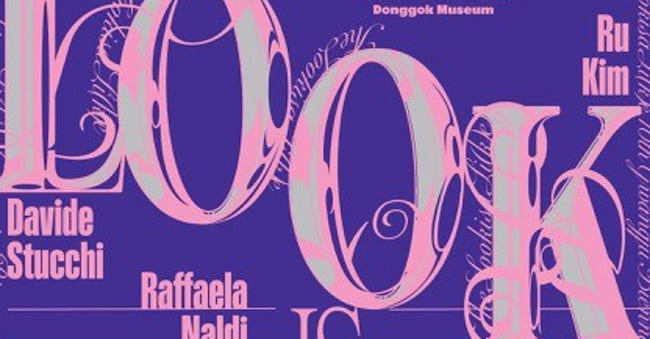
Now in its third edition, the Pavilion is hosted at the Donggok Museum in Gwangju and was conceived as a project by the Italian Cultural Institute in Seoul to promote contemporary Italian art, forming part of the cultural diplomacy activities of the Ministry of Foreign Affairs and International Cooperation (MAECI). Entitled ‘The Look is A Li(k)e’ and curated by Irene Campolmi, the exhibition brings together three Italian artists – SAGG Napoli, Raffaela Naldi Rossano and Davide Stucchi – and two Korean artists, Dew Kim and Ru Kim.
Loading...

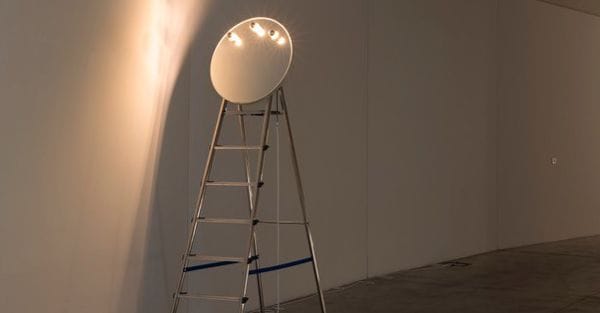
«Rising, falling, looking for the sun», 2025 di Davide Stucchi

The Italian Pavilion in Gwangju

Not merely a showcase for Italian art, but a platform for building relationships between two cultural systems. This is the role that the Italian Cultural Institute in Seoul assigns to the Italian Pavilion at the Gwangju Biennale. “The Italian Pavilion at the Gwangju Biennale is, first and foremost, an instrument of cultural diplomacy for the Ministry of Foreign Affairs and International Co-operation,” explains Davide Scalmani, director of the IIC in Seoul. “The aim is to promote contemporary Italian art forms abroad and, at the same time, to create a platform for dialogue between the Italian and Korean art scenes.”

A strategy which, in the 2026 edition curated by Irene Campolmi, also takes the form of bringing together three Italian artists – Raffaela Naldi Rossano, Davide Stucchi and SAGG Napoli – with two Korean artists, Dew Kim and Ru Kim. “We didn’t want to limit ourselves to simply including existing works within an already defined curatorial framework,” emphasises Erika Sfascia, deputy director of the IIC. “The creation of new works allows the artists to engage with Gwangju, with the exhibition’s theme and with Korean society. It is this shared process that makes the project truly international.”

The Pavilion thus becomes the starting point for a journey that is intended to continue beyond the duration of the Biennale. “For the Institute, internationalisation does not end with participation in a Biennale,” adds Scalmani. “We want to create the conditions for Italian artists to build lasting professional relationships with Korean curators, institutions, galleries and collectors.” This approach has already been borne out to some extent by the careers of artists from the first editions, who have returned to Korea for exhibitions, festivals and new projects.
Camilla Alberti, who was featured in the 2023 Pavilion, took part in the Gangneung International Art Festival and, in 2024, organised the exhibition ‘The Spell of Monsters’ at the Hyundai Museum of Kids’ Books & Art. Marco Barotti, who also took part in the 2023 edition, exhibited at the Jeju Museum of Art as part of the ‘Homo migratio’ project and was selected by the Busan Museum of Contemporary Art for a project in 2026–27. Fabio Roncato took part in the 2025 Jeonnam International Ink Biennale at the invitation of the artistic directors, in collaboration with the Italian Embassy and the IIC. “Internationalisation must be seen as a journey rather than a one-off event,” concludes Sfascia. “Our aim is for artists to be able to develop, starting from the Biennale, new opportunities for work and collaborations within the Asian art and collecting scene.”

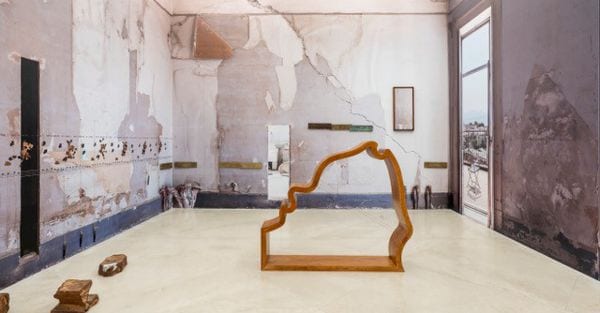
Installation view of «On Becoming Partenope, ongoing script», 2026, di Raffaela Naldi Rossano, Museo Madre, Napoli

Artists and projects

A central feature of the 2026 edition is the creation of works conceived specifically for the Pavilion. During a residency lasting around a month, Raffaela Naldi Rossano (works priced between 5,000 and 75,000 euros) and Davide Stucchi, represented by Martina Simeti (4,000–15,000 euros), worked on site, engaging with the exhibition’s theme and the Korean cultural context. SAGG Napoli took a different approach, presenting the 2021 video installation ‘AMEN’, which explores the themes of the body, discipline and physical limits. The artist is represented by zazà (Milan, Naples), with works ranging from 4,000 to 60,000 euros for the large-scale installations.

Raffaela Naldi Rossano’s residency led to the creation of ‘Partenope’s Blind Date Room’ (2026), a work that establishes a direct dialogue between Naples and Korea through materials and memories gathered in Seoul and Gwangju. The installation comprises several works, including ‘This Room No Longer Has Walls but Trees’, created using fragments of traditional roof tiles salvaged from the renovation of Seoul Women’s University and subsequently re-glazed by the artist. Also central is ‘The Ocean Between Us’, an area of mattresses inspired by traditional Korean sleeping customs which, when placed side by side, symbolically trace a continuity between the Mediterranean and the seas surrounding the Korean peninsula. Fabrics, seaweed, sand and other organic materials collected along the Korean coastline are woven into the fabric of the work, whilst Neapolitan love songs reinterpreted by the artist create a further sonic and cultural bridge between the two countries.

Davide Stucchi, who undertook a residency in Seoul, also drew on his own practice, in which objects take centre stage and the domestic space unfolds like a choreography of subtle shifts. Through minimal interventions, everyday objects are stripped of their original function and drawn into new relationships, where utility gives way to ambiguity, desire and fiction. Works such as ‘Rise & Shine’, ‘Light Switch’ and ‘Rising, falling, looking for’ (all from 2026) revolve around light and reflection, transforming familiar domestic devices into unstable perceptual situations. Mirrors vanish behind window frames, are recessed into electrical sockets or mounted on staircases that invite an impossible ascent. The objects no longer fulfil the functions for which they were designed, but act as actors within carefully staged environments, where the very act of seeing becomes uncertain.

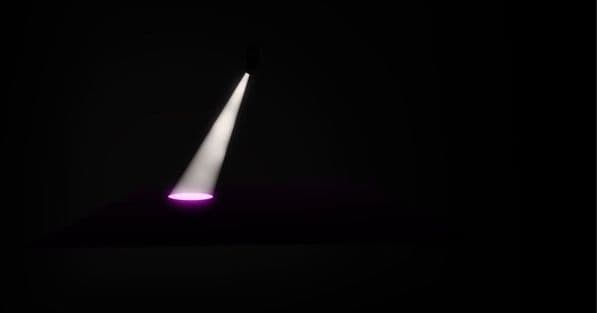
Simulated lighting installation image for Ru Kim, «Tails of Courage», or the Master’s Pirouette, 4-channel audio and moving light installation, sculpted silver, performance stage, 2026

The project brings together two Italian and two Korean artists, making the comparison between different cultures and sensibilities one of the defining features of the Pavilion. Dew Kim (Seoul, 1985) and Ru Kim (Hamburg, 1995) present work in the exhibition that centres on the body as a site of identity, conflict and transformation. Dew Kim weaves together religious symbolism, queer identity and pop culture through sculpture, video and performance (represented by Podium Gallery Hong Kong); Ru Kim uses performance and video installation to explore the relationships between the body, gender, power, memory and trauma. Their presence alongside the Italian artists is therefore not merely a side-by-side arrangement, but forges a dialogue between the contemporary Korean and Italian art scenes, bringing common themes to the fore through different cultural perspectives. In Gwangju, a city symbolic of Korea’s democratic history and contemporary culture, this exchange takes on particular significance: art becomes a space for connection and mutual reinterpretation.

Loading...

The result is a Pavilion that seeks to shift the focus from representation to relationship. Italy’s presence in Gwangju is therefore not measured solely by the number of artists involved, but by its ability to generate new productions, exchanges and connections with the Korean cultural scene. It is from this perspective that the Biennale can become not an end in itself, but the start of an international journey for Italian artists.

Copyright reserved ©
Loading...

Brand connect

Loading...

Newsletter

Notizie e approfondimenti sugli avvenimenti politici, economici e finanziari.

Iscriviti