
The Jubilee and the urban transformation of Rome: an opportunity for the future
3' min read
3' min read
Rome is a city that lives on history, but its future is also built through challenges and opportunities that major events can offer. The Jubilee 2025 is one of these key moments, a decisive push to improve the capital's urban planning, infrastructure and liveability. Looking at other cities that have leveraged international events to transform themselves - such as Milan with Expo 2015 or the 2026 Winter Olympics - we can see how these occasions are catalysts for progress.
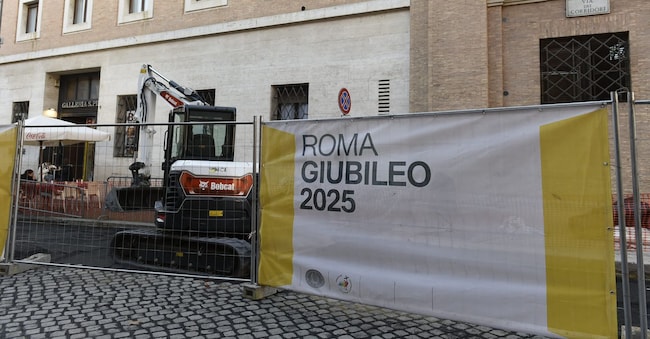
The impact of the Jubilee on Rome is evident. The city is witnessing an acceleration of infrastructure projects that would otherwise have taken decades. From new pedestrian routes to the redevelopment of entire neighbourhoods, from improvements in public transport to the enhancement of cultural sites, Rome is changing face. The urban interventions implemented for the Jubilee are not temporary, but real strategic investments that will leave a lasting legacy for citizens
After a period of stagnation, transformational action has been relaunched in the last year and a half, involving both the mobility sector - with the resumption of the process of overcoming the car-dominated era - and the issue of the quality of urban spaces
One of the most significant examples is the Piazza Pia redevelopment project, an intervention that transformed the area located between Castel Sant'Angelo and Via della Conciliazione, creating a vast pedestrian area directly connecting the castle to St. Peter's Basilica. The project included the extension of the existing subway of Lungotevere in Sassia, allowing the pedestrianisation of the entire square and improving usability for citizens and pilgrims. This transformation made Piazza Pia the largest urban pedestrian area in Rome, enriched with fountains, steps and green areas, offering a high quality public space in the heart of the city.
In general, recent history shows that major international events can be a driving force for the development of cities. Milan, on the occasion of Expo 2015, further accelerated the transformation of its urban layout, giving rise to new polarities such as MIND (Milano Innovation District). London did the same with the 2012 Olympics, converting a disused industrial area into the modern Queen Elizabeth Olympic Park. And now, with the 2026 Winter Olympics, Milan and Cortina are investing in sustainable mobility and infrastructure redevelopment.

