
'The labours of Eve' and Italia: the hidden price of inequality
The book by author Paola Mascaro will be presented in Turin at a meeting organised by Unione Industriali Torino and highlights the challenges to be faced, but also the opportunities possible if action is taken to close the gender gap

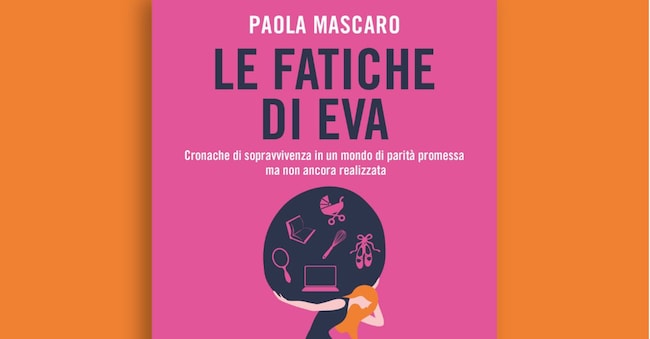
(Il Sole 24 Ore Radiocor) - In Italia only slightly more than half of women of working age are employed (around 51-52.5%), compared to around 69% of men, one of the widest gaps in Europe and among the most marked in the European Union, as confirmed by the data in the latest edition of the Global Gender Gap Report. These numbers tell of a reality that the book "Le fatiche di Eva" by Paola Mascaro does not hesitate to define as structural and profound. The text will be presented on the evening of 27 January at a meeting organised by the Unione Industriali Torino at the Egyptian Museum. An opportunity to initiate an open dialogue on the challenges that still stand in the way of achieving real equality. The initiative is aimed in particular at companies, now more than ever called upon to question their own active role in promoting fair and inclusive working environments. The event, moderated by Professor Chiara Civera, Associate Professor at the University of Turin, will also be attended by Cristina Tumiatti, Amma Vice-President in charge of Diversity and Inclusion, Cristina Prandi, Rector of the University of Turin and Fabio Torretta, General Manager of Compagnia dei Caraibi.
The book, says author Paola Mascaro, stems from a simple and powerful observation: 'What a struggle to be a woman'. The title "naturally evokes the labours of Hercules", Mascaro further explains, who thought of "an iconic name: Eve, like the first woman, like all women" to link it to all women, thus becoming a symbolic and universal figure and representing the face of all: girls, students, workers, mothers, daughters called upon to take care of others. The text tells how "gender inequalities are not the result of individual frailties, but of a social structure that continues to weigh on women's lives", says the author. Ten chapters deal with ten topics: from the stereotypes we are subjected to as children, to what girls experience in later life, from studying to health, the body and other aspects of life. The idea is 'to highlight what the challenges are, but also what the opportunities are if we decide to change our perspective a little and take action to try to close this gap,' Mascaro explains.
The invisible weight of care work
One of the central issues is the traditional division of roles, which continues to mark everyday life in 2026. "On average, women in Italia spend more than two hours a day more than men on domestic and care work," she points out. According to Istat data, 71% of unpaid family work falls on women, even when they work full-time. "But we are not just talking about mothers," Mascaro emphasises, "in a country that is rapidly ageing, it is mainly women who take care of elderly parents, non-self-sufficient family members or those with disabilities. A burden that is added to paid work and that helps explain whythe female employment rate in Italia stops at around 52%, against a European average of around 65%.
Job, career and cultural resistance
"In recent years, companies, especially the larger ones, have introduced diversity & inclusion policies. But the change, immersed in a culture that is still patriarchal, is proceeding slowly," says the author of "The Labours of Eve". Top positions, in fact, remain overwhelmingly male: according to ISTAT, women in managerial positions (including medium-high levels) are around 24%, with the national target of reaching 35% by 2026. The paradox also emerges among the younger generations: "many men under 40 show a greater willingness to share care work, but they often clash with older organisational models and leadership, which look with suspicion on a father who asks for flexibility to take a child to nursery school or attend a school play," Mascaro points out.
A problem that does not only affect women
Gender equality, however, is not a 'women's issue', but an economic and social challenge. According to the Bank of Italy, greater participation of women in the labour market could increase GDP by several percentage points in the medium term. "That is why the change has to be 50-50. It is necessary for many reasons that are economic, social, the country's productivity, the purchasing power of families," she explains. Men have a decisive role, especially since they continue to occupy the majority of decision-making positions: "we have to involve them, which does not mean renouncing claims, but building alliances, because it is an issue that concerns everyone. We have to remind them that men are fathers, they are sons, they are brothers, so this issue also concerns the women in their families. And if I think of a father today, I think he will want the best for his daughter. So we have to help them empathise,' says Mascaro.

