
The League is looking for a ‘safe’ candidate for ANAC, with the appointment to the Council of Ministers expected
There is a sense of urgency surrounding ANAC: the term of office of the current president, Giuseppe Busia, who has been in post since 2020, has expired and cannot be renewed.

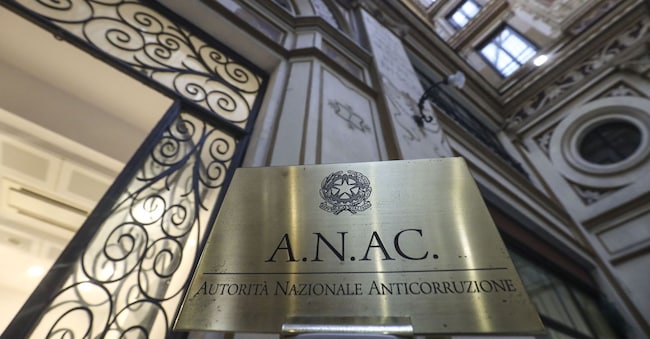
This time, the search is on for an unassailable – or at least ‘bulletproof’ – candidate for the presidency of ANAC. This is the challenge facing the League just a few days after League member Nuccio Altieri stepped down from the helm of the National Anti-Corruption Authority, following his appointment on Thursday and pressure from the opposition to backtrack. It will therefore fall to Matteo Salvini to make amends for the setback (as Altieri is still considered too close to the party) by putting forward another candidate to tomorrow’s Council of Ministers. He himself gave this advance notice. And this evening, Antonio Tajani confirmed this, even though he will be in Paris for the G7 foreign ministers’ meeting.
The alternative to Altieri
Everyone is keeping tight-lipped about the alternative, not least because – as they assure us at the Lega’s headquarters – the dossier is jealously guarded by the secretary and Deputy Prime Minister. It is no secret that the appointment is a matter close to his party’s heart, a party that has often been at odds with the Public Procurement Authority and the project for the bridge over the Strait. The new candidate will also have to navigate the internal feuds within the Carroccio that are poisoning the atmosphere. This is particularly true in the North, where Andrea Cassani, the secretary for Varese, was re-elected today; he had voted for Massimo Garavaglia, Salvini’s challenger at the last party congress.
There is a certain sense of urgency surrounding ANAC: the term of office of the current president, Giuseppe Busia, who has been in post since 2020, has expired and cannot be renewed. The only certainty is that, when it comes to his successor, there is no room for errors or slip-ups regarding political incompatibility. And the diktat appears to be coming directly from the upper echelons of government, as rumours circulate within the ruling coalition. The government’s allies take this for granted, not only by stepping back from the process but also by noting that the League will not be able to push things too far.
The appointment process
By law, the president is nominated by the Minister for Public Administration in consultation with the Minister for Justice and the Minister for the Interior, and must have the approval of the opposition parties. In fact, the favourable opinion of the relevant parliamentary committees is required, with a quorum of two-thirds of their members and expressed promptly (probably next week, if the appointment were to take place tomorrow). The candidate’s background will therefore be a key factor; by law, they should have no direct political involvement. Legislative Decree No. 150 of 2009 is clear: ‘The Chair and members of the Authority may not be chosen from among persons holding elected public office or positions within political parties or trade unions, or who have held such offices or positions in the preceding three years.’

