What remains of the Paralympics

Legacy is a silent cultural revolution

There is also an economic responsibility: without structural investment, without skilled labour, inclusion remains fragile

by Luca Pancalli

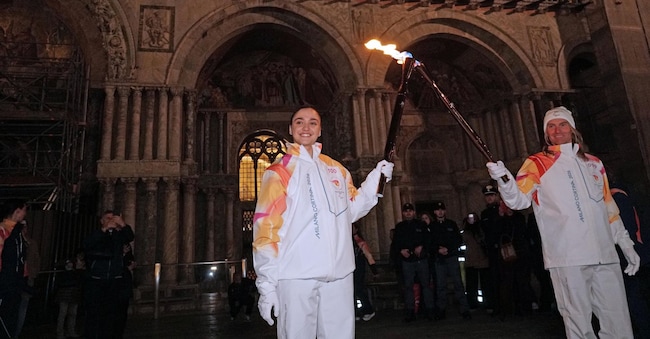
L’atleta della Reyer Basket femminile Matilde Villa mentre si avvia verso il palco delle paralimpiadi Milano Cortina, allestito in piazza San Marco, per accendere il braciere olimpico, stasera 4 marzo 2026. ANSA/ANDREA MEROLA

3' min read

Translated by AI
Versione italiana

3' min read

Translated by AI
Versione italiana

In the public debate on major sporting events, the word legacy often recurs as a promise. Infrastructure, visibility, growth, international reputation. But rarely is a more uncomfortable and decisive question asked: who really benefits from what remains, and for how long.

The legacy is not an automatic effect. It does not arise from the event itself, but from the ordinary policies that precede and follow it. It is the result of a political choice: turning an exception into continuity, an extraordinary investment into stable access, a temporary showcase into democratic infrastructure.

Loading...

From this point of view, the Paralympic experience offers a particularly sharp lens. Because it forces one to measure legacy not in symbolic terms, but in material terms. Real accessibility, practicability of spaces, continuity of services, concrete possibility of participation. Either these things remain, or legacy is just storytelling.

Inclusion and legacy, in reality, are not two separate issues. True legacy is always inclusive, or it is not. Not because it is 'good' or 'right' in the abstract, but because only inclusion produces lasting effects by contributing to the spread of a virtuous system of 'silent cultural revolution'. An accessible infrastructure remains usable. An open system continues to generate participation. An enforceable right is not consumed with the end of the event.

Paralympism has shown that inclusion is not a marginal adaptation, but a vision, a design criterion. It is not a matter of adding something afterwards, but of thinking from the beginning for a real plurality of bodies, of needs, of life trajectories. Where this happens, sport ceases to be an experience for the few and becomes an inhabitable public space.

Major events then function as a stress test of democracy. They make visible the infrastructures that exist and those that are lacking. They accelerate processes that have already begun or show the absence of a strategy. They do not create development on their own, but they reveal whether an area is capable of transforming the exception into a system.

In this sense, legacy is not measured the day after an event closes, but in the years that follow. It is measured in the continuity of sports policies, in the stability of employment, in the spread of access, in the reduction of territorial inequalities. Where sport becomes intermittent again, the legacy also evaporates.

Then there is a less visible but equally decisive dimension: cultural legacy. The way in which bodies are narrated, recognised, legitimised in public space. The risk of hyper-visibility is simplification: inclusion reduced to an emotional narrative, the exception elevated to a model, the limit transformed into spectacle. Here too, what counts is the continuity of the language, not the intensity of the moment.

True inclusion does not need to be celebrated every time. It needs to be practised. It becomes legacy when it stops being news and becomes normality. When a person with a disability walks through a sports space without being an exception, something has really changed.

Thinking of legacy as inclusion also means taking economic responsibility. Without planning, without structural investment, without skilled labour, inclusion remains fragile. Rights do not maintain themselves. They need material architectures that make them viable over time. In the end, the question of legacy is about how a society decides to use its future. Whether as a showcase or as a foundation. Whether as narrative or as infrastructure. Whether as an event or as a right.

Paralympism has taught us that what remains matters more than what appears. That inclusion is not an additional cost, but the condition for something to last. And that a democracy is not just measured by what it inaugurates, but by what it makes habitable, accessible, viable for all.

When this happens, legacy stops being a promise. It becomes public policy that takes shape.

Copyright reserved ©
Loading...

Brand connect

Loading...

Newsletter

Notizie e approfondimenti sugli avvenimenti politici, economici e finanziari.

Iscriviti

Tutto mercato WEB