Interventions

The legacy of Pope Francis in terms of taxation

3' min read

3' min read

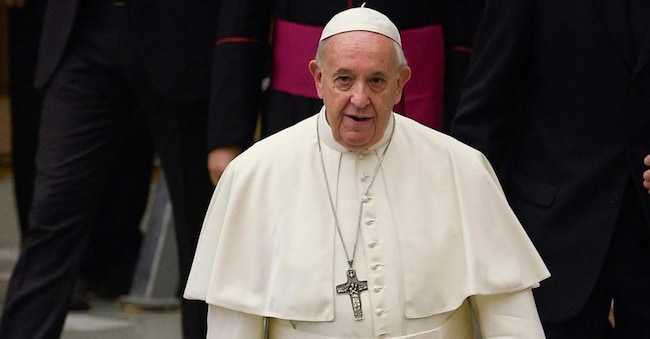
Pope Francis has made an invaluable contribution in the area of taxation, an essential part of his great legacy.

The Social Doctrine of the Church (and the Pontiffs) have been talking about taxes for a long time. Without going to the Gospels or Acts, we find mention of it (among others) in Rerum Novarum (1891), in Quadragesimo Anno (1931), in Mater et magistra (1961). But the references to the tax, in these and other broad economic-social documents, were mere hints (thus Galmarini and Giarda, Dizionario della Dottrina sociale, 2004). Suffice it to think, then, that out of the 2865 issues of the Catechism of the Catholic Church only one (2240) mentions taxes, and the Compendium of the Social Doctrine of the Church dedicates only one issue - 355 - to the subject (thus G. Salvini, La Civiltà Cattolica, 2006).

Loading...

In recent decades, however, the subject had seen a crescendo of interest on the part of the Magisterium, picked up by Pope Francis with an unprecedented attention and perspective: there is confirmation of this in speeches, encyclical letters, and documents of Dicasteries, from which emerges an extraordinarily modern reading of the phenomenon, which sees the tax in its extra-fiscal function and thus in its effects, particularly towards the weak and the environment.

This is new, both with reference to individual topics and in general.

Specific topics include tax havens and environmental protection.

With respect to the former, he condemns the transfer of capital abroad, as it generates inequity and reduces resources for essential public services (To the participants in the seminar "New forms of fraternity in solidarity", 2020); and countries with privileged taxation, as they "[take] decisive resources away from the real economy and [contribute] to generating economic systems based on inequality" (Oeconomicae et pecuniariae quaestiones, 2018); calls for a renewed international dialogue on tax havens to "end economic injustice" and reform national tax systems (Videomessage for the 75th Session of the UN General Assembly, 2020), as only through uniform and internationally binding tax parameters is it possible to shape tax systems in equitable and solidaristic terms (Oeconomicae, 2018); provided that "all commit to work together to close tax havens, prevent evasion and money laundering...".

Regarding environmental protection, in Laudato sì (2015) he calls for a true 'ecological conversion', to achieve which in the 'path to care for the common home' he calls for a global carbon tax to reduce emissions (and the use of taxation to promote the circular economy).

But the most important novelty is the attention paid to the subject in a systematic key, on numerous occasions: suffice it to think of the Angelus of 18 October 2020, commenting on the passage from Matthew 'give unto Caesar ...', a milestone in the separation of State and Church in every age; but above all, of the extraordinarily important speech given for the visit of the Revenue Agency in 2022, in which he identifies the three cardinal principles (a 'precious compass') of the tax system, legality, impartiality and transparency. Legality as a guarantee of equality, to balance social relations: tax, when fair, is in function of the common good. Impartiality: the scourge of evasion is matched by the righteousness of many taxpayers, fortunately an overwhelming majority; a 'crafting of the common good' that must be disclosed, which administrations must take into account. Finally, transparency: in the management of public money, it motivates the payment of taxes, especially if this contributes to overcoming inequalities and creating work and investment; tax is perceived negatively if it is not understood where and how the revenue is spent.

In short, even in tax matters he is a pope who leaves us a great legacy, which must now be taken up by national and international institutions; some steps have been taken, but - as he taught us - even in tax matters there is a real 'turning point'.

Sacred Heart Catholic University

Dean of the Faculty of Economics and Law

Copyright reserved ©
Loading...

Brand connect

Loading...

Newsletter

Notizie e approfondimenti sugli avvenimenti politici, economici e finanziari.

Iscriviti