
The lesson of gold in all periods of art
At the National Gallery of Umbria, an exhibition brings the gold holdings of the museum's collection into dialogue with the works of some of the leading contemporary artists

3' min read
Key points
3' min read
Rare, incorruptible, malleable, ductile: this is gold, the most precious metal, which has always been the object of human greed, used since antiquity - due to its physical characteristics, including its splendour - as an attribute of supreme power and in various religious traditions taken as a metaphor for celestial light and immortality. A material of choice in the Middle Ages for liturgical furnishings and the embroidery on priestly vestments, but also for making the backgrounds of icons, in which the sacred figures seem immersed in an infinite space, emblematic of an otherworldly reality, gold - laid out in thin sheets and worked with different techniques - appears in numerous examples of medieval painting. Rarely present in Renaissance painting - although persisting in the artefacts of the applied arts - gold unexpectedly reappears at the end of the 19th century in the production of the Secessions and makes its way into artistic experimentation on several occasions from the mid-20th century onwards.
As witnessed by the exhibition "The Golden Age. The golden masterpieces of the National Gallery of Umbria meet Contemporary Art", promoted by the Galleria Nazionale dell'Umbria from 26 October to 19 January 2025, born from an idea of the director Costantino D'Orazio, who has set up a series of dialogues between a selection of the gold fonds of the museum's collection and the works of some important protagonists of the international contemporary art scene, who have used gold in different ways and with very interesting results. An exhibition that can be enjoyed on several levels, with the help of an agile printed guide and a scholarly catalogue that makes use of contributions from both art historians and scholars who have delved into various aspects of the precious metal, such as its spiritual significance, the geographical areas where it was mined, its presence in the arts of Byzantium, in myth and in literature.
The exhibition route
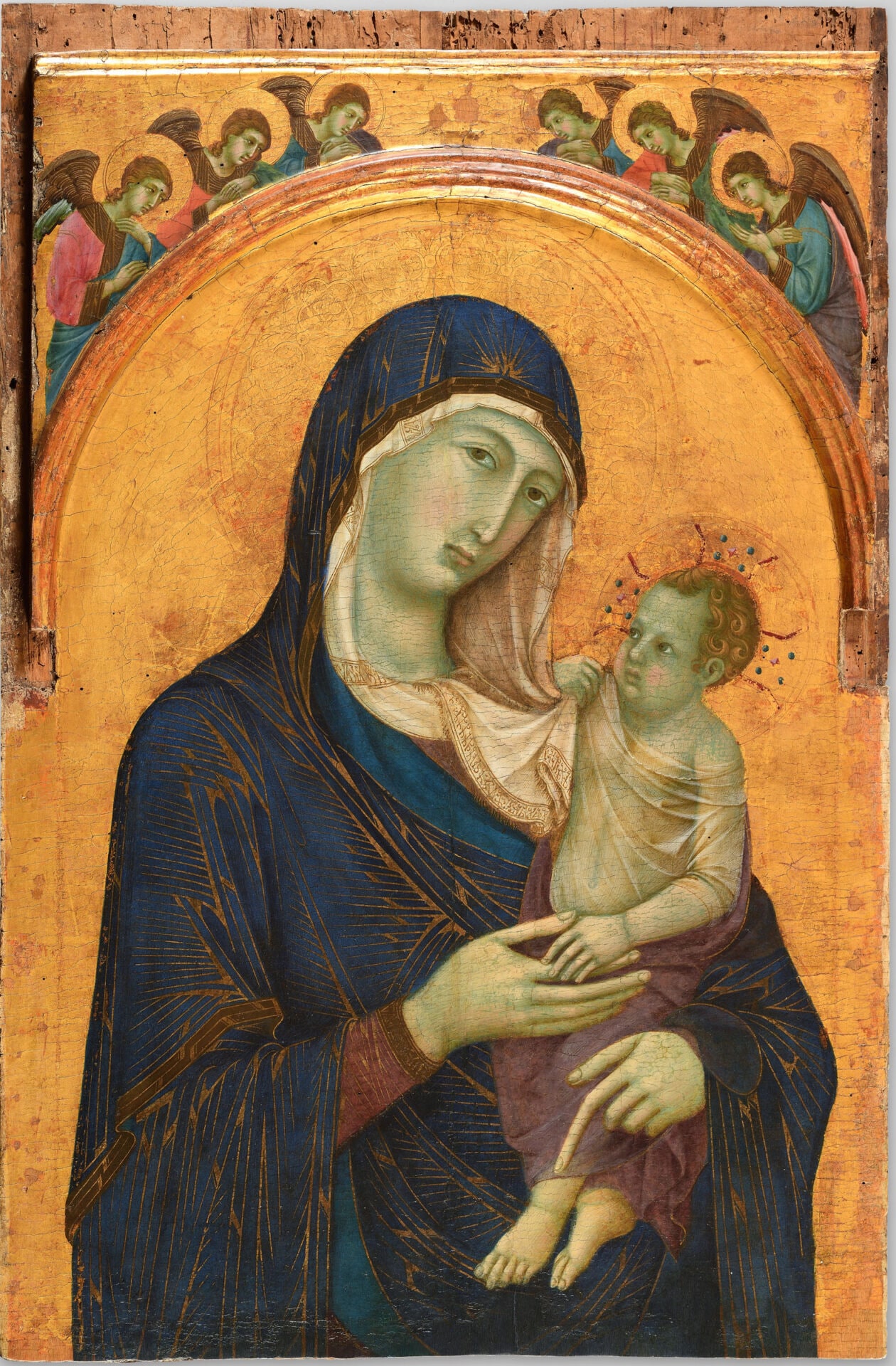
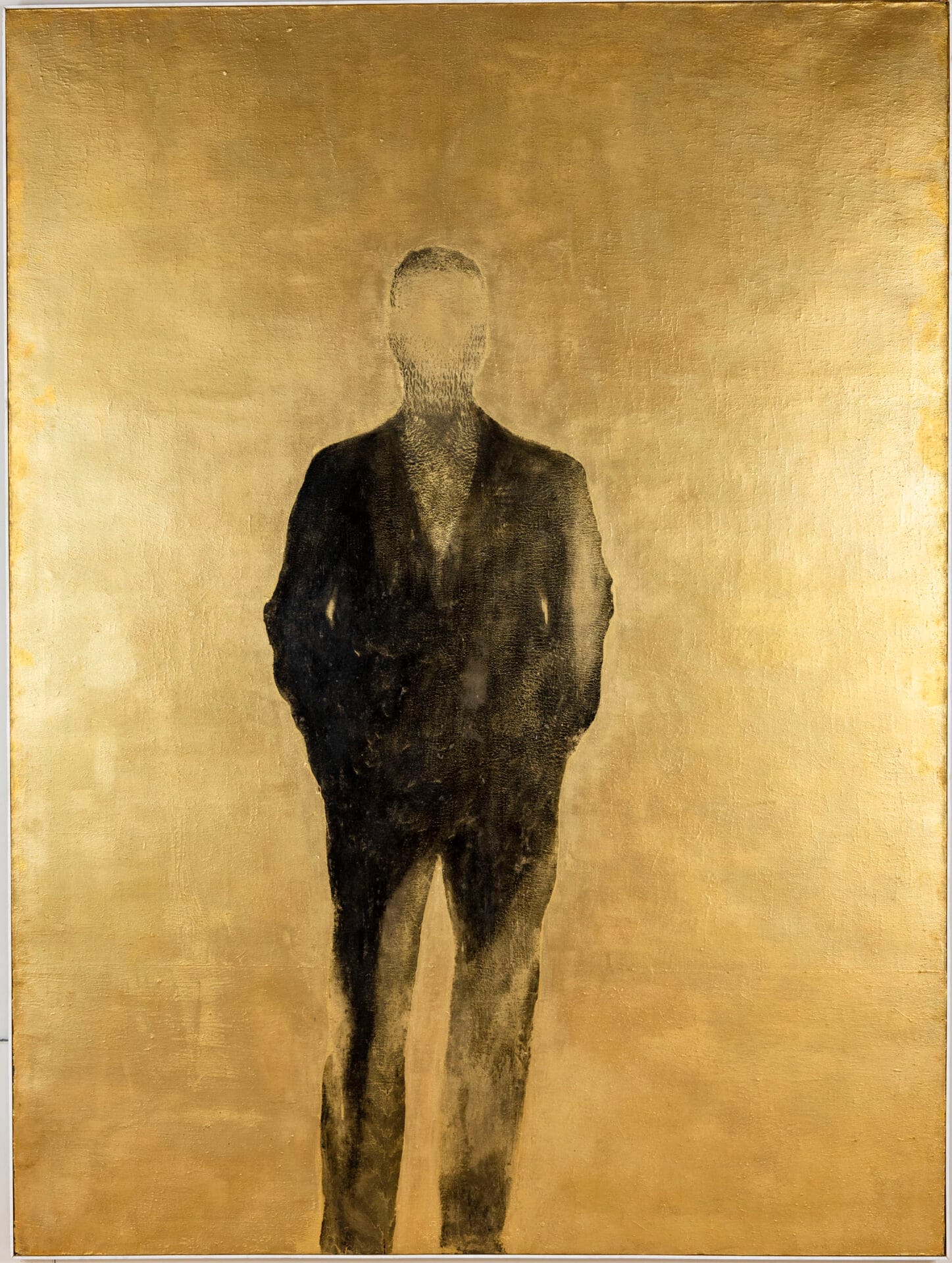
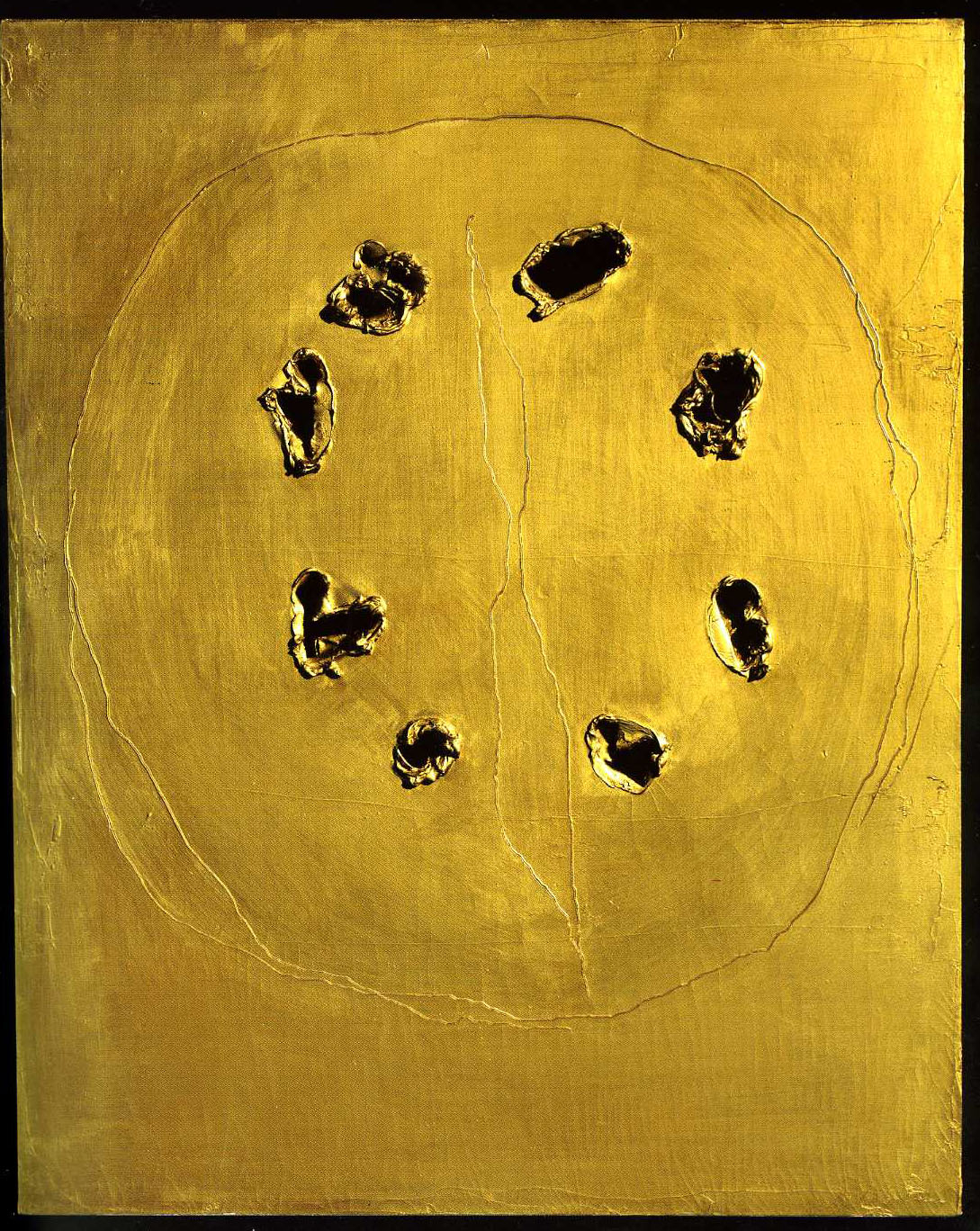
.Constructed by curators Alessandra Mammì, contemporary art critic, Carla Scagliosi, modern art historian, Veruska Picchiarelli, medieval art scholar, by juxtaposing the works in the exhibition (as many as fifty) for aesthetic and technical similarities and activating suggestions and unprecedented interpretative cues, opens with Michelangelo Pistoletto's "Autoritratto oro" (1960) and continues with the splendid cope embroidered with gold threads by Cardinal Armellini (early 16th century) juxtaposed with the three large, gold-embroidered works of the Cardinal's family (early 16th century). 16th century) juxtaposed with Jan Fabre's three large bronze and gold Dung Beetles (2016), surmounted by Christian symbols, while Duccio di Boninsegna's "Madonna and Child with Six Angels" is flanked by Lucio Fontana's "Spatial Concept on a Gold Background" (1964), Andrew Marilyn 11.40" by Andy Warhol looks at the "Angel of the Hunter's Altarpiece" by Bartolomeo Caporali (1487) and the delicate "Magdalene" (1977) by Fausto Melotti recalls the saint painted by Taddeo di Bartolo (1403).
Other 'dialogues' are on display, including those between the works ofMarisa Merz, Burri, Zorio, Vezzoli, Penone, Klein, Paolini and precious paintings from the past, but also individual works such as the iconic 'Untitled' (1992) by De Dominicis and the 'Goldfinger/Miss' (1965) by Ceroli, in which the blatant reference to Botticelli's 'Venus' is translated into the series of gilded rough-hewn wooden silhouettes, reminiscent of the Honor Blackman from the James Bond agent 007 film.
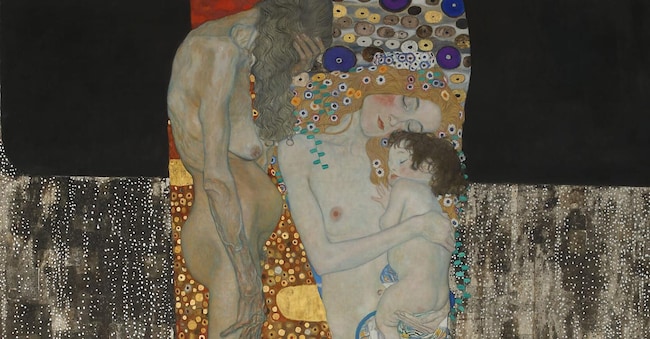
While Gustav Klimt's 'The Three Ages' (1905) and Mimmo Paladino's 'Untitled' (2021) close the exhibition, juxtaposed with The Banner of St. Augustine (c. 1499), due to the repeated presence of gilded decorative elements, the high emotional quotient between Christ crucified between the two is also worth mentioning.) by Pinturicchio, due to the repeated presence of gilded decorative elements, the high emotional quotient of the dialogue between Niccolò di Liberatore's 'Christ Crucified between Saints Francis and Bernardine of Siena' (1497) and the two versions (1975, 2007) of Jannis Kounellis's 'Civil Tragedy' should also be noted: in the first, a coat hanger with a coat and hat stands out on a wall covered in gold leaf; in the second, the background of the work consists of irregular fragments of rough gilded wood fixed on wire mesh and coats suspended from a pole like rags, symbolising the desolating absence of man.

