Speech

The lesson of Ulysses and the contradictions of leadership

The Odyssey does not offer simple answers, but raises profound questions about the price of success and the meaning of responsibility towards others

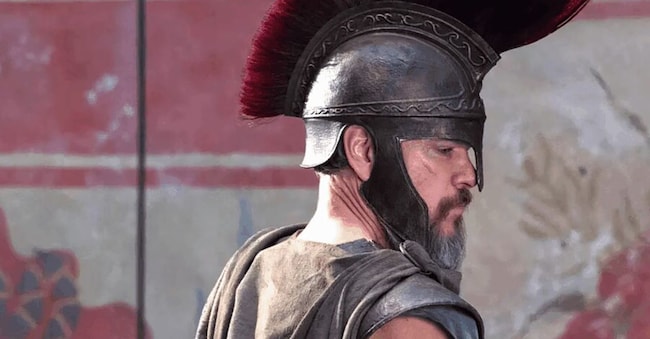
Una scena tratta dal film «Odissea» di Christopher Nolan

7' min read

Translated by AI
Versione italiana

7' min read

Translated by AI
Versione italiana

We have made Ulysses the model of the perfect leader. Christopher Nolan brings him to the screen on 15 July, and his *Odyssey* — literally the epic of Odysseus: ‘Ulysses’ — takes on a new meaning: less as a leader’s handbook or a role model to follow, and more as an unparalleled exploration of our difficult freedom.

In our schools, and beyond, Ulysses has long been held in the highest regard. A strategist, shrewd, resilient, a winner: the model leader, the one often cited in leadership courses between two case studies for his loyalty to his goal, his throne, his family and his crew...

Loading...

On 15 July, Christopher Nolan brings it to the big screen as a global blockbuster, offering millions of viewers the chance to rediscover the poem whose lost melody Ismaïl Kadaré had so beautifully sought to recapture in *The H File* (1981). To reread what is called the ‘proem’ (from the Latin ‘proemium’, meaning ‘beginning’) means, from the very first line, to stumble upon his name. Achilles is named right from the opening lines of the *Iliad*. Odysseus, on the other hand, is identified by the word ‘man’ (‘andros’) and by his epithet: ‘polytropos’ (‘of many devices’?). Leconte de Lisle translated ‘andros polytropos’ as ‘this shrewd man’, Victor Bérard called him ‘the man of a thousand stratagems’, whilst Philippe Jaccottet, in his sublime and unrivalled verse translation, referred to him as ‘the resourceful one’. The term refers above all to the man who, like the poem that bears his name, turns ambiguity into a virtue – not when it is synonymous with duplicity, but as a guarantee of fidelity to the complexity of reality and a call for in-depth questioning.

In fact, the poem that has shaped our conception of leadership does not offer us an answer: it offers us questions.

The Merits of Ulysses

Let us first acknowledge Odysseus’s merits. They are genuine. Odysseus is Athena’s man: cunning, what the Greeks call mètis, the flexible intelligence that adapts to the unexpected, that of a captain on a stormy sea. This is a far cry from Ares, the god of war, whom Athena herself defeats in the Iliad and whom Zeus claims to hate more than any other of the Olympians: Odysseus does not rouse the troops to battle; he reflects. He is primus inter pares, first among his peers, the finest archer, the finest strategist, with the Trojan Horse as his calling card. And he even learns from his own failures: defeated by the Cicones because his men, drunk, turned a deaf ear to his order to retreat, he will later turn drunkenness into his own weapon to blind the Cyclops. His stroke of genius, moreover, lies in a single word. To trap the monster, he presents himself as ‘Nobody’ (‘Outis’, a play on ‘Métis’ in Greek). When the blinded giant screams that he is being attacked, his fellow giants simply shrug: ‘Nobody has done him any harm’. It’s hard not to admire him.

It is in this famous episode of Canto IX that the portrait becomes more complex. Ulysses’ masterstroke lies in agreeing, for the duration of a ruse, to be nobody. We do the opposite: our age celebrates the executive who has a name, a brand, a presence – the star executive, the personal signature, the profile that shines. Nothing new, after all: at Troy, Greece had its own hero of glory, Achilles, ready to die young so long as his name would live on through the ages, as the guests at Plato’s Symposium – Phaedrus and Socrates – recall. However, unlike the *Iliad*, whose title refers to the Trojan War (‘Ilion’), the *Odyssey* takes its name from its hero, Odysseus: the man. It is no longer an epic of war, but one of humanity, of wandering with the risk of losing oneself, for which the sea becomes the ideal setting – with its smooth surface and turbulent depths – a space in which one can lose one’s way, but where the skilled navigator uses landmarks to reach port.

Apparently, the Odyssey rewards those who know how to fade into the background and punishes those who cannot bear to do so: no sooner has he been rescued and is in high spirits than Odysseus shouts his real name to Polyphemus and gives him just what he needs to curse him all the way back to Ithaca. The same man triumphs by calling himself ‘nobody’ and is lost the moment he wishes to be recognised as ‘Ulysses, Scourge of Cities, son of Laertes and noble citizen of Ithaca’ during the Cyclops episode. He must still wander and be recognised in turn by the swineherd, Eumaeus, by his son Telemachus, by his dog, Argo, who dies immediately after finding his master, then by his nurse, Eurycleia, by means of his scar, and finally by Penelope, in order to become Odysseus once more and reclaim his throne, this time in his own name. Which Odysseus is the true one?

Ulysses is not a perfect leader

The wandering king shapes our image of a leader, but he is far from being a perfect leader, and that is what makes him interesting. He sometimes listens to his men with only half an ear: on the Cyclops’ island, his companions beg him to set off again; but, being too curious, he wants to see the Cyclops and find out whether he will bestow upon him the ‘gifts’ of traditional Greek hospitality. He does as he pleases, and his men pay for it with their lives. Elsewhere, it is he who is no longer listened to. Listening poorly, or failing to make oneself heard: the poem presents, without resolving, the two sides of this managerial dilemma.

Nor should we forget that, whilst the *Odyssey* comprises twenty-four books, the first four are not devoted to the absent Odysseus, but to Telemachus; and that, very often, we are only familiar with Books IX–XII, which are in fact a narrative by Odysseus – a ‘flashback’, as Christopher Nolan would say – presented to the court of the Phaeacians. The Sirens? The Lotophagi? The realm of the dead, Helios’ herds, the Cicones, the Laestrygonians, Aeolus’ bag? It is all nothing more than Odysseus’ storytelling as he is received by King Alcinous on the island of the Phaeacians. Should we believe him when he recounts his cunning, his ‘epic fails’ and his hesitations? There is no doubt that the director of *Inception* will know how to capitalise on this complexity of temporal interweaving and shifting perspectives, which are also managerial issues...

Finally, the question that makes one’s head spin arises. Odysseus achieves his goal: he returns to Ithaca, but… alone. More than seven hundred men have died along the way. Mission accomplished? In today’s terms: a collective burnout in order to achieve the set goal. The Odyssey tells the story of a ‘nostos’, a return – the Greek word from which we derive the term ‘nostalgia’ – but wasn’t the point supposed to be returning with one’s companions? From this perspective, the hero has failed.

There is nothing new about the idea. As far back as the 14th century, Dante cast Ulysses into his Inferno, amongst the deceitful counsellors, for having led his men ‘beyond’ the Pillars of Hercules, guilty of boundless curiosity. Three centuries later, Fénelon drew a completely different conclusion: The Adventures of Telemachus is a ‘spin-off’ of the Odyssey, written to educate the heir to the French throne, a European bestseller and, incidentally, the ancestor of our word ‘mentor’. The moral of the story? A good king is not one who triumphs, but one who serves his people rather than his own glory: ‘When you are the ruler of other men, remember that you were once weak, poor and suffering just like them,’ says Mentor to Telemachus in Book II of the novel. Louis XIV, it is said, saw in it a criticism of his own reign.

‘A man who has come full circle’

Today, alongside Nolan’s films, the New York-based writer Daniel Mendelsohn – who had revived Fénelon’s *Telemachus* in *Three Rings* (2021) – has just published a new translation of the *Odyssey*, which has been hailed by critics. And everything hinges, precisely, on the translation of the opening epithet (‘polytropos’). Mendelsohn follows in the tradition of Victor Bérard — who described him as ‘the man of a thousand wiles’ — but shifts the emphasis: with his translation ‘a man who has travelled far and wide’, he downplays the aspect of cunning to emphasise the character’s resourcefulness.

Every age reinterprets, rewrites and adapts the Odyssey to reflect on its own power. Plato, after all, had already described Homer as ‘the educator of all Greece’, such is the food for thought provided by the epic. Dante made him a damned soul; Fénelon, a father whose quest he undertook to devise, alongside the future King of France, the foundations of wise and measured leadership; Mendelssohn pored over every word. And now, in turn, cinema has taken it on board: proof, if any were needed, that the poem has lost none of its power of attraction.

Here, perhaps, lies the greatest gift of our epic poem: beneath the veneer of adventure, not a manual for the perfect leader to be emulated or condemned, but a mirror reflecting our own ambivalences. We admire the strategist who triumphs: the poem asks at what cost. We celebrate the hero who has a name: it reminds us that his finest stratagem was knowing, for a moment, that he was nobody. We speak of results; he counts the absent. At a time when Odysseus is set to return to the big screen, his story may well reignite a question: at what cost does one succeed? And what does it mean, ultimately, to succeed when one is responsible for others?

Three thousand years on, the Odyssey continues to defy all those who would like to turn it into a leadership manual. It never enshrines a single model; it compels every age to re-examine its own.

* Lecturer in Literature & Management at NEOMA Business School

Copyright reserved ©
Loading...

Brand connect

Loading...

Newsletter

Notizie e approfondimenti sugli avvenimenti politici, economici e finanziari.

Iscriviti