
The spotlight is on Homo Faber: craftsmanship of the highest quality takes centre stage
Over 700 works and hundreds of artists from all over the world: the best of international craft on display in Venice at the Giorgio Cini Foundation, on the island of San Giorgio Maggiore.

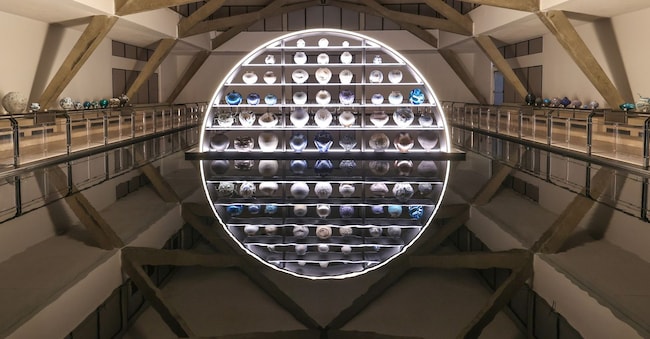
Light is invisible until it strikes an object, at which point it defines a shape, casts a shadow and brings colour to life. It is all about the way in which this vital energy interacts with the world, with humankind and with human hands – this is the narrative behind the 2026 edition of Homo Faber: an Island of Light, curated by the British designer Es Devlin. Now in its fourth edition, the event – which focuses on the creative transformation of materials – has become an unmissable fixture in Venice’s already packed calendar of events, ranging from the Art Biennale to the upcoming Film Biennale. ‘Homo Faber is not just an exhibition,’ explains Alberto Cavalli, executive director of the Michelangelo Foundation for Creativity and Craftsmanship, a not-for-profit organisation that supports craftspeople worldwide. “It is a movement; it is the belief that a more humane, inclusive and sustainable future is possible. Promoting the arts and crafts and the talent that expresses them means defending personal freedom and trusting in one’s own hands as the tool that can change the world.”
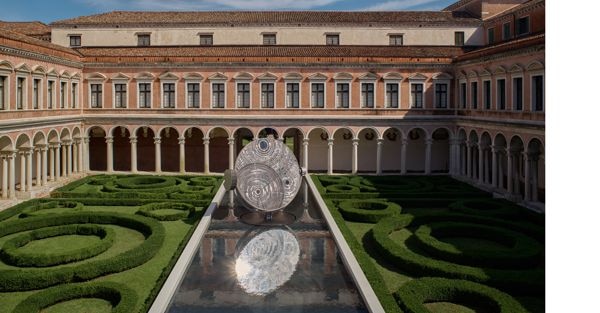
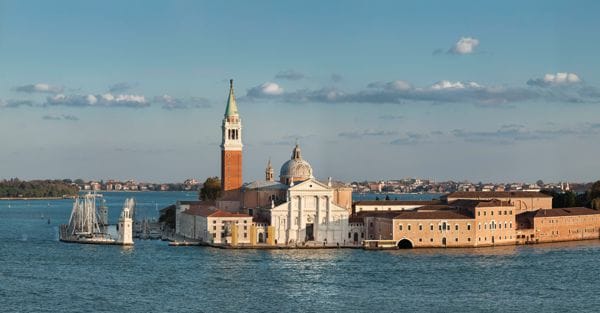
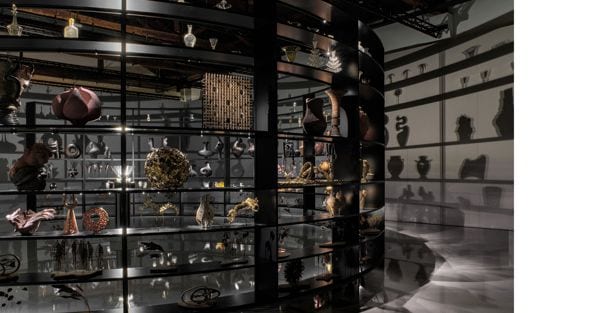
On 1 September, at the Giorgio Cini Foundation on the island of San Giorgio Maggiore, the spotlight will therefore be on the masters and their artefacts, hailing from all over the world. The central theme is a wave of light that spreads, refracts, reflects or disappears as it is absorbed: the journey begins in a large workshop space, a studio within a studio, where the specific tools of each craft – from embroidery to woodcarving, from clay to glass – are displayed and arranged like lifeless paintings. These tools remain inert until a hand comes along to breathe life into them, transforming a thought and a design into something both aesthetically pleasing and functional. Every object is the expression of two hands and a face: thus, the second room uses light to capture, in black and white, the portraits of all the creators featured in this edition. A gallery of faces, eyes and physical features that reveal just how varied and vast the world of fine craftsmanship is, and how much it reflects both a community and, at the same time, a unique and individual personality. The third room is a slowly rotating carousel, where every object bears the earthy brown hues of the earth and the primary elements: theatrical lighting projects the magnified shadows of each piece in a circular pattern onto the wall.
There is a dramatic and celebratory, yet an intimate one in Es Devlin’s desire to ‘trace the etymology of objects’, which allows the audience to experience a middle ground between a Platonic cave and a child’s game that reduces the essence of creation to its form, whether real or merely imagined. In the subsequent rooms, the handcrafted elements finally take the upper hand, although the direction remains strong—at times dominant—and the perspective selective.
Here, then, are the colour combinations (first wood and wicker, then the pure white of ceramics, paper, plaster, and finally the most colourful medley of hues), by theme (such as the ‘Silent Song’ roundels which, using different techniques and designs, rhythmically punctuate the cloister’s arches, or the aviary of mirrors that depicts every form of winged creature), and by texture (such as the long tapestry whose black-and-white counterpoint unfolds against the green of the Borges Labyrinth. ‘In an age when technology is capable of generating images, synthesising voices and reproducing forms, Homo Faber is searching for the human imprint: traces of individuality, imperfection, skill and awareness,’ explains Hanneli Rupert, executive vice-president of the Michelangelo Foundation. An emotional experience and a rational exploration, superbly organised and orchestrated ‘to show what the mind, heart and hands are capable of’.

