
The rise of street food: the number of businesses has doubled
Today, more than one in four Italian municipalities is home to at least one business in this sector, whereas ten years ago the figure was just over one in six

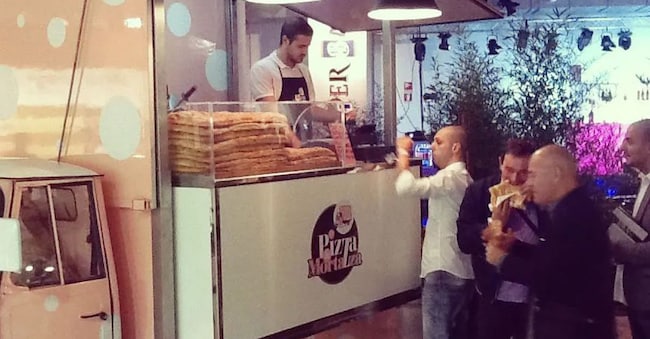
There is a new trend in fast food: street food is making its mark through Piaggio Ape vans, food trucks and street-front stalls, to the point where it has become a permanent fixture in the local economy, reaching even small towns, coastal areas, tourist centres and inland villages. As at 31 March 2026, there were 1,975 Italian municipalities with at least one registered business operating in the street food sector, compared with 1,258 in 2016. Over the past ten years, the sector’s geographical reach has therefore expanded to include 717 new municipalities, representing a 57 per cent increase in the area covered. Over the same period, the total number of businesses has almost doubled, rising from 2,271 to 4,286 (+88.7 per cent). Today, more than one in four Italian municipalities is home to at least one business in the sector, whereas ten years ago the figure was just over one in six. These are the findings of data from the Business Register compiled by Unioncamere and InfoCamere.
Street food is an alternative form of catering, and has become a business model that has successfully adapted to a wide variety of contexts, capitalising on new consumer habits, the growth of experiential tourism and a demand increasingly geared towards flexible, informal and locally-based dining options. Its geographical spread confirms this trend. Southern Italy accounts for almost half of all registered businesses, reflecting the link between street food and the region’s growing appeal to tourists, as well as the promotion of local culinary traditions.
At regional level, with Lombardy firmly in the lead with 544 businesses, the regions with the highest number of businesses in 2026 will be Sicily (514), Puglia (510), Lazio (371) and Campania (361). Among the provinces, behind Milan (256 businesses) come Rome (230), Lecce (192), Turin (170) and Naples (162). Finally, at municipal level, the title of street food capital goes to Rome (129 businesses), which narrowly edges out Milan (128). Some way behind follow Turin (78), Palermo (48) and Bari (44).
In recent years, the phenomenon has spread across the whole country. In fact, 717 municipalities have appeared on the street food map for the first time over the last decade, a sign that the sector continues to expand its presence throughout Italia. This widespread entrepreneurial activity is led by sole traders, the most common business form with 3,157 registered businesses accounting for 73.7 per cent of the total, confirming the strong roots of small-scale and often family-run enterprises. Alongside this long-standing component, however, there is a process of progressive structuring within the sector. Limited companies have risen from 105 to 620 in ten years, recording growth of nearly 500 per cent. Their share of the total number of businesses has risen from 4.6 per cent to 14.5 per cent, highlighting a sector that is increasingly capable of attracting investment and consolidating its market presence.

